










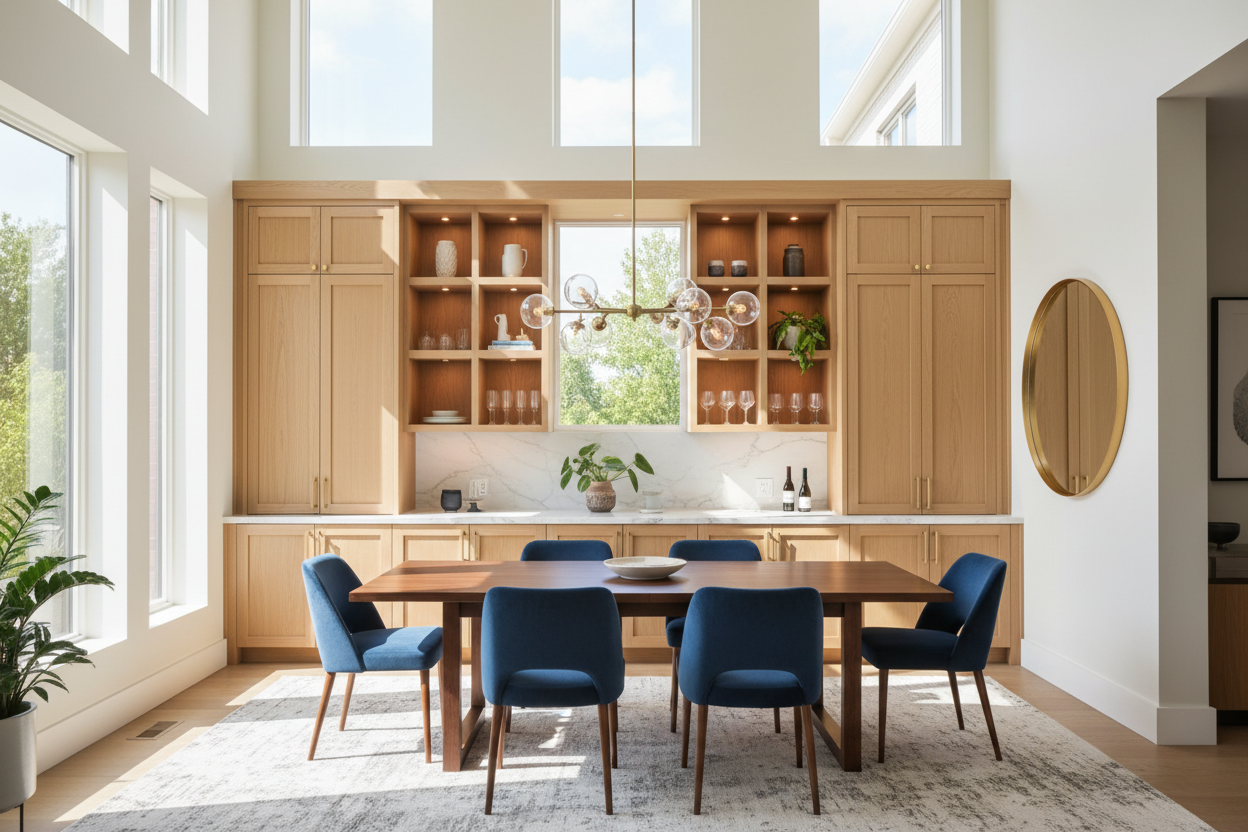
I spent three hours last weekend trying to tetris a 16-inch ceramic serving platter into a 14-inch deep sideboard. It was embarrassing. We have been lied to by furniture catalogs that suggest a dainty, waist-high console is all you need for **dining room cabinet ideas**. Most of those pieces are designed for looks, not for the reality of owning a 12-quart stock pot or a stack of oversized holiday chargers.
- Standard buffets are usually too shallow (12-15 inches) for modern appliances.
- Wardrobes offer 22+ inches of depth, perfect for air fryers and slow cookers.
- Solid doors beat glass doors every time if you actually have clutter to hide.
- Vertical storage saves your floor space while making the room look professionally designed.
The Problem With Standard Dining Buffets
Traditional buffets are a relic of a time when people had tiny plates and zero small appliances. Most designs of dining room cabinets you see in big-box stores top out at 15 inches of depth. That is barely enough room for a stack of dinner plates, let alone the bulkier items we actually need to store. If you are trying to find dining room storage cabinet ideas that accommodate a modern kitchen overflow, the standard buffet is going to fail you.
I have owned three different sideboards in five years. The first one was a beautiful mid-century piece that looked great but couldn't even fit my salad spinner. The second was a 'dining room cabinet set' that came with the table—it felt like a hotel breakfast suite and had zero personality. The real issue is verticality. When you stop at waist height, you are leaving four to five feet of usable wall space completely empty. It makes the room feel 'bottom-heavy' and leaves you with nowhere to put the things you only use twice a year.
Yes, You Should Put a Literal Wardrobe in Your Dining Room
This is the hill I will die on: a wardrobe in dining room setups is the ultimate storage hack. Why? Because wardrobes are built to hold hanging clothes and bulky sweaters, meaning they are typically 20 to 24 inches deep. That extra five inches of depth is the difference between your air fryer fitting behind closed doors or sitting on your counter forever. When you are looking for the best dining room cabinets, stop filtering by 'dining' and start filtering by 'bedroom storage.'
A massive wardrobe adds architectural weight to a dining room that might otherwise feel like just a box with a table in it. It hides the chaos of mismatched Tupperware and giant roasting pans behind tall, elegant doors. Plus, you can install battery-operated motion lights inside. There is nothing more satisfying than opening two tall doors to find your entire pantry and bar kit organized in one spot. It is a bold dining cabinet designs choice that guests will actually compliment because it looks intentional, not like a makeshift solution.
Dining Room Cabinet Ideas That Actually Hide the Mess
We need to talk about the 'glass door' trap. We have all seen those dining room cabinet designs pictures where every glass-fronted shelf holds four perfectly spaced white bowls and a single sprig of eucalyptus. That is not real life. In real life, your dining room cabinet decor consists of half-empty boxes of crackers, a stack of napkins from three different holidays, and a blender you use once a month. Dining room cabinet design should prioritize concealment over display.
Look for dining cabinet designs with solid doors on the bottom two-thirds. If you must have glass, keep it to the very top shelf for your 'nice' glassware. The goal is heavy-duty utility. You want shelves that are rated for at least 30-50 pounds so they don't bow under the weight of your cast iron collection. Solid wood or high-grade MDF with a thick veneer will hold up much better than the flimsy cardboard-backed units that wobble when you walk past them.
The Floor-to-Ceiling Dinette Cabinet
In a small breakfast nook, floor space is gold. A tall, narrow dinette cabinet acts like a pantry extension. I once lived in a 600-square-foot apartment where the 'dining room' was just a corner of the kitchen. I swapped a small console for a 72-inch tall pantry cabinet. It took up the same two feet of floor space but tripled my storage capacity. By going vertical, you draw the eye up, which actually makes a small room feel taller and more expansive.
Sideboards That Don't Waste Vertical Space
If you aren't ready to commit to a full wardrobe, you can still find mid-height pieces that work hard. Look for a solid wood modern sideboard with adjustable shelving. The 'adjustable' part is non-negotiable. Being able to move a shelf up two inches so your stand mixer can actually fit is a life-saver. Avoid pieces with fixed cubbies; they are the enemy of efficient storage.
How to Mix Your Dining Cabinet Designs Without Clashing
The biggest mistake people make is buying a matching set. It is boring and lacks soul. You want your storage to look like it was collected over time. If you have a light oak table, try a matte black cabinet or a deep navy wardrobe. Mixing materials—like a wood table with a metal-framed cabinet—creates a much more curated vibe. It avoids that 'showroom' look that feels stiff and uninviting.
If you are worried about the scale of a large cabinet, match the hardware to your dining chairs or light fixture. This creates a visual thread that ties the room together without being matchy-matchy. For more tips on this, I highly recommend reading about pairing a china cabinet and dining room set to ensure your big statement piece doesn't overwhelm the space. It is all about balance and intentional contrast.
The Final Verdict: What Makes the Best Dining Room Cabinets?
Don't settle for a piece of furniture that only does half the job. The best dining room cabinets should meet three criteria: they must be at least 18 inches deep, they must have adjustable internal shelving, and they should have solid doors to hide the inevitable clutter. Whether you choose a towering wardrobe or a deep, chunky sideboard, prioritize the volume of stuff you actually own over the trendy 'slim' designs that dominate your social media feed.
FAQ
Can I really use a bedroom wardrobe in the dining room?
Absolutely. Just swap the hanging rod for extra shelves. Most wardrobes use standard shelf pins, so you can buy extra boards at any hardware store and customize the interior to fit your specific platters and appliances.
How deep should a dining cabinet be?
Aim for at least 18 inches. Anything less and you will struggle to fit standard serving trays or larger kitchen gadgets like a slow cooker. If you have the space, 22 inches is the gold standard for true 'hide-everything' storage.
Should I get a cabinet with legs or a solid base?
Cabinets with legs look lighter and make a room feel bigger because you can see the floor underneath. However, they are a nightmare for dust bunnies. If you hate cleaning under furniture, go for a solid plinth base.

Dejar un comentario
Este sitio está protegido por hCaptcha y se aplican la Política de privacidad de hCaptcha y los Términos del servicio.