










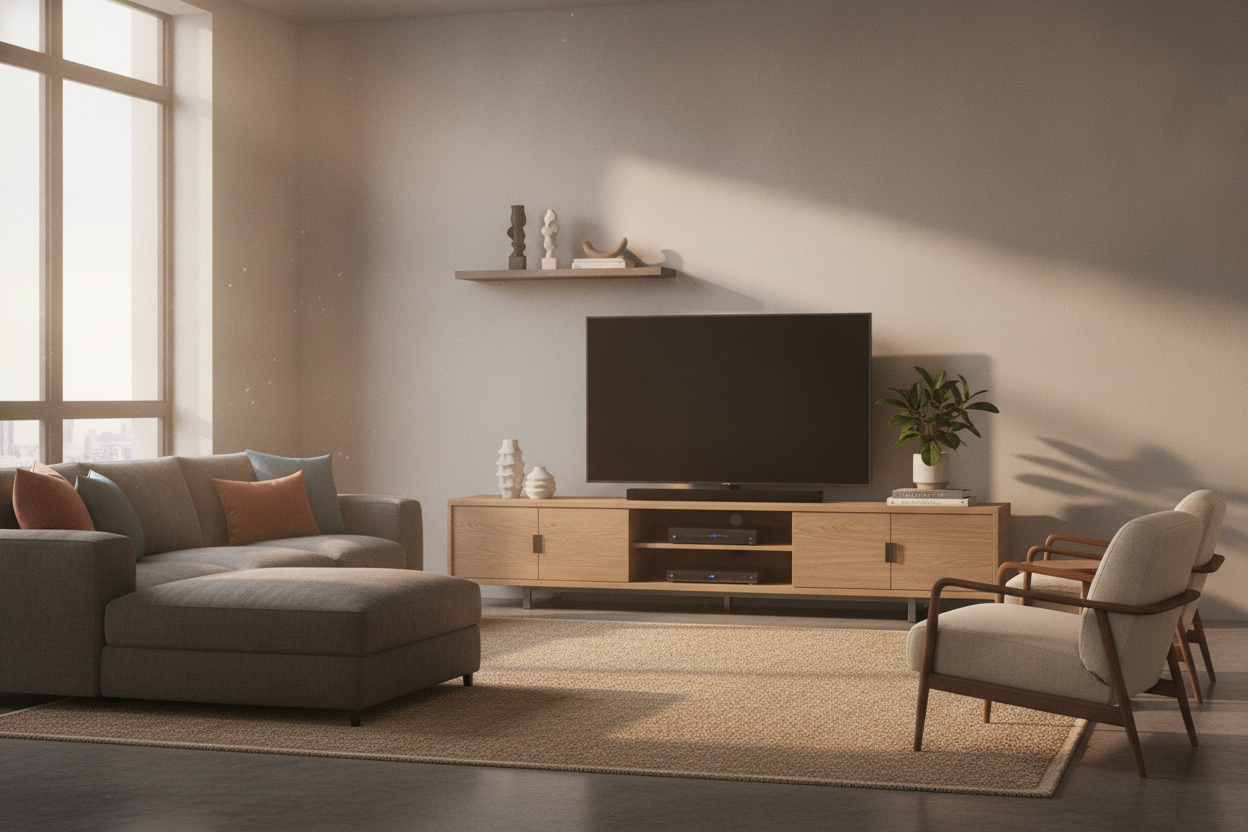
I spent three years staring at a TV mounted above my fireplace because a design blog told me it looked 'clean.' By the end of a single season of a prestige drama, I had a permanent crick in my neck and a massage therapist on speed dial. It is time we admit that the living room focal point should not require a chiropractor visit. Finding a 25 inch high tv stand might seem like a niche obsession, but it is the difference between a relaxing movie night and a physical therapy session.
Quick Takeaways
- Eye level is the goal; the center of your screen should align with your pupils when seated.
- Standard sofas sit 18 inches off the ground; a 25-inch console hits the sweet spot for a 55-65 inch TV.
- Avoid the 'fireplace mount' trap unless you enjoy physical discomfort and poor picture quality.
- Go wider, not taller, to fill a large wall without ruining the ergonomics.
The 'TV Too High' Epidemic (And Why We Fell For It)
We have entered a dark era of interior design where TVs are treated like gallery art. We hang them at standing eye level or, even worse, perch them on top of towering dining buffets. It looks great in a staged photo, but it is an ergonomic nightmare. When you sit on a sofa, your natural line of sight is significantly lower than when you are walking through the room.
Staring up at a screen for hours forces your neck muscles into a constant state of contraction. It is a subtle strain that builds up over time. If you find yourself sliding down your sofa just to get a better angle at the screen, your furniture is failing you. A 25 inch tv stand brings the action down to where your eyes actually live.
The Ergonomic Math Behind the 25 Inch Sweet Spot
Let us look at the numbers because they do not lie. Your average sofa seat height is about 18 inches. When you sit down, your eyes are roughly 24 to 30 inches above the seat, putting them about 42 to 48 inches from the floor. For a standard 65-inch TV, the vertical center of the screen is about 16 inches from the bottom.
If you use a 25 inch height tv stand, the center of that screen sits at 41 inches. That is almost a perfect match for your seated eye level. This is why I pair low sofas with a 19 inch high tv stand when dealing with ultra-modern, floor-hugging Italian leather pieces, but for a standard North American couch, 25 inches is the absolute gold standard for comfort.
Doesn't It Look Too Stubby in a Big Room?
A common fear is that a 25 inch tall tv stand will look like a 'dorm room' special in a house with ten-foot ceilings. I get it. A low piece of furniture on a massive blank wall can look a bit lonely. But the solution is never to go higher; the solution is to go wider.
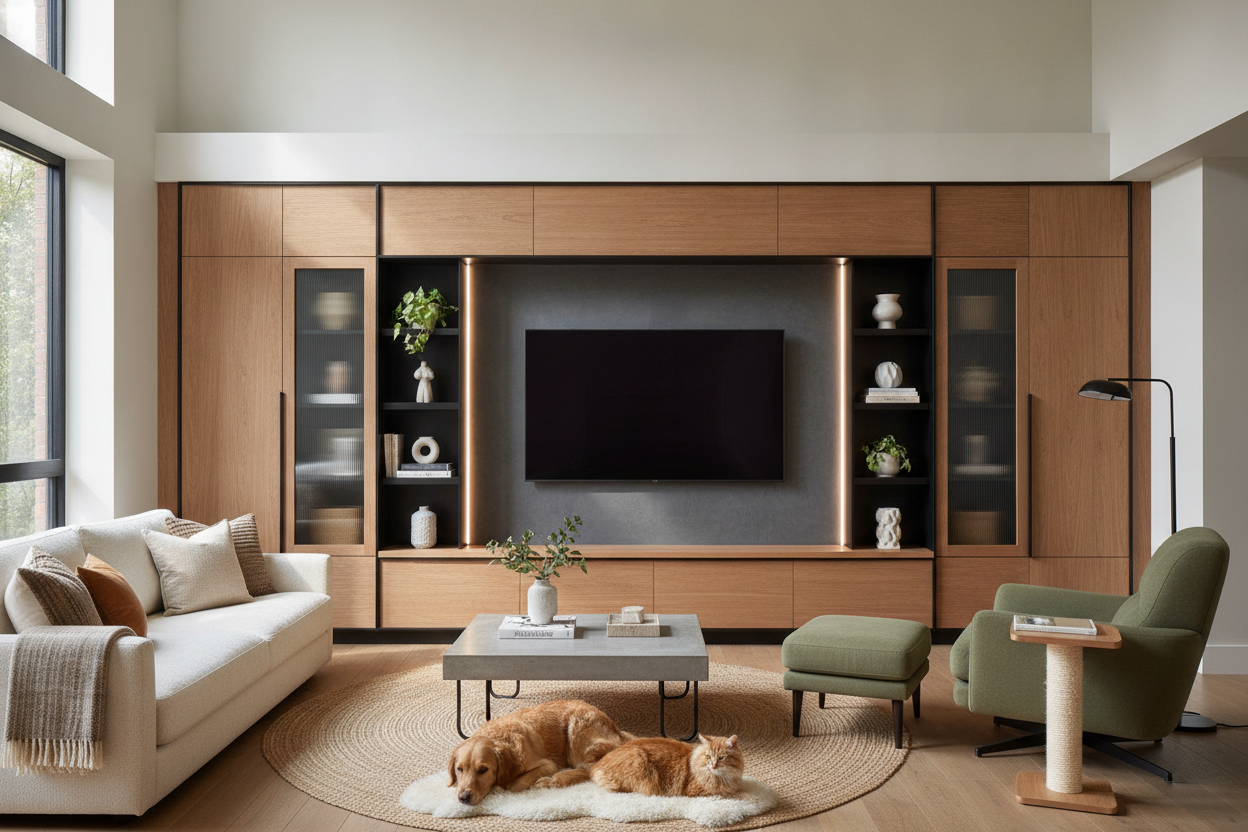
This is why a 74 inch tv stand is the sweet spot for larger living rooms. By spreading the footprint horizontally, you ground the room and provide enough visual weight to balance the TV without forcing your neck into a 30-degree upward tilt. You can also use gallery walls, sconces, or even a moody paint color behind the console to draw the eye up without moving the screen itself.
When You Actually Should Break the Rules
There are always exceptions. If you are shopping for a bedroom, a tv stand 29 inches high or taller is actually a better bet. Why? Because you are usually propped up on pillows with your head tilted back. Your natural line of sight in bed is angled toward the ceiling, so a higher mount makes sense.
The same goes for basement bars or 'man caves' with high-top seating. If you are sitting on a 30-inch bar stool, a tv stand 25 inches tall will have you looking down at your knees. But for the primary living room sofa? Stick to the 25-inch rule. Your cervical spine will thank you.
What to Look For When Shopping This Exact Height
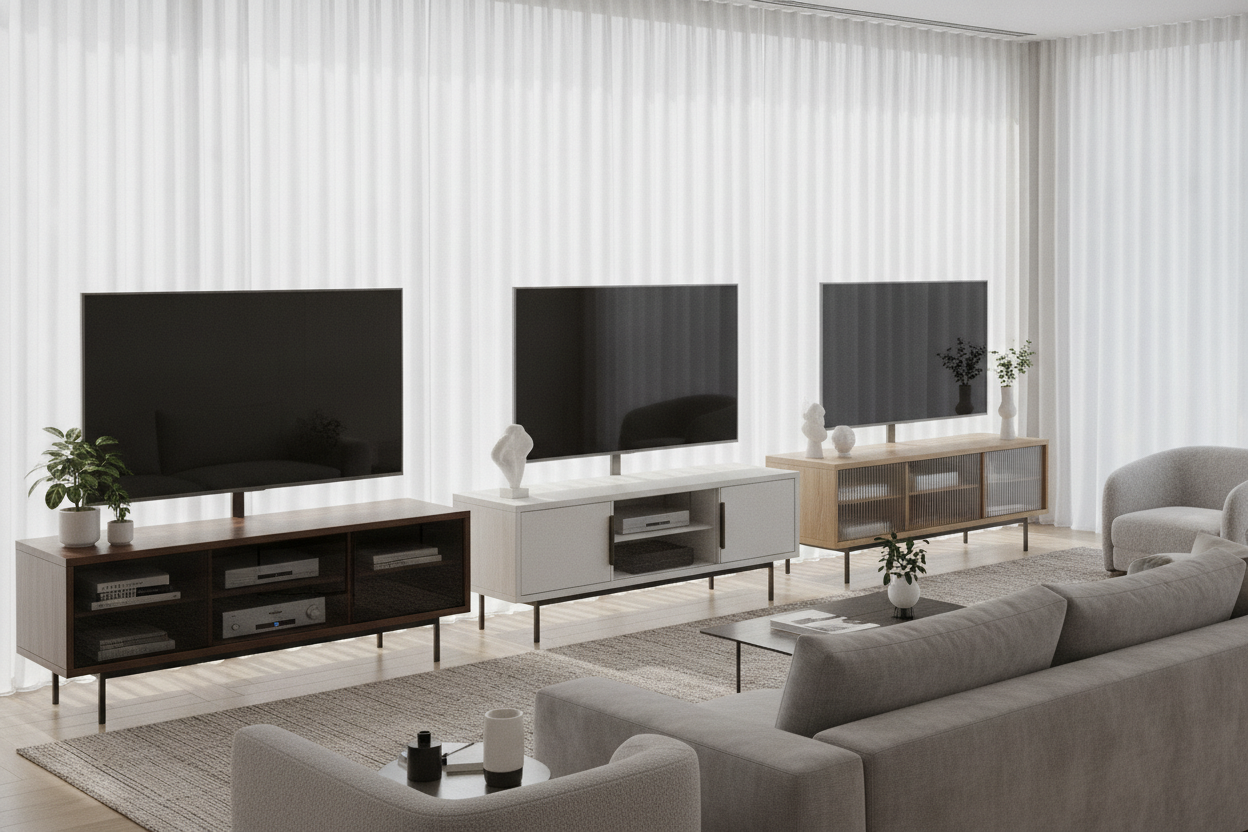
When you are hunting for tv stands 25 inches height, do not just look at the style. Check the materials. I have seen too many 'budget' options made of hollow-core particle board that start to sag under the weight of a decent soundbar and a 65-inch glass panel. Look for kiln-dried hardwoods or at least high-density MDF with real wood veneers.
Storage is the other big factor. At 25 inches, you usually have enough room for two rows of shelving. Make sure the internal clearance is at least 8 inches if you plan on hiding a modern gaming console or a beefy AV receiver. When you start browsing tv stands, use the height filters immediately to narrow your search so you don't fall in love with a 35-inch sideboard that will ruin your posture.
My Personal Console Disaster
I once bought a stunning mid-century sideboard that was 34 inches tall. It was solid walnut, had beautiful brass pulls, and I was convinced it was the 'grown-up' choice. I put my TV on it, sat down to watch a two-hour sci-fi epic, and by the intermission, I had a tension headache. It felt like sitting in the front row of a movie theater. I ended up selling that piece on a local marketplace for a loss and replaced it with a 25-inch unit. The room felt bigger, the TV looked better, and the headaches vanished instantly.
Frequently Asked Questions
Is 25 inches too low for a 55-inch TV?
Not at all. For a 55-inch screen, 25 inches is actually ideal for standard sofa seating. It keeps the center of the screen right at eye level.
Can I use a dresser as a TV stand?
Most dressers are 30 to 36 inches high. Unless you have an unusually high sofa or are watching from bed, a dresser is typically too tall for a comfortable living room setup.
How wide should my TV stand be?
Aim for a stand that is at least 6 to 10 inches wider than the TV itself. This prevents the 'top-heavy' look and provides better balance for the room's proportions.

Dejar un comentario
Este sitio está protegido por hCaptcha y se aplican la Política de privacidad de hCaptcha y los Términos del servicio.