










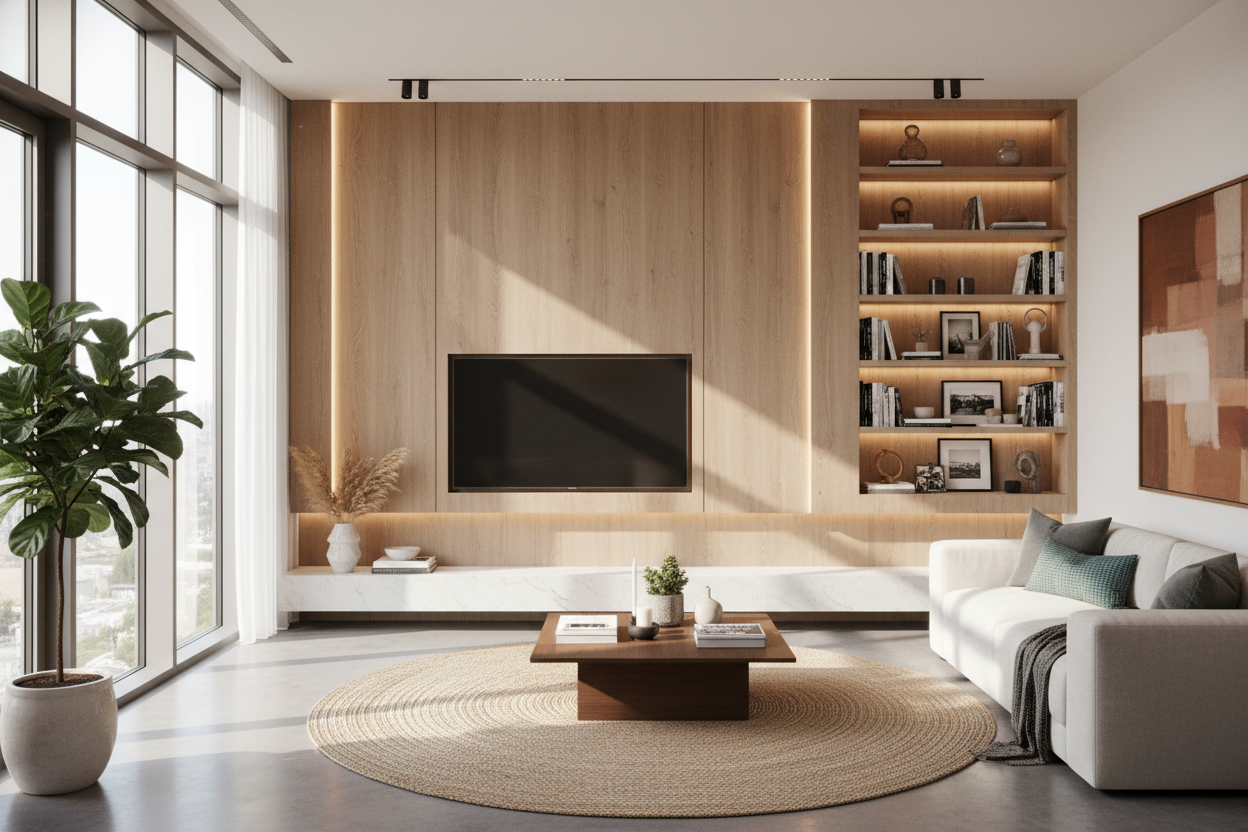
I spent three Saturdays trying to 'camouflage' my 65-inch OLED with a cluster of thrifted frames and a moody navy paint arch. The result? A cluttered mess that looked like a TV in a junk shop. It took me way too long to realize that a dedicated television wall unit isn't an admission of defeat—it's a design choice that actually works.
- Gallery walls create visual noise around a screen rather than hiding it.
- A structural wall unit provides the architectural 'weight' a large room needs.
- Proportions are everything: your furniture must be wider than your TV.
- Closed storage is the only way to truly hide the cable bird's nest.
The 'Gallery Wall TV Camouflage' Lie We All Fell For
We’ve all seen the Pinterest boards. You take a massive black rectangle and surround it with vintage botanical prints and quirky mirrors, hoping it magically turns into a Parisian salon. It doesn't. Instead, you end up with a tv unit wall that feels frantic. The eye doesn't know where to land, and the TV actually stands out more because it’s the only thing with a perfectly straight, modern edge in a sea of mismatched frames.
The problem is visual competition. When you try to make a screen 'disappear' with small decor, you’re fighting a losing battle against physics and light. A 65-inch screen is a heavy object, both literally and visually. Surrounding it with 8x10 prints just makes the scale feel off. I realized my living room felt like a waiting room because I was too afraid to let the tech have its own space. It was time to stop pretending the TV wasn't the focal point and start treating it like one.
Why I Finally Embraced the Television Wall Unit
The shift happened when I stopped looking for 'low profile' and started looking for 'structural.' A large, intentional piece of furniture does something a skinny console can't: it grounds the entire wall. It turns a floating screen into a built-in feature. I finally swapped my old console for a modern wall cabinet and the difference was immediate. The room felt taller, more expensive, and—ironically—less tech-heavy.
When you use a substantial piece of furniture, the TV becomes an integrated component of the cabinetry rather than a black hole on a blank wall. It gives your eyes a place to rest. I opted for a unit with thick gables and a back panel, which framed the screen like a piece of art. This architectural approach meant I didn't need to hang twenty different things to make the wall look 'finished.' The furniture did the heavy lifting for me.
Getting the Proportions Right for a TV Unit on Wall
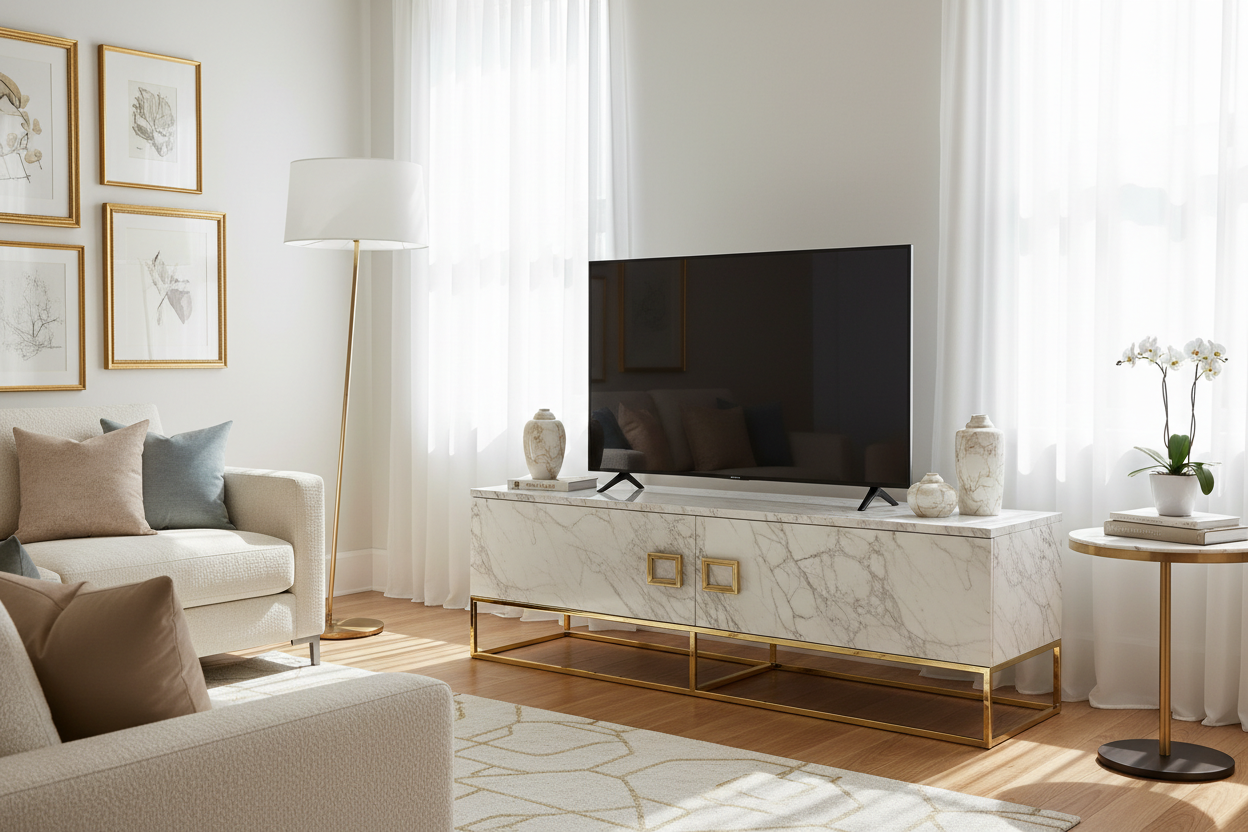
If your TV is 55 inches wide and your stand is 56 inches wide, you have a problem. It looks like a gymnast balancing on a toothpick. To get a tv unit on wall setup that looks professional, you need at least 6 to 10 inches of breathing room on either side of the screen. This horizontal 'runway' is what prevents the setup from looking top-heavy or accidental.
I usually recommend a wall mounted media console if you want to keep the floor clear but still need that wide visual base. Mounting the unit itself creates a clean line that draws the eye across the room, making the space feel wider. Just make sure you’re hitting studs. I once tried to mount a 72-inch MDF unit with cheap drywall anchors and watched it slowly pull the paper off the wall over three months. Use the right hardware or don't do it at all.
Maximizing Your Wall Storage TV Setup (Without Making It Look Cluttered)
The beauty of a wall storage tv system is the 'hide and seek' factor. You need closed cabinets for the ugly stuff: the router, the PS5, the tangled nest of HDMI cables that collect dust bunnies. But you need open shelving to keep it from looking like a giant locker. I follow the 70/30 rule: 70% closed storage, 30% curated display. This keeps the visual 'weight' balanced.
Color choice is also a massive factor. I’ve written before about why white media centers work so well—they bleed into the wall and make a massive storage unit feel almost weightless. If you have a small apartment, you might be tempted to browse standard TV stands to save space, but a full-height wall unit actually uses vertical real estate better. It draws the eye up to the ceiling, which is the oldest trick in the book for making a tiny living room feel like a loft.
My Personal Lesson: The 'Cheap Wood' Sag
A few years ago, I bought a gorgeous-looking wall unit made of thin particle board. It looked great for two weeks. Then, the weight of my books and the center-channel speaker started to bow the middle shelf. By month six, it looked like a sad smile. If you are buying a unit that spans more than 60 inches, look for reinforced shelving or solid wood supports. Don't let a $200 'deal' ruin your $2,000 living room aesthetic.
FAQ
How high should I mount my TV in a wall unit?
The center of the screen should be at eye level when you are sitting on your sofa. For most people, that's about 42 inches from the floor. Do not mount it 'fireplace height' unless you enjoy neck strain.
Can a wall unit hide all my cables?
Yes, that is their primary superpower. Look for units with integrated cable management holes or a 'back plane' that creates a 1-inch gap between the unit and the wall to run wires.
Are wall units too big for small apartments?
Actually, they are better. One large, cohesive piece of furniture looks much cleaner than four small, mismatched storage bins and a tiny TV stand. It reduces visual clutter significantly.

Dejar un comentario
Este sitio está protegido por hCaptcha y se aplican la Política de privacidad de hCaptcha y los Términos del servicio.