










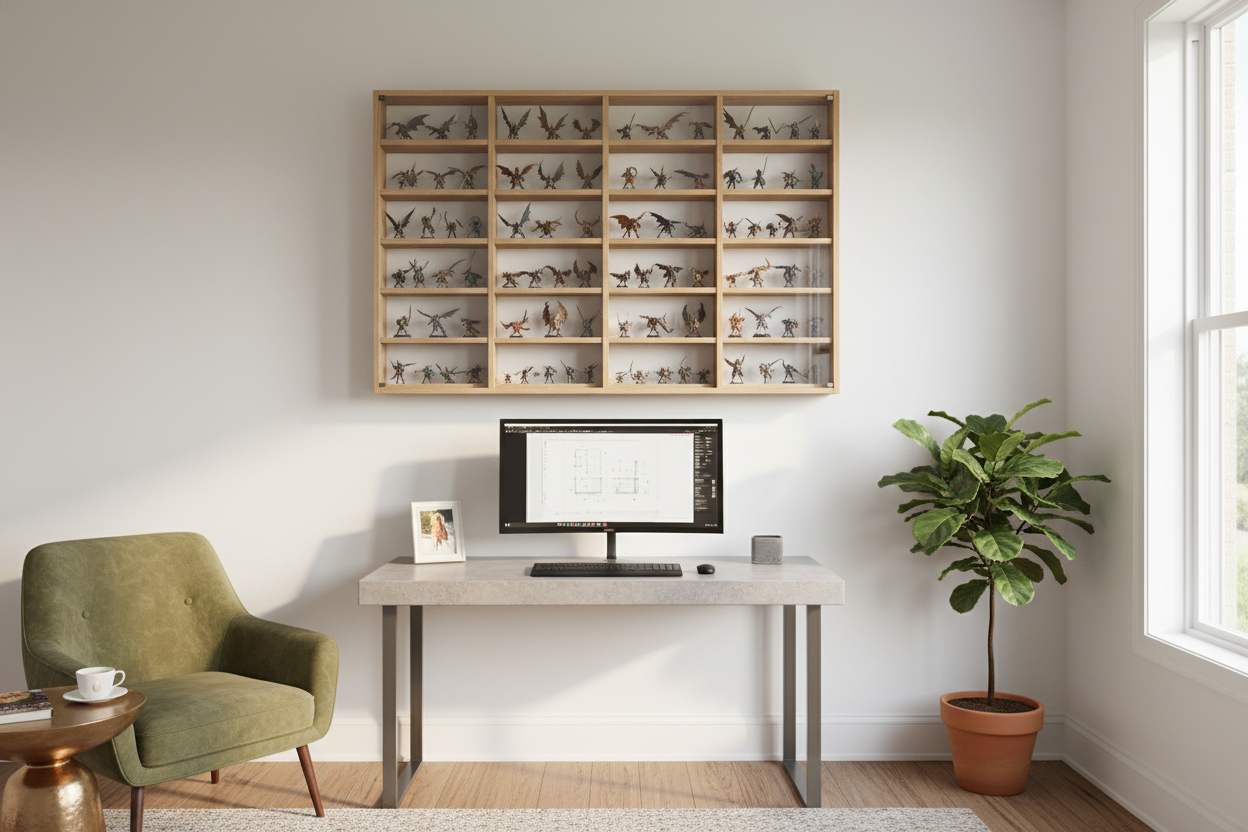
I spent three months apologizing to a three-inch vinyl cat. Every time I reached for my coffee or shifted my mouse, a domino effect of blind-box figures would tumble across my desk. It is the curse of the remote worker: the more we sit at our desks, the more little 'friends' we accumulate to keep us company. Eventually, my workspace felt less like a home office and more like a crowded subway car at rush hour.
The solution was getting them off the flat surfaces entirely. A figurine wall display case reclaimed my desk and actually made my collection look like it was meant to be there, rather than just being a pile of plastic I forgot to put away. If you are tired of the 'clutter creep,' it is time to look up at your walls.
Quick Takeaways
- Wall mounting clears about two square feet of prime desk real estate.
- Enclosed cases are non-negotiable unless you genuinely enjoy dusting with a Q-tip every weekend.
- Depth matters—ensure your deepest figure has at least a half-inch of clearance from the glass.
- Group by color or series to make the collection look like intentional decor rather than a toy store shelf.
The 'Desk Creep' Problem Nobody Talks About
It starts with one Smiski on your monitor stand. Then a Sonny Angel. Maybe a vintage ceramic owl you found at a flea market. Before you know it, your keyboard is surrounded by a tiny, judgment-filled audience. This 'desk creep' is a real productivity killer. Every time I dropped a pen, I had to play a high-stakes game of Operation to retrieve it without toppling a dozen figures.
I struggled with this for a year because I Refuse to Box Up Heirlooms: Why I Use a Display Case for Ornaments—and I consider my $15 blind boxes to be modern heirlooms. Sticking them in a dark storage bin felt like a waste. You bought them because they make you happy, so you should be able to see them without them being in the way of your mouse pad.
Why I Skipped Floating Shelves for a Figurine Wall Display Case
Floating shelves are a trap for miniatures. They look great in Pinterest photos, but in real life, they are just high-altitude dust magnets. If you have fifty small items on an open shelf, you have to move fifty items every time you want to wipe it down. That is a chore I will never actually do.
A dedicated enclosed unit creates a visual 'frame' for your collection. It turns a chaotic pile into a curated gallery. Plus, the acrylic or glass door keeps the cat from batting your rarest figures onto the floor. I prefer a solid wood frame with a clear front; it feels more like a piece of furniture and less like a retail fixture.
How to Style a Display Box for Figurines Like Grown-Up Decor
The secret to making a display box for figurines look like actual interior design is negative space. Do not pack the figures shoulder-to-shoulder. Give them room to breathe. I like to follow the 'rule of threes'—grouping three similar figures together and then leaving a small gap before the next set.
Color-blocking is another pro move. If you have a bunch of disparate characters, try arranging them in a rainbow gradient. It ties the whole display together and makes it feel cohesive. If your case has adjustable shelves, use them to create varying heights so the eye doesn't get bored looking at a flat line of heads.
Getting the Depth Exactly Right
Before you buy, measure your deepest figure from back to front. Most standard wall cases are about 3 to 4 inches deep. If you have a figure with a long tail or a protruding weapon, it might be 3.5 inches deep, which is a tight squeeze for a 4-inch case. You want at least a little bit of air between the figure and the door to avoid that 'squished' look. I once bought a slim case that forced my favorite dragon to face sideways for six months because his wingspan was too wide.
What Happens When Your Collection Outgrows the Wall?
Eventually, you will run out of empty wall real estate. When that happens, you have to get creative with your layout. I usually start looking for a corner display case to snag that weird dead space between a window and a door frame. It is a great way to transition from a single wall unit to a more dedicated display area.
If you have moved past the 3-inch miniatures and started collecting 1/6 scale statues or heavy-duty resin pieces, you need to move to the floor. A 4 layer glass door display case is the heavy-duty alternative for when your hobby starts taking up serious physical weight. Wall studs have their limits, and you don't want five pounds of resin pulling your drywall down at 2 AM.
Personal Experience: The Mounting Mistake
I once tried to save five minutes by using those 'heavy duty' adhesive strips to mount an acrylic case. It stayed up for exactly four hours before the weight of the plastic figures caused the whole thing to slide down the wall, taking a chunk of paint with it. Now, I only use proper screw-in anchors. If you are renting, just patch the holes when you move. It is much better than replacing a dozen broken collectibles.
FAQ
Do I need built-in LED lights?
They are nice but not essential if your room has good natural light. If the case is in a dark corner, battery-operated puck lights are a cheap way to add glow without wiring anything into the wall.
How do I stop figures from falling over inside the case?
Use a tiny dot of museum putty (QuakeHold) on the bottom of their feet. It is clear, removable, and keeps them from doing a face-plant if someone slams a door nearby.
Is acrylic better than glass?
Acrylic is lighter and safer if you have kids or pets, but it scratches easily. Glass is heavier and harder to mount, but it stays crystal clear for decades and is much easier to clean without leaving swirl marks.



Dejar un comentario
Este sitio está protegido por hCaptcha y se aplican la Política de privacidad de hCaptcha y los Términos del servicio.