










If you find yourself battling headaches or squinting at your monitor by 3 PM, the culprit is often hanging right above your head. In my years designing corporate HQs and home offices, I’ve found that harsh, direct downlighting is the enemy of productivity. The solution isn't just a better desk lamp; it is a fundamental shift toward indirect office lighting.
Quick Decision Guide: Key Features to Look For
If you are planning a lighting upgrade, focus on these critical specifications to ensure the light serves the space effectively:
- Color Temperature: Aim for 3500K to 4000K. This provides a neutral white light that aids concentration without the clinical feel of daylight bulbs (5000K+).
- High CRI (Color Rendering Index): Look for a CRI of 90+. This ensures that wood grains on your desk and paint colors on your walls look authentic, not washed out.
- Diffusion Method: Ensure the fixture has a frosted lens or is positioned to bounce light off a matte surface to eliminate "hot spots."
- Dimmability: Essential for controlling contrast ratios between your screen brightness and the ambient room light.
The Ergonomics of Bounced Light
Indirect lighting works by aiming light sources at adjacent surfaces—usually walls or ceilings—reflecting the illumination back into the room. This technique reduces the contrast between your bright computer screen and the dark room behind it, a major cause of Computer Vision Syndrome.
From an ergonomic standpoint, the goal is to create a soft wash of light that fills the volume of the room without creating shadows on your work surface. Unlike direct downlights, which cast shadows from your head onto your paperwork, indirect sources create a shadow-free environment ideal for drafting, reading, and typing.
Choosing the Right Fixtures and Materials
Implementing this strategy requires more than just buying a lamp; it requires understanding how light interacts with your furniture and architecture.
Linear Suspensions and Uplighting
For high ceilings, I often specify linear suspension fixtures with an "uplight" component. These hang over the desk but shoot light upward. However, you must consider the ceiling finish. If your ceiling is textured (like popcorn) or has a high-gloss finish, uplighting will highlight imperfections or create distracting glare. A flat, matte white ceiling is the best canvas for indirect lighting.
Cove Lighting and LED Strips
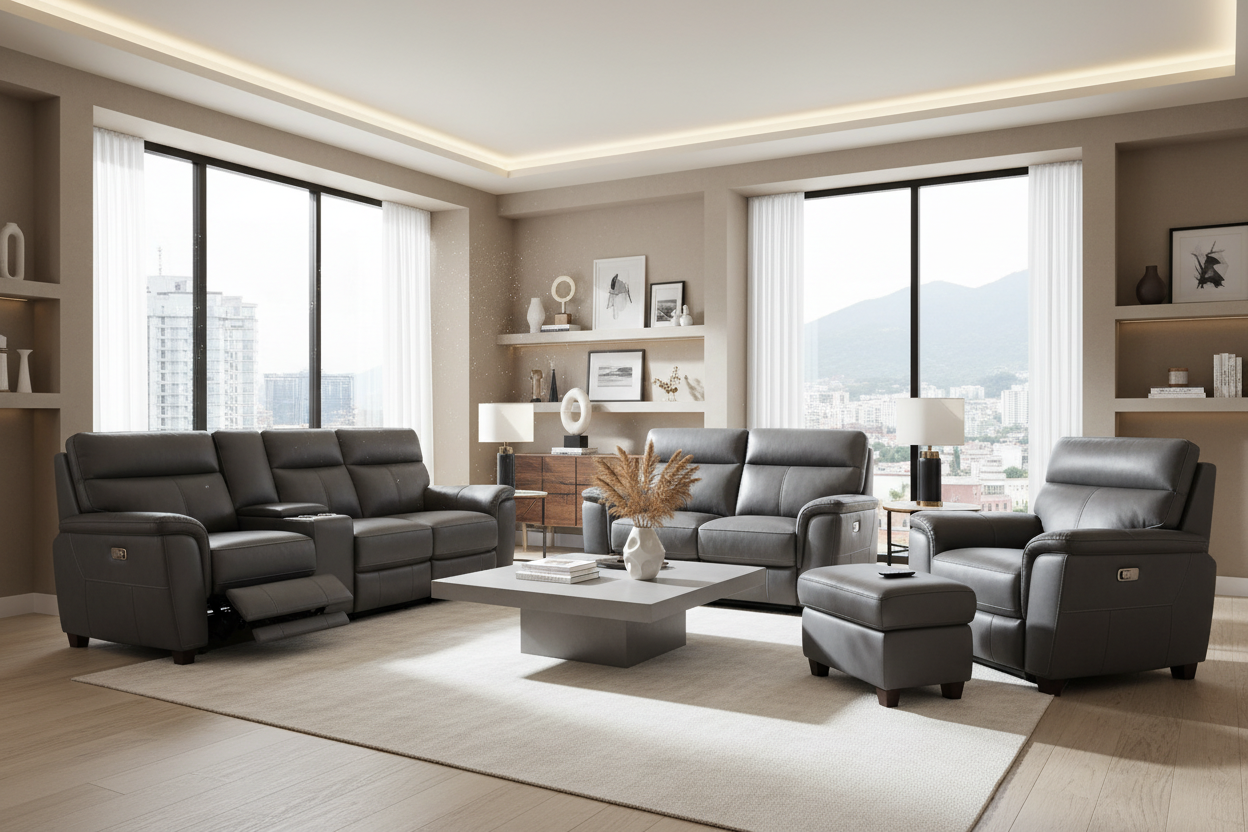
Architectural cove lighting is the gold standard for a luxury aesthetic. This involves hiding high-output LED strips behind crown molding or dropped ceiling soffits. When selecting LED tape, pay attention to "pitch" (the distance between individual diodes). If the pitch is too wide, you will see a dotted line reflection rather than a smooth glow. Always use a diffuser channel.
Floor Lamps as Architectural Tools
In smaller home offices where hardwiring isn't an option, heavy-weighted torchère floor lamps are effective. Place them in corners to expand the visual perception of space. The light bouncing off the corner walls pushes the boundaries of the room outward, making a cramped office feel more breathable.
Visual Balance and Layering
While indirect light provides the ambient foundation, it should not be the only source. A room lit entirely by indirect light can feel cloudy or flat. To add depth and visual interest, layer in a dedicated task lamp with a focused beam for detailed work. This combination creates a hierarchy of light: the indirect glow manages eye comfort, while the task light draws focus to the work at hand.
My Personal Take on Indirect Office Lighting
I learned the hard way that paint finish matters just as much as the fixture itself. A few years ago, I designed a minimalist office for a client who insisted on a "high-gloss lacquer" finish for their ceiling to make the room feel taller. We installed powerful linear uplights to wash the ceiling.
It was a disaster. Instead of a soft, diffused glow, the glossy paint acted like a mirror. You could see the raw reflection of the LED bulbs and the dust inside the fixture channels. It created a harsh glare that was worse than standard fluorescent tubes. We had to sand the ceiling down and repaint it in a flat matte finish. The lesson? Indirect lighting is a partnership between the bulb and the surface it hits. If you don't have a matte surface to bounce off, the effect fails.
Conclusion
Treating light as a material is just as important as selecting your desk chair. By shifting to indirect sources, you soften the visual noise of your workspace, allowing you to work longer with less fatigue. It is an investment in your health that happens to look incredibly sophisticated.
Frequently Asked Questions
Is indirect lighting bright enough for detailed paperwork?
On its own, it can be, provided you have enough lumens bouncing off the ceiling. However, for fine print or drafting, I always recommend pairing ambient indirect light with a direct task lamp to prevent eye strain.
What is the best wall color for indirect lighting?
Lighter colors with high Light Reflectance Value (LRV) work best. White, off-white, and light greys reflect the most light. Dark walls absorb the light, meaning you will need significantly more powerful fixtures to achieve the same brightness.
Does indirect lighting require special wiring?
Not necessarily. While architectural cove lighting requires hardwiring, you can achieve a similar effect using plug-in floor lamps with upward-facing shades or by mounting plug-in LED bars on top of tall bookcases or cabinets.

Dejar un comentario
Este sitio está protegido por hCaptcha y se aplican la Política de privacidad de hCaptcha y los Términos del servicio.