










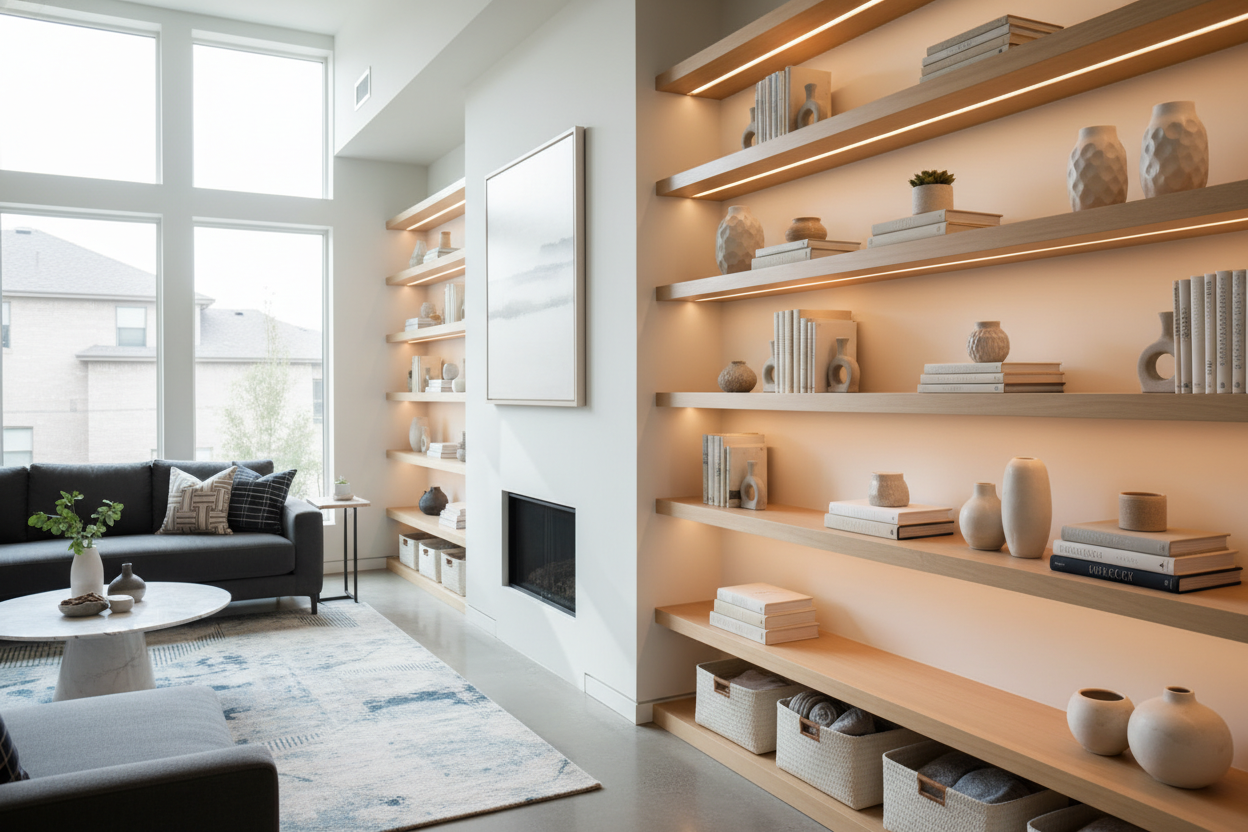
I spent three hours last Saturday night hunched over a bookshelf with a roll of 3M tape and a tangled mess of wires, only to flip the switch and realize my living room looked like a cheap airport terminal. There is a specific kind of heartbreak that comes from trying to install lights on shelf units yourself and failing. If you can see the individual glowing dots of the LED strip reflecting off your books, you haven't upgraded your room; you've just added a distraction.
Quick Takeaways
- Never leave LED diodes exposed; always use a frosted diffuser channel.
- Place lights toward the front of the shelf, facing inward, to avoid glare.
- Shelf backlighting works best for silhouettes, while shelf spotlights are for focal points.
- Cable management is 90% of the work in any led shelf lighting system.
The 'Runway' Mistake You're Probably Making
The biggest crime in shelf lighting is the 'runway' effect. This happens when you stick bare led lights for shelves directly onto the wood. Because most shelving has a semi-gloss finish or holds glass objects, those tiny LED diodes reflect everywhere, creating harsh hot spots. It looks messy and cheap. My first attempt at floating shelf lighting looked exactly like this until I realized I needed a diffuser.
A diffuser is just a slim aluminum channel with a frosted plastic cover. It softens the light into a continuous glow. If you are doing in shelf lighting, mount these channels about an inch from the front edge of the shelf, facing back toward your items. This way, the light hits the front of your decor instead of just washing out the wall behind them.
Backlighting vs. Up Lighting: What Goes Where?
How to light shelves depends entirely on what you are displaying. If you have a collection of glassware or translucent bottles, shelf backlighting is your best friend. By placing the light strip at the rear of the shelf, you create a glowing halo that makes glass pop. However, if you are lighting heavy books or solid objects, backlighting just creates a dark silhouette.
For a more dramatic, museum-style look, shelf up lighting or small shelf spotlights can highlight specific textures. I usually prefer a top shelf light for the very highest level to wash the whole unit in a soft glow. Honestly, a well-executed bookcase with light can provide enough ambient glow to replace that bulky floor lamp you never liked anyway.
How to Hide the Cables (No Drywall Repair Required)
Nothing kills the vibe faster than a black power cord dangling across a white wall. When installing a led shelf lighting system, you have to get creative. If your shelves have a back panel, drill a small 1/4-inch hole in the corner of each level and feed the wires through the back. Use white electrical tape or plastic raceways to pinned the main trunk line to the corner of the wall.
If you are using adjustable shelf storage, you can often hide the wires in the vertical metal tracks or behind the modular backing panels. Use small binder clips or adhesive cable mounts to keep everything tight against the underside of the shelves. If the wires are sagging, the whole project looks unfinished.
When to Just Buy a Pre-Lit Unit Instead
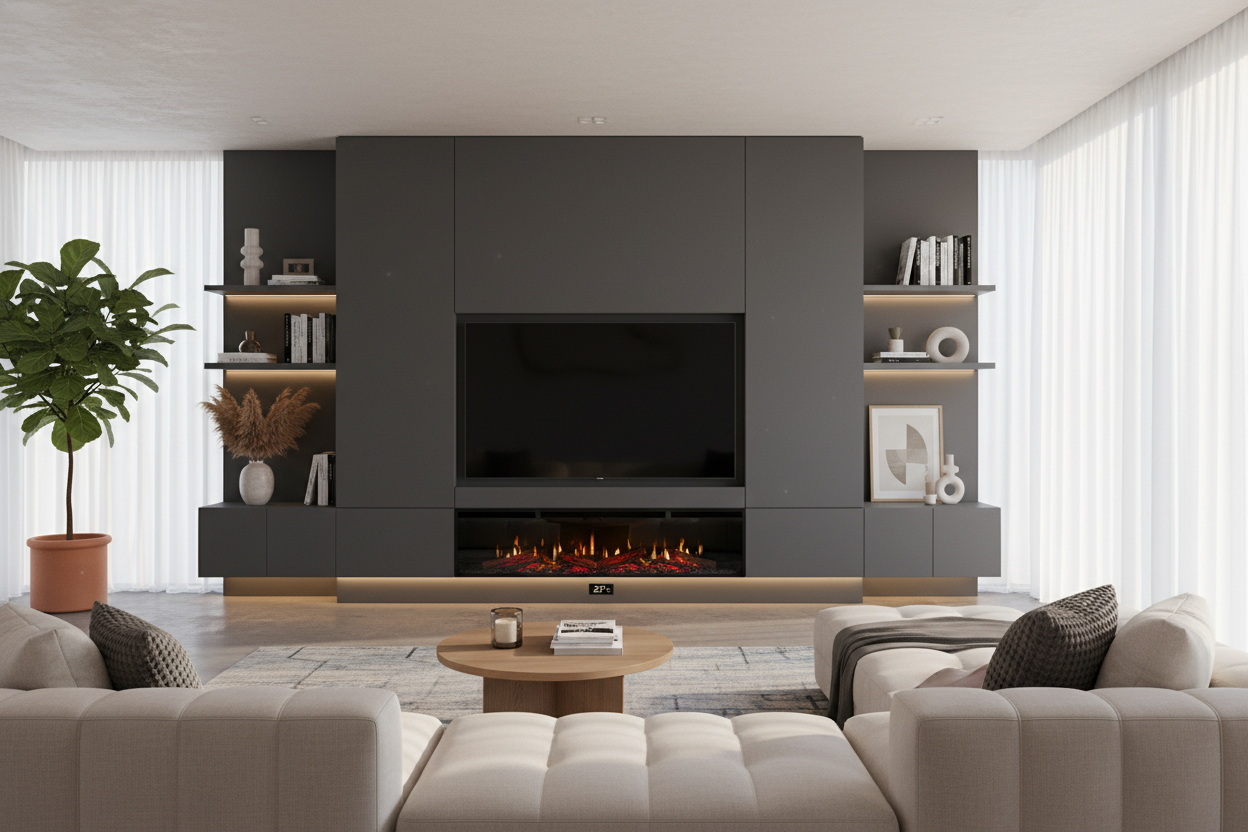
I’ll be honest: retrofitting lights is a massive pain. Between soldering connections, hiding drivers, and getting the diffusion right, it’s a full weekend project. If you aren't the DIY type, you are better off buying a unit with integrated lighting. A tall bookcase with dual cabinets usually comes with pre-routed channels and hidden wiring, which saves you the headache of trying to hide cords yourself.
Personal Experience: The Sticky Tape Disaster
I once tried to use cheap battery-powered puck lights on my shelves. Within two weeks, the adhesive failed on three of them, and they fell off in the middle of the night, shattering a ceramic vase. Beyond the mess, the light was inconsistent and the batteries died every four days. If you're going to do it, hardwire it. The effort of routing a real power supply is worth it to avoid the 'dead battery' look.
FAQ
What is the best color temperature for shelves?
Stick to 2700K or 3000K (Warm White). Anything higher than 4000K starts to look like a hospital lab or a high-end refrigerator.
Can I use battery lights for my shelves?
You can, but you'll regret it. They are never bright enough, and the cost of replacing batteries—or the annoyance of recharging them—means you'll eventually stop turning them on.
How do I stop the light from glaring in my eyes?
Install a small 'lip' or molding on the front of the shelf to hide the light strip, or use an angled aluminum channel that directs the light at a 45-degree angle toward the back of the shelf.

Dejar un comentario
Este sitio está protegido por hCaptcha y se aplican la Política de privacidad de hCaptcha y los Términos del servicio.