










There is a specific kind of visual noise that kills productivity faster than anything else: clutter. You sit down to work, but your eyes drift to the stack of papers, the tangled cords, or the reference books piled precariously on the corner of your desk. As a designer, I often tell clients that a desk is for working, but the surrounding joinery is for thinking. The backbone of a truly functional home office isn't the chair or the view—it is well-designed study cabinets.
Key Features to Look For
- Material Integrity: Opt for high-density fiberboard (HDF) or solid wood veneers to prevent shelves from bowing under the weight of books.
- Depth Considerations: Standard overhead cabinets should be 12-14 inches deep; base units can go up to 24 inches for printer storage.
- Hardware Quality: Soft-close hinges and full-extension drawer slides are non-negotiable for longevity.
- Integrated Lighting: Look for routed channels for LED strips to provide task lighting without glare.
Choosing the Right Material for Longevity
When specifying cabinets for study room interiors, the finish dictates both the durability and the mood of the room. While solid wood is the gold standard for heritage looks, it reacts to humidity and can warp if not properly kiln-dried.
For a modern, seamless aesthetic, I often recommend high-pressure laminates (HPL) or architectural veneers. These offer the tactile warmth of wood but with superior resistance to scratches and coffee rings. If you are going for a painted look, ensure the millwork is finished with a catalytic conversion varnish rather than standard latex paint; this prevents that sticky feeling where books adhere to the shelf surface in humid weather.
Space Planning and Ergonomics
The placement of your study room cabinets defines the flow of the room. A common error is placing deep storage overhead directly above the monitor. This creates a claustrophobic "heavy brow" effect that shadows your workspace.
Vertical Utilization
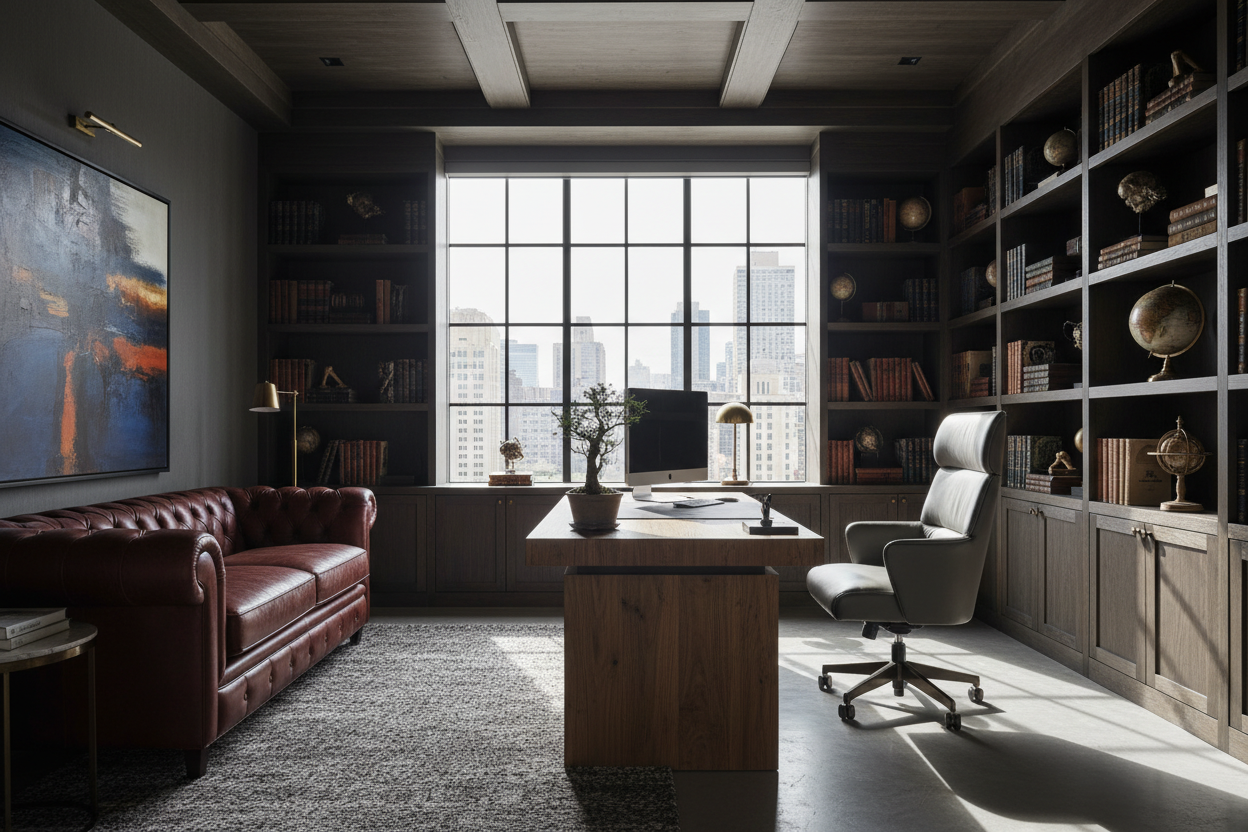
Always take your cabinetry floor-to-ceiling. Even if you cannot reach the top shelf without a ladder, that space is invaluable for archiving tax returns or old project files. Visually, floor-to-ceiling joinery lifts the eye and makes a small study feel grander and more intentional.
The "Active" Zone
Keep the area within arm's reach reserved for daily essentials. I prefer incorporating shallow drawers immediately under the desktop or to the immediate right (for right-handed users) to house stationery. This keeps the surface pristine.
Visual Balance: Open vs. Closed Storage
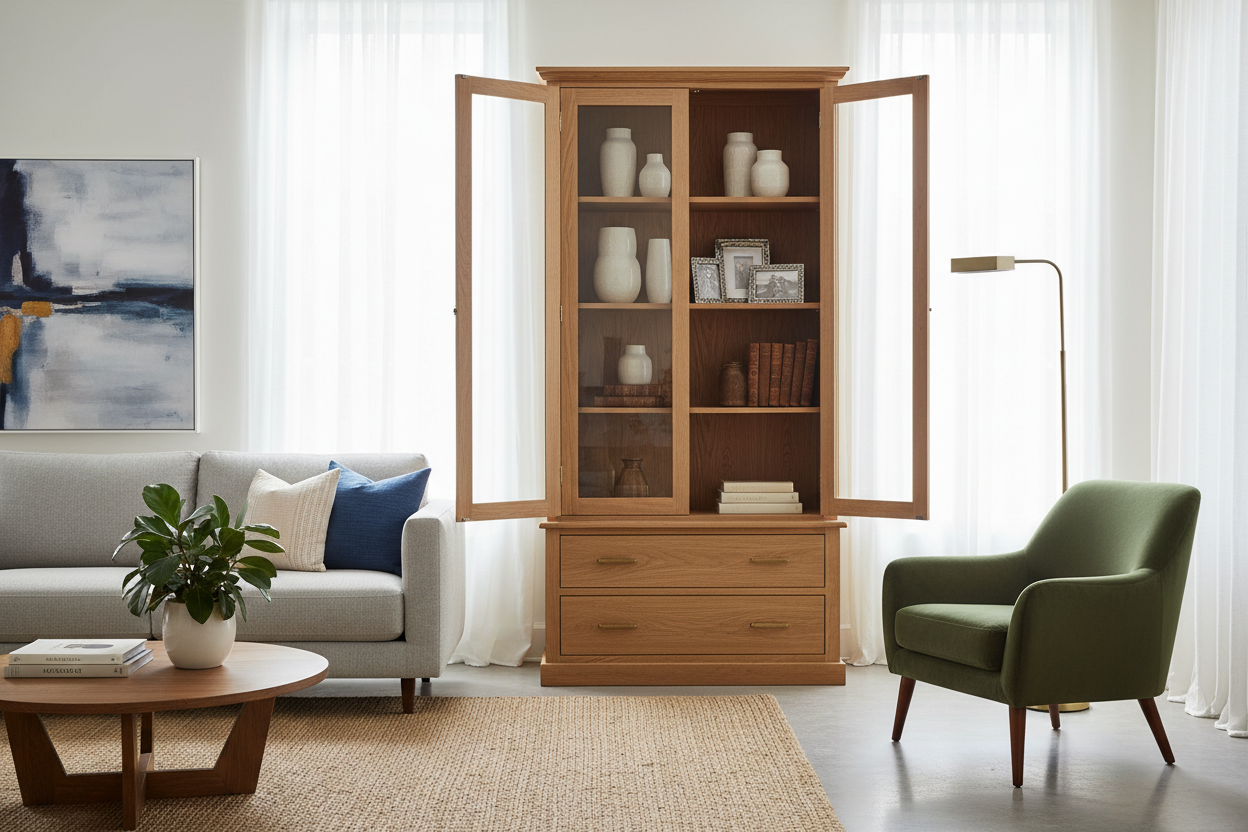
A wall of solid doors can feel oppressive, like a locker room. Conversely, entirely open shelving requires you to be an immaculate curator of your own belongings. The most sophisticated designs use a 70/30 rule: 70% closed storage for ugly necessities (routers, binders, printer paper) and 30% open display for curated books and sculptural objects. This balance allows the cabinetry to breathe and serve as a focal point rather than just a storage locker.
Lessons from My Own Projects
I learned a hard lesson about hardware during a renovation for a client who insisted on a sleek, handle-less look for their study. We installed push-to-open latches on matte navy cabinetry. It looked stunning in the photos.
However, three months later, the client called me back. The mechanism on the most frequently used drawer had jammed because push-latches often struggle with heavy loads, and the area around the latch was shiny with oil from fingerprints. Since then, I always advise clients: if you want a minimal look, use an edge-pull or a routed finger groove rather than a mechanical push-latch. It’s a small detail, but it saves you from constantly wiping down the face of your joinery just to keep it looking clean.
Conclusion
Investing in the right storage is an investment in your mental clarity. Whether you choose custom millwork or modular solutions, ensure your cabinetry serves both your workflow and your aesthetic. A well-organized space doesn't just store your items; it respects your time.
Frequently Asked Questions
What is the ideal depth for study cabinets?
For upper cabinets, 12 to 14 inches is standard to accommodate binders without encroaching on head space. Base cabinets are typically 24 inches deep, matching standard desk depths.
Should I install lighting inside my cabinets?
Yes, particularly for open shelving or glass-fronted units. recessed LED strip lighting adds depth and ambient glow, turning the cabinetry into an architectural feature rather than a dark block.
How do I hide cables in built-in units?
Plan for grommets and internal raceways before installation. Ask your carpenter to create a "false back" in the lower cabinets; this allows you to run wires behind the storage space while keeping the interior looking neat.

Dejar un comentario
Este sitio está protegido por hCaptcha y se aplican la Política de privacidad de hCaptcha y los Términos del servicio.