










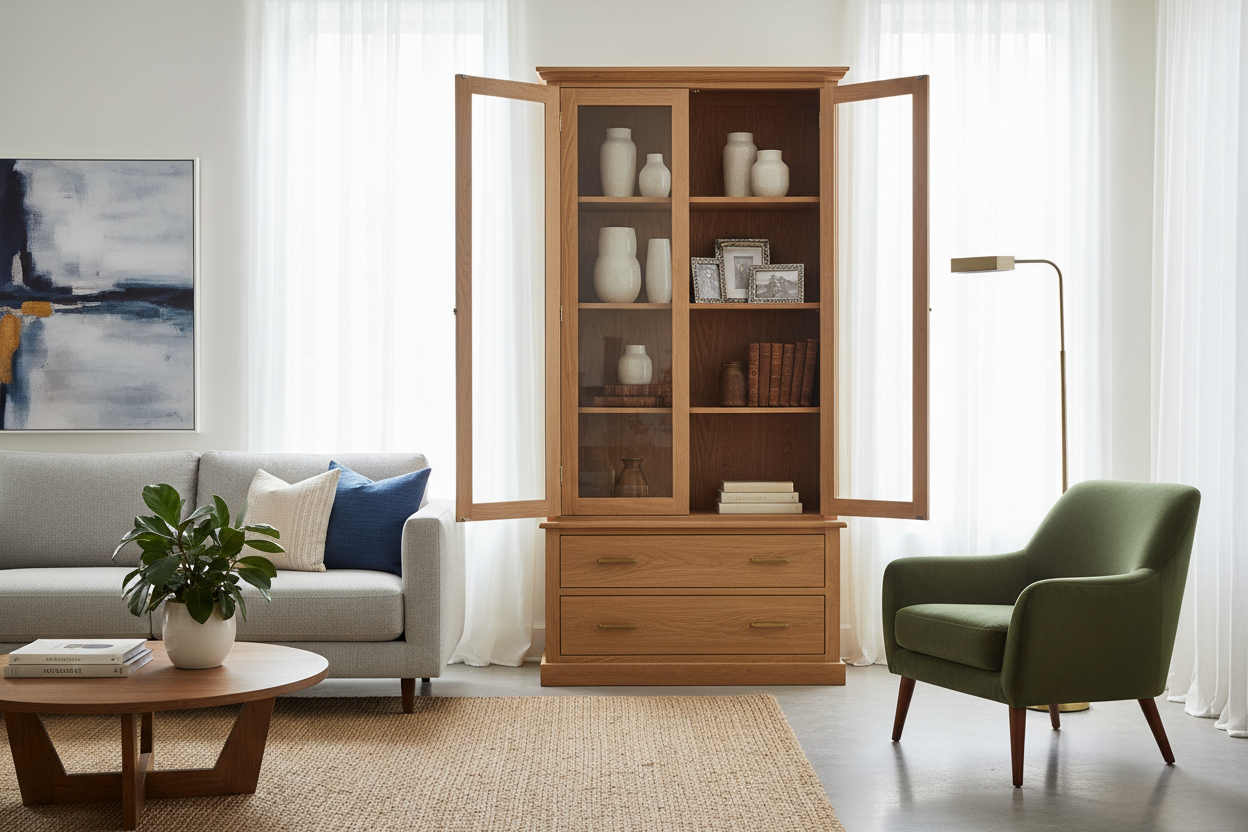
We all have those pieces—travel souvenirs, vintage pottery, a growing collection of design books—that end up crammed onto a floating shelf or hidden away in a box because there simply isn't a dedicated place for them. Finding storage that actually showcases your items without making the room feel like a crowded antique shop is a common design hurdle.
Enter the solid oak display cabinet. It is one of the few furniture pieces that bridges the gap between heavy-duty storage and visual delicacy. In this guide, I will walk you through what to look for, how to place it in your floor plan, and whether this substantial investment makes sense for your home.
Quick Decision Guide
- Check the floor joists: Solid oak is incredibly heavy; ensure your floor can support the weight, especially in older homes or upper levels.
- Look for tempered glass: Standard glass is a safety hazard in a high-traffic living room. Always verify the doors use tempered panes.
- Consider internal lighting: Oak absorbs light. A cabinet without built-in or added LED lighting will leave your displayed items sitting in shadows.
- Measure the door swing: Allow at least 24 inches of clearance in front of the cabinet for the doors to open comfortably.
Understanding the Build Quality
White Oak vs. Red Oak
Not all oak is created equal. In the North American market, you will primarily see white oak and red oak. White oak features a tighter grain pattern and naturally resists moisture, making it a favorite for modern and transitional interiors. Red oak has a more prominent, swirling grain with warmer, pinkish undertones that lean traditional. If you want a cleaner silhouette that blends with contemporary decor, white oak is usually the better choice.
The Joinery Matters
When you are paying for solid wood, the construction should match the material's lifespan. Look for dovetail or mortise-and-tenon joints, especially on any interior drawers. If you see staples or excessive glue residue on the back panel, walk away. A true heirloom piece allows the wood to expand and contract with seasonal humidity changes without cracking.
Placement and Visual Weight
Balancing the Room
A solid oak display cabinet carries immense visual weight. If you place it on the same side of the room as a dark leather sectional or a brick fireplace, the space will feel lopsided. I always recommend placing heavy case goods opposite another substantial element—like a large window or a sofa—to keep the room balanced.
Managing Clearances
Scale is the number one issue I see when clients buy large case goods. A common mistake is measuring only the footprint of the cabinet. You must account for the outswing of the glass doors. If the cabinet sits too close to a dining chair or a coffee table, accessing your items becomes a frustrating chore. Leave a minimum 36-inch walkway, plus the door swing radius.
Curating Your Display
A glass-front cabinet puts your styling skills on full display. To avoid a cluttered look, embrace negative space. Do not fill every square inch of the shelves. Group items in odd numbers—threes and fives work best—and vary the heights. Pair a tall ceramic vase with a short stack of books and a low, textured bowl. The oak background provides a beautiful, natural canvas, so neutral and earth-toned objects often pop best against the wood grain.
Designer's Honest Take
I love specifying oak case goods for my clients, but I have to be honest about the realities of living with them. A few years ago, I placed a stunning, 300-pound French oak cabinet in a client's 1920s Tudor home. The piece was gorgeous, but I learned a hard lesson about vintage floors.
Because the original hardwood floors were slightly uneven, the cabinet leaned just a fraction of an inch. That tiny tilt put pressure on the frame, causing the glass doors to stick and rattle every time someone walked heavily through the room. We had to empty the entire piece, carefully shim the back legs, and anchor it to the wall studs to stabilize it. If you are buying solid wood, anchoring is not optional—it is a safety necessity, and leveling is crucial for the hardware to function properly.
Frequently Asked Questions
How do I clean and maintain solid oak?
Dust regularly with a dry, soft microfiber cloth. Avoid silicone-based aerosol sprays, as they leave a cloudy residue over time. Twice a year, apply a high-quality furniture wax or oil—depending on the manufacturer's finish—to keep the wood from drying out.
Does a display cabinet make a room look smaller?
It can, if the piece is too dark or bulky for the space. However, cabinets with glass doors and glass interior shelves allow light to pass through, creating a sense of depth that actually makes the room feel larger than a solid bookcase would.
Can I add lighting to an existing cabinet?
Absolutely. If your cabinet did not come with hardwired lighting, battery-operated LED puck lights or adhesive LED strips are excellent, non-destructive options. Place them at the front edge of the shelves facing inward to avoid glaring directly into the room.


Dejar un comentario
Este sitio está protegido por hCaptcha y se aplican la Política de privacidad de hCaptcha y los Términos del servicio.