










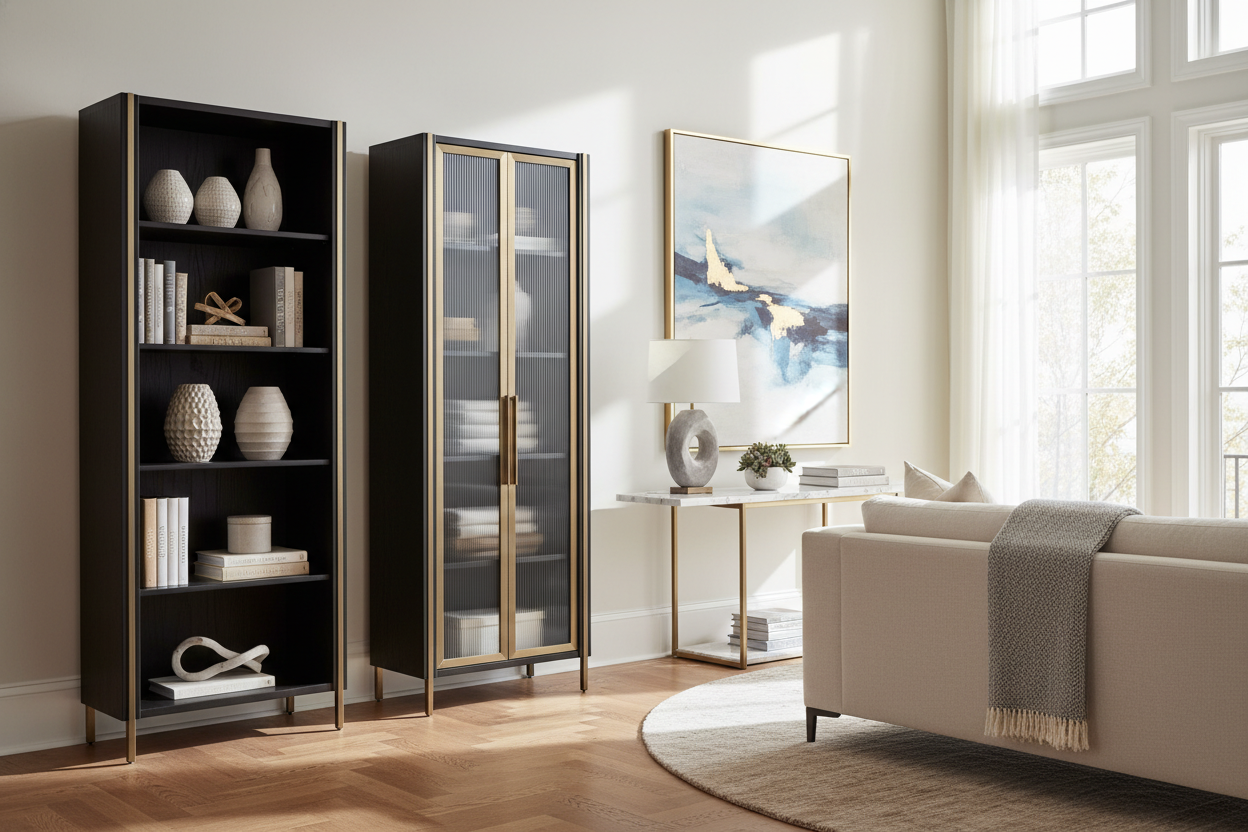
Have you ever looked at your living room and felt like everything was sinking into the floor? Sofas, coffee tables, media consoles—they all naturally sit below waist level. The result is a bottom-heavy room with miles of awkward, empty wall space above. You need height, but a massive built-in bookcase feels like too much commitment. That is exactly when a tall accent cabinet becomes an interior designer's best friend.
Beyond just giving you a place to hide everyday clutter, these vertical pieces act as architectural anchors. They draw the eye upward, balancing the visual weight of your space while providing highly functional storage. In this guide, I will walk you through exactly how to scale, place, and style these vertical workhorses so you can get a high-end look without overwhelming your floor plan.
Quick Decision Guide
- Measure your vertical space: Leave at least 12 to 18 inches between the top of the cabinet and your ceiling so the room can breathe.
- Account for door swing: Always measure the depth of the cabinet with the doors fully open to ensure it will not block walkways.
- Mix open and closed storage: If you struggle to keep things tidy, opt for solid doors on the bottom and glass or open shelves on top.
- Anchor it immediately: Vertical furniture is prone to tipping. Never skip the anti-tip hardware, especially if you have pets or children.
Solving the Bottom-Heavy Room
Scaling for Standard Ceilings
When sourcing decorative cabinets for living room layouts, proportion is everything. If you have standard 8-foot ceilings, look for a tall accent cabinet for living room spaces that caps out around 72 to 78 inches high. This leaves enough negative space above the piece so it does not feel like it is wedged into the room. If you have vaulted ceilings, you can comfortably push past 80 inches, or use a slightly shorter piece and place a substantial piece of artwork or a trailing plant on top to bridge the visual gap.
Traffic Flow and Clearances
Because an accent tall storage cabinet has a smaller footprint than a wide credenza, it is incredibly versatile for tight corners or narrow hallways. However, you must plan for the clearance needed to actually use it. I always recommend leaving a minimum of 36 inches of walkway space in front of the piece. If you are working with a truly tight space, a tall accent cabinet with sliding doors is a highly practical alternative to traditional hinged doors.
Styling and Storage Needs
Concealed vs. Display Storage
Your lifestyle should dictate your storage style. A tall accent cabinet with doors and shelves offers the best of both worlds—you can hide board games, router boxes, and paperwork behind the lower doors, while using the upper shelves to display curated books and ceramics. If your primary goal is hiding clutter, a tall accent cabinet with drawers on the bottom half provides excellent organization for smaller items like batteries, candles, and coasters.
Matching Your Aesthetic
The material you choose will heavily influence the room's vibe. A tall wood accent cabinet in warm walnut or white oak brings organic texture and grounds a stark, neutral room. If you are leaning toward contemporary design, a modern tall accent cabinet featuring reeded glass, matte black metal, or a sleek lacquer finish adds a crisp, tailored edge. For bedrooms or transitional spaces, a slightly wider tall accent chest with brass hardware can serve as a beautiful focal point.
Designer's Honest Take: Lessons from My Own Projects
I will let you in on a frustrating reality of vertical furniture. A few years ago, I sourced a stunning, solid oak tall decorative cabinet for a client's dining space. It looked incredible in the showroom. But when we delivered it to their 1920s home, we hit a snag: the vintage baseboards were unusually thick.
Because the cabinet had a flat back and straight legs, it sat nearly two inches away from the wall. Not only did this create an ugly gap where dust could collect, but it also made anchoring the piece to the wall a nightmare. We ended up having to hire a carpenter to notch out the back legs so it could sit flush. My advice? Always check your baseboard height and depth against the leg structure of the cabinet before you buy. Also, if you buy a cabinet with full glass doors, be prepared to treat the inside like a museum display—it takes constant styling effort to keep it looking good.
Frequently Asked Questions
How do I choose the right tall accent storage cabinet for a small room?
In small spaces, look for a cabinet with a slender silhouette, ideally no wider than 30 inches. Choosing a piece with glass upper doors or legs that lift the base off the floor will make the cabinet feel lighter and less imposing in a tight room.
Can I use a tall accent cabinet with doors as a kitchen pantry?
Absolutely. Many North American homes lack built-in pantry space. A sturdy wooden accent cabinet works beautifully in a kitchen or adjacent dining area to hold dry goods, small appliances, and oversized serving platters. Just ensure the interior shelves are adjustable and rated for heavy weight.
How do I style the top of a tall cabinet?
Less is more. If the cabinet is already quite tall, you do not want to clutter the top. A single structural item—like a large ceramic vase, a cascading pothos plant, or a leaning piece of framed art—is usually all you need to finish the look without making the space feel top-heavy.


Dejar un comentario
Este sitio está protegido por hCaptcha y se aplican la Política de privacidad de hCaptcha y los Términos del servicio.