










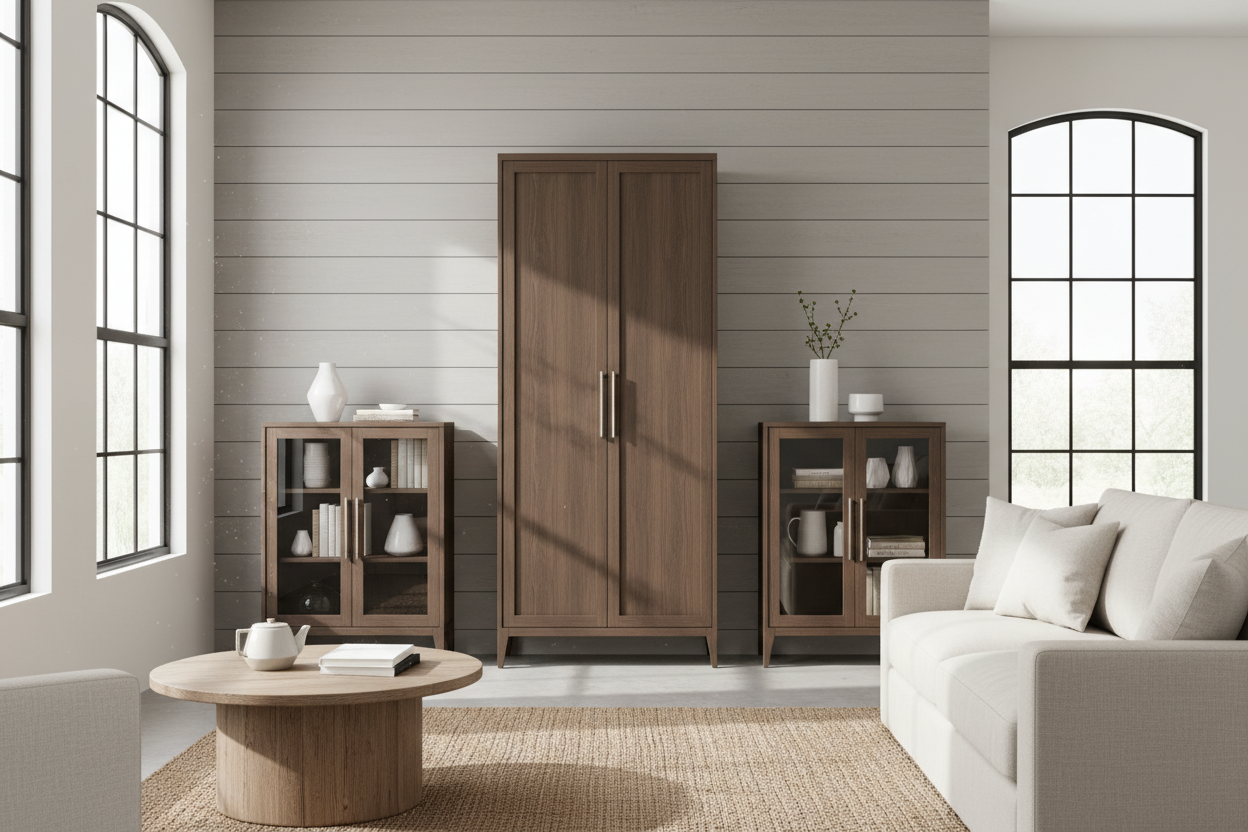
We have all been there: the vacuum cleaner is leaning awkwardly in the hallway, cleaning supplies are overflowing under the kitchen sink, and the house feels constantly chaotic because there is nowhere to hide the bulky essentials. You desperately need vertical storage. But when you finally bring home a tall utility cabinet, it ends up looking like a piece of garage furniture accidentally dropped into your living space. By the end of this guide, you will know exactly how to select, place, and style these functional workhorses so they blend seamlessly into your home's aesthetic.
Quick Decision Guide
- Measure your tallest items first (like stick vacuums or ironing boards) to ensure the internal clearance fits your specific needs before worrying about the exterior style.
- Avoid cheap particleboard if you plan to store liquids or heavy tools; opt for solid wood or high-grade engineered wood with a moisture-resistant veneer.
- A 2 door tall storage cabinet offers better visual balance and requires less clearance to open compared to a wide, single-door model.
- Always anchor the piece to the wall. Tall, narrow storage is highly prone to tipping, especially on thick North American carpets.
Finding the Right Spot for Vertical Storage
Integrating a large storage piece into a residential layout requires careful attention to visual weight. A massive, dark cabinet placed in the middle of a wall will instantly dominate the room and make the ceiling feel lower. Instead, tuck these pieces into natural alcoves, corners, or at the end of a hallway to preserve negative space.
Clearance and Walkways
When dealing with a tall two door storage cabinet, the physical footprint is only half the equation. You also have to account for the door swing. Most utility cabinets run between 15 and 20 inches deep. You need a minimum of 36 inches of clearance in front of the piece to comfortably swing the doors open and crouch down to retrieve heavy items from the bottom shelf. If you are working with a narrow mudroom, look for doors with a slimmer profile or sliding mechanisms.
Choosing Materials That Survive Real Life
Utility storage takes a beating. Unlike a decorative bookshelf, these cabinets handle damp mops, heavy detergent bottles, and sharp tools. Material choice dictates both longevity and maintenance.
The Moisture Factor
If you are placing a tall 2-door cabinet with shelves in a laundry room or near a side entrance, moisture is your biggest enemy. Standard MDF will swell and crumble if exposed to standing water from a leaky bleach bottle. Look for cabinets with sealed edges and metal shelf pins. Furthermore, verify the weight capacity per shelf; 2 shelf cabinets inside a larger unit often bow over time if they aren't reinforced with a solid back panel or a center support stile.
Making Utility Look Intentional
You do not have to settle for industrial gray metal or sterile white melamine. To elevate a tall 2 door cabinet, treat it like a piece of architectural millwork. Swapping out cheap factory knobs for solid brass or matte black pulls instantly upgrades the look. If your home leans traditional or transitional, adding a simple crown molding to the top of a tall double door cabinet can make a freestanding piece look like an expensive custom built-in.
Designer's Honest Take
After 15 years of designing residential interiors across North America, I have learned that freestanding utility storage always comes with a compromise. A few years ago, I placed a beautiful, custom-painted two door tall cabinet in a client's Toronto townhouse. It looked stunning on installation day. But within two months, the daily abuse of sliding a heavy mop bucket in and out had completely chipped the bottom edge of the frame.
The honest downside to freestanding utility cabinets is that they lack the protective toe-kick found in built-in kitchen cabinetry. They sit flush on the floor, making them magnets for scuffs, vacuum bumps, and water damage. I now always recommend retrofitting the bottom edge with a discreet metal kickplate or raising the cabinet onto sturdy, 4-inch legs to protect the base.
Frequently Asked Questions
What size tall utility cabinet do I need?
Start by measuring your longest item, which is usually a broom or a cordless vacuum (typically 45 to 50 inches). Ensure your cabinet has at least one continuous vertical section that tall, with adjustable upper shelving for smaller supplies.
Can I use a tall utility cabinet in a small apartment?
Absolutely. In tight spaces, vertical storage is essential. Choose a cabinet with a lighter finish or mirrored doors to reflect light, and place it in a corner to prevent it from overwhelming the room's proportions.
How do I organize a tall double door cabinet efficiently?
Treat the inside like a pantry. Use clear acrylic bins for small items like sponges and batteries, install hooks on the inside of the doors for dustpans, and keep your heaviest items (like bulk liquids) on the bottom shelf to lower the center of gravity and prevent tipping.



Dejar un comentario
Este sitio está protegido por hCaptcha y se aplican la Política de privacidad de hCaptcha y los Términos del servicio.