











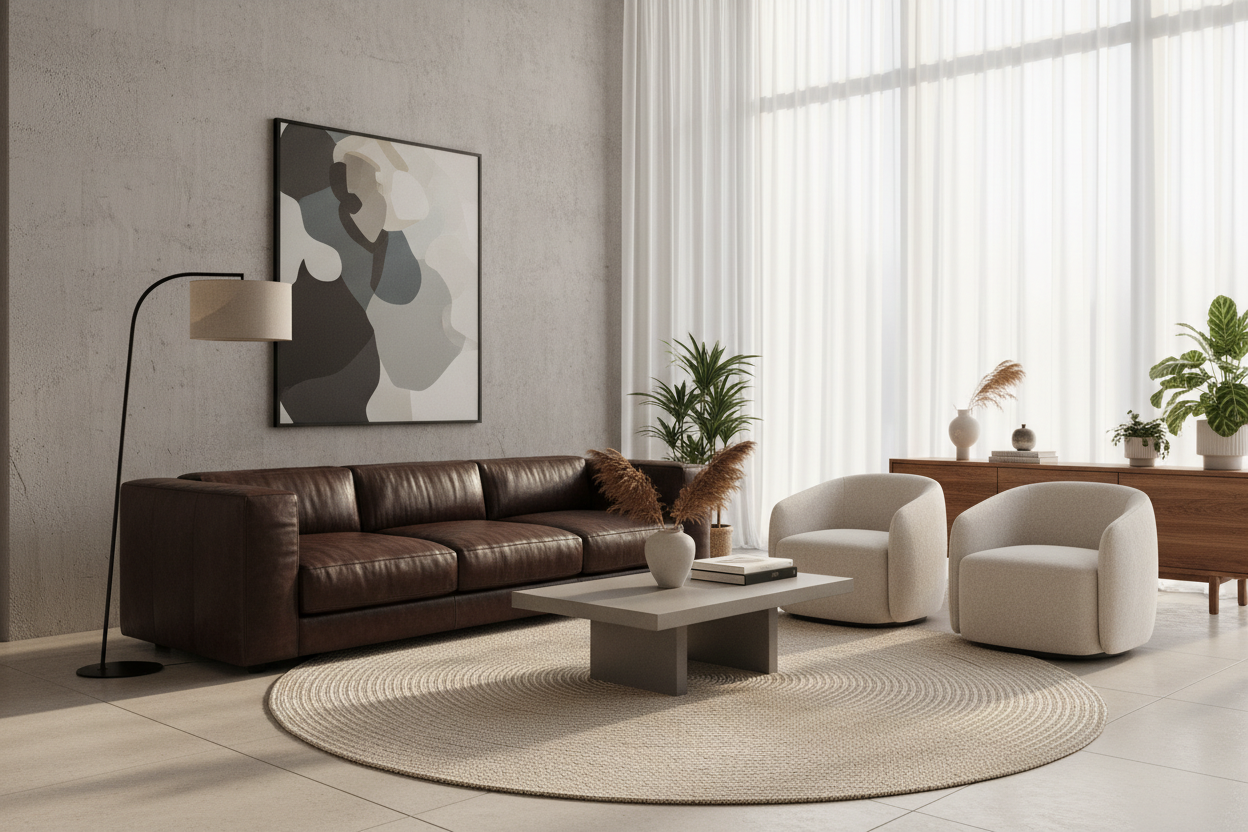
There is a pervasive myth in interior design that deep, saturated furniture makes a room feel small or cavernous. I hear this concern constantly from clients afraid to commit to bold pieces. However, when executed correctly, a dark leather couch acts as the ultimate anchor—a grounding element that provides sophisticated contrast against lighter walls and textiles. It is not just a place to sit; it is a textural statement that defines the room's gravity.
Key Features to Look For
- Leather Grade: Prioritize Full-Grain or Top-Grain leather for longevity; avoid "bonded" leather which peels over time.
- Frame Construction: Look for kiln-dried hardwood frames to prevent warping and squeaking.
- Suspension System: Eight-way hand-tied springs offer superior support compared to simple sinuous springs.
- Cushion Fill: A down-wrapped high-resiliency foam core balances structure with the "sink-in" factor.
- Patina Potential: Ensure the finish allows the leather to age gracefully rather than crack.
Navigating Leather Grades and Finishes
The terminology in the leather industry can be intentionally vague. As a designer, I advise clients to look past the color and touch the material. You want to understand the "hand"—the tactile quality of the hide.
Full-Grain vs. Top-Grain
For a dark leather sofa that improves with age, full-grain is the gold standard. It utilizes the entire hide, showing natural markings and scars. It breathes better, meaning it won't feel sticky in summer or freezing in winter. Top-grain is sanded to remove imperfections; it is softer and more uniform but lacks the rugged durability of full-grain. If you have pets or children, a semi-aniline finish (which has a light protective coating) is often the pragmatic sweet spot between luxury and livability.
Balancing Visual Weight
A dark sofa is visually heavy. If you place it on a dark floor without a buffer, it disappears into a black hole. To counter this, I always recommend layering. A high-contrast rug—think creams, light greys, or even a faded vintage Oushak—is non-negotiable. This separates the dark leather from the floor, allowing the silhouette of the furniture to pop.
Furthermore, consider the legs. If your room is on the smaller side, choose a sofa with exposed legs (stiletto or tapered wood). This creates "negative space" underneath the piece, allowing light to travel through the room and preventing the furniture from looking blocky.
Texture and Temperature
Leather is sleek and cool. To make a living space inviting, you must introduce opposing textures. I never style a dark leather piece without throwing in a chunky knit wool blanket, velvet pillows, or linen accents. This interplay of matte fabrics against the sheen of the leather creates the depth that characterizes high-end interiors.
Lessons from My Own Projects
I want to share a specific reality check from a project I completed in a Brooklyn brownstone. We installed a stunning, chocolate-colored pure aniline leather sofa. It looked immaculate on install day.
Two weeks later, the client called in a panic because their Labrador had jumped up and left a long, light-colored scratch across the cushion. Here is the unvarnished truth I told them: Embrace the scratch.
With high-quality dark leather, the dye penetrates deep, but the surface wax can show marks. I taught them to use the heat of their hand and a vigorous rubbing motion to redistribute the oils in the leather. The scratch didn't disappear, but it blended into a beautiful patina. Six months later, that sofa looked infinitely better than it did when it was brand new because it looked lived in. If you are a perfectionist who needs a pristine surface, dark aniline leather will drive you crazy. But if you want a piece with soul, there is nothing better.
Conclusion
Investing in this type of furniture is a commitment to the long game. It requires a thoughtful approach to lighting and layout to ensure it doesn't dominate the space, but when balanced with soft textures and proper spacing, it offers an aesthetic maturity that fabric simply cannot match.
Frequently Asked Questions
How do I prevent a dark leather sofa from fading?
Direct sunlight is the enemy of dark dye. Position your sofa away from south-facing windows or use UV-blocking window treatments. Regular conditioning (every 6-12 months) helps keep the leather hydrated and resistant to fading.
Can I put a dark couch in a small living room?
Absolutely. The trick is to choose a slim profile. Avoid rolled arms and overstuffed back cushions. A sleek, mid-century modern silhouette in dark leather adds drama to a small room without consuming the physical footprint.
What wall colors work best with dark leather?
You have two distinct paths: high contrast or moody monochrome. Crisp whites and warm greige tones create a classic, airy look. Alternatively, painting the walls a deep charcoal or navy can create a cozy, library-like atmosphere, provided you have adequate ambient lighting.

Dejar un comentario
Este sitio está protegido por hCaptcha y se aplican la Política de privacidad de hCaptcha y los Términos del servicio.