










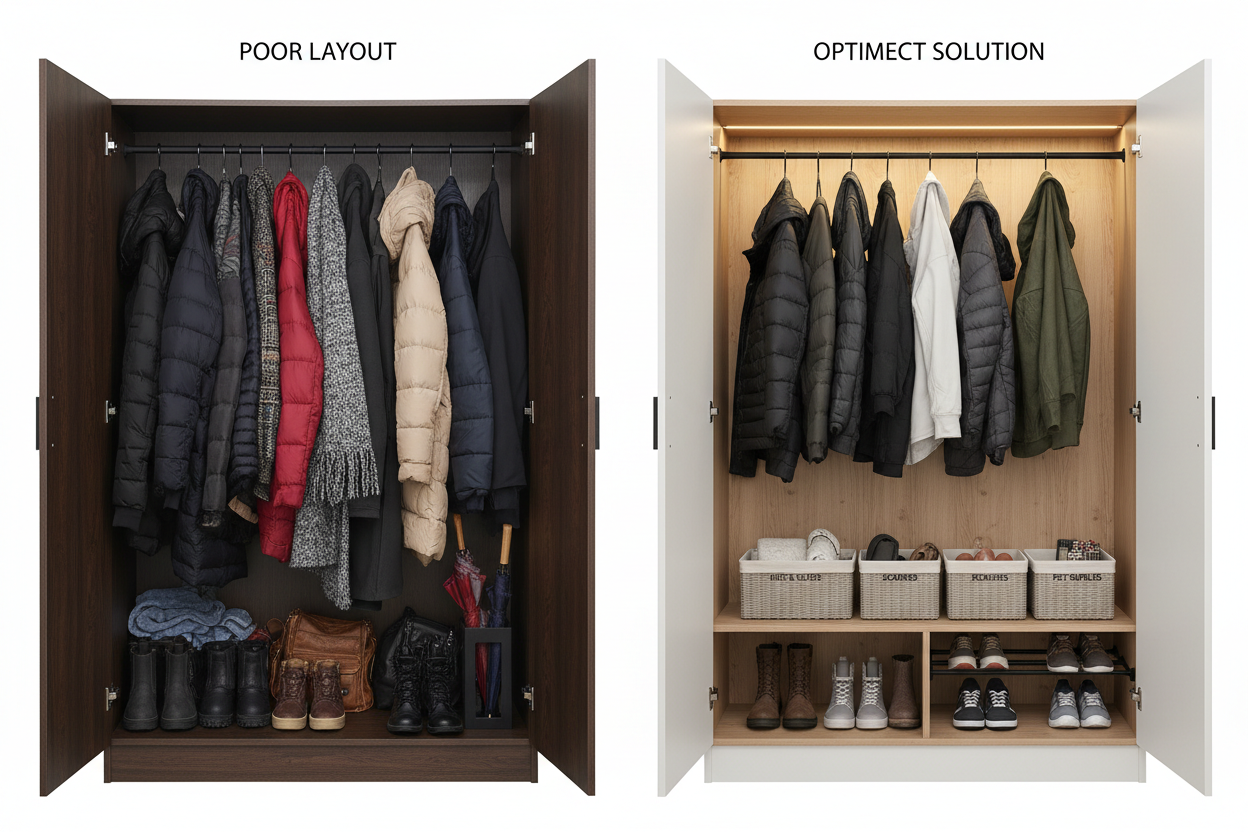
There is nothing quite as frustrating as walking through your front door only to be greeted by a chaotic pile of jackets, scarves, and bags. It instantly disrupts the visual calm of a home. The entryway sets the tone for the entire residence, yet it is often the most neglected space regarding functional joinery. The solution isn't just a row of hooks; it is a dedicated, well-proportioned coat cabinet that anchors the space while concealing the daily mess.
Key Features to Look For
Before committing to a purchase, review this checklist to ensure the piece meets high-traffic demands:
- Internal Depth: Ensure a minimum depth of 24 inches (60cm) if using a standard hanging rail; otherwise, coats will prevent doors from closing flush.
- Ventilation: Look for louvers or back-panel cutouts to prevent damp fabrics from creating musty odors inside the cabinet.
- Hardware Durability: Heavy winter coats require robust hinges and soft-close mechanisms to withstand daily wear.
- Material Density: Solid wood or high-grade plywood is preferable to low-density particle board, which often fails at the hinge points over time.
- Adjustable Shelving: Flexibility is vital for accommodating boots at the bottom or seasonal items at the top.
Choosing the Right Material and Finish
In my years of sourcing furniture, I have found that material selection dictates longevity more than any other factor. For an entryway, which experiences temperature fluctuations from the opening front door, stability is key. Solid hardwoods like oak or walnut offer beautiful grain textures and resilience, but they can be susceptible to expansion and contraction.
Often, a high-quality engineered wood with a premium veneer is the smarter choice for a coat storage cabinet. It provides the visual warmth of wood without the warping risks. If you prefer a painted finish, ensure it is a catalyzed lacquer or enamel. These finishes harden significantly, resisting the inevitable scuffs from zippers and buttons that softer paints cannot withstand.
Ergonomics and Space Planning
The footprint of your storage unit must respect the traffic flow. A common error is placing a deep cabinet too close to the door swing, creating a "pinch point" that makes the entry feel claustrophobic. You generally need a minimum of 36 inches of clearance for comfortable passage.
The Depth Dilemma
If your hallway is narrow, standard depth cabinets may protrude too far. In these scenarios, I recommend a shallow coat cabinet with doors that utilizes perpendicular pull-out rails (front-to-back hanging) rather than a standard side-to-side rod. This allows you to reduce the cabinet depth to as little as 14-16 inches while still maintaining functionality.
Visual Balance and Silhouette
A coat cabinet is a substantial piece of furniture. To prevent it from dominating the room, consider the visual weight. A unit with legs—creating negative space between the floor and the cabinet—feels lighter and airier than a piece that sits flush on the plinth. This is an old designer's trick to make small foyers feel larger.
Furthermore, pay attention to the hardware. Oversized handles can catch on clothing in tight spaces. Integrated finger pulls or push-to-open mechanisms offer a cleaner, more architectural silhouette that blends seamlessly with modern interiors.
Lessons from My Own Projects
I learned the hard way about the importance of internal dimensions during a project for a client in a pre-war apartment. We ordered a stunning, vintage-inspired coat cabinet that looked perfect on the floor plan. However, I hadn't accounted for the actual bulk of the client's winter wardrobe—specifically, heavy down parkas.
While the cabinet was technically deep enough for a standard hanger, once the puffy coats were inside, the doors wouldn't stay latched. They kept popping open, creating a messy, unpolished look. We ended up having to retro-fit the hinges with heavy-duty magnets and actually shave down the back of the internal shelf to gain an extra half-inch. Now, whenever I inspect a cabinet, I physically hang a heavy coat inside to check the "crush factor" before approving it. It’s a small detail, but it determines whether you love or hate the piece three months later.
Conclusion
Investing in the right storage transforms your entryway from a cluttered drop zone into a sophisticated transition space. By focusing on internal depth, durable materials, and the correct scale for your hallway, your coat cabinet becomes more than just storage—it becomes a foundational element of your home's design.
Frequently Asked Questions
What is the ideal depth for a coat cabinet?
For standard hanging rods, 24 inches (60-65cm) is ideal to allow hangers to sit freely without brushing against the doors. For shallow spaces, 14-16 inches works if you use front-facing pull-out rails.
How do I prevent odors in a closed coat cabinet?
Ventilation is crucial. Ensure the cabinet has a breathable back panel or louvered doors. Additionally, never place damp coats directly inside; allow them to air dry on an external hook first.
Should a coat cabinet go all the way to the ceiling?
Floor-to-ceiling cabinetry maximizes storage and looks like custom millwork, which is excellent for luxury aesthetics. However, a freestanding unit with space above can make a small room feel less cramped and offers a surface for styling decor.


Dejar un comentario
Este sitio está protegido por hCaptcha y se aplican la Política de privacidad de hCaptcha y los Términos del servicio.