










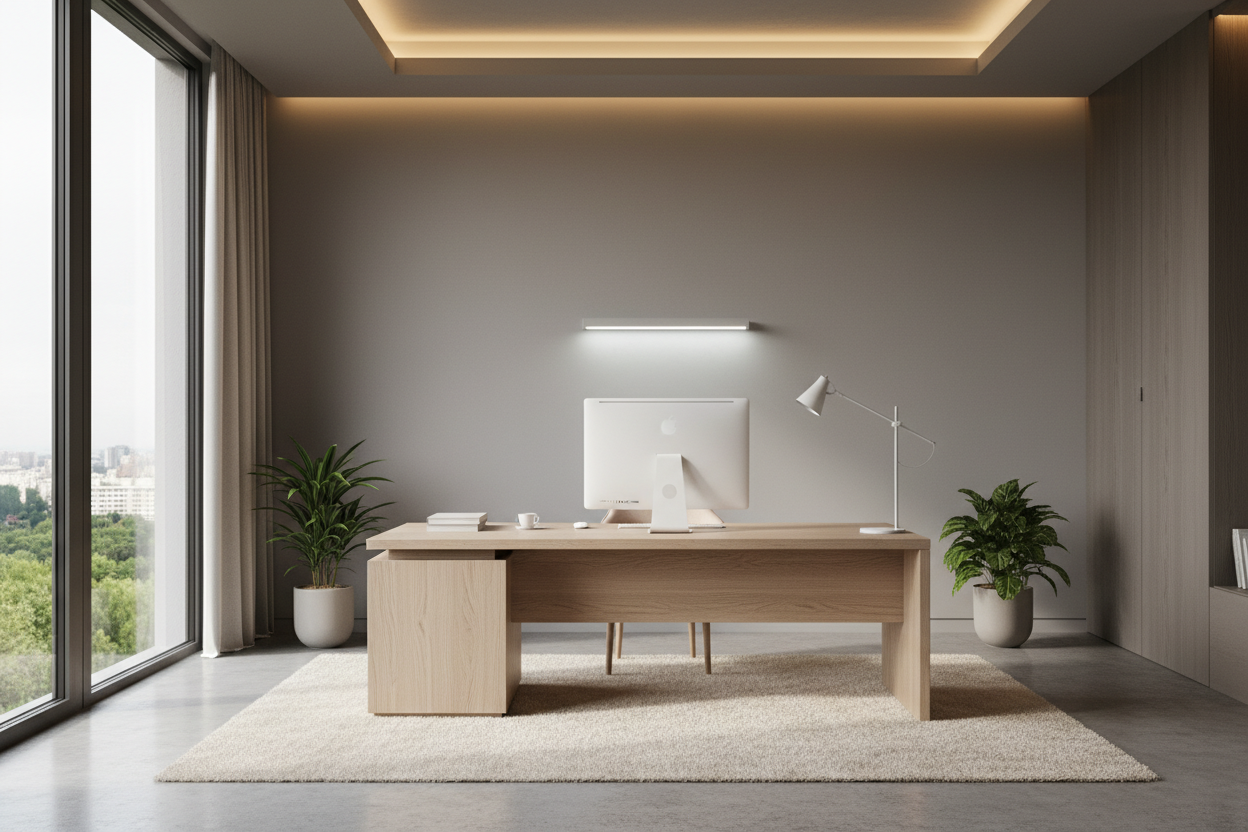
Most homeowners treat lighting as an afterthought, relying solely on a single overhead fixture to do the heavy lifting. This is the quickest way to induce eye strain and flatten the visual depth of your workspace. True contemporary office lighting is not just about illumination; it is about sculpting the space and supporting your circadian rhythm. If you are sitting under a buzzing 60-watt bulb wondering why your focus is waning by 2 PM, it is time to rethink your lighting plan.
Key Features to Look For
- Color Temperature (Kelvin): Aim for 3500K to 4000K for optimal focus without the harshness of clinical blue light.
- Adjustability: Look for articulating arms or pivoting heads to direct lumens exactly where you need them.
- Dimmability: Essential for transitioning from high-focus work modes to evening ambiance.
- Material Quality: Prioritize weighted bases (brass, marble) and integrated LEDs with high CRI (Color Rendering Index) to see true colors.
Mastering the Layered Approach
In design school, we are taught that a single light source is a design failure. To achieve a sophisticated look using modern office lighting, you must embrace layering. This involves three distinct tiers: ambient, task, and accent.
Ambient Lighting: The Foundation
This is your general illumination. For a contemporary aesthetic, move away from flush mounts (boob lights) and consider linear suspension fixtures or recessed architectural lighting. The goal is soft, diffused light that bounces off the ceiling or walls, reducing shadows.
Task Lighting: The Workhorse
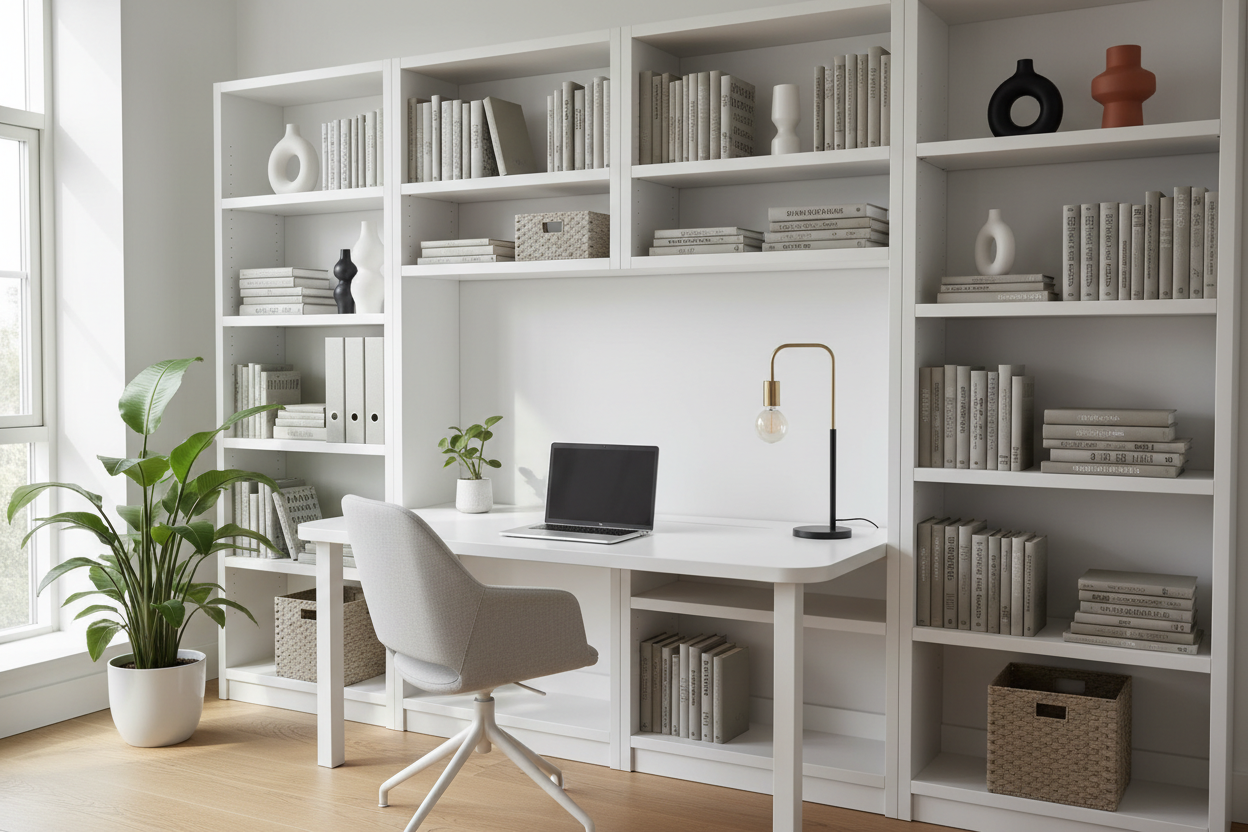
This is where ergonomics meets style. A dedicated desk lamp is non-negotiable. When selecting a fixture, consider the silhouette. A slender, matte-black architectural lamp adds a graphic punch to the desk without consuming valuable surface area. Ensure the beam spread is wide enough to cover your documents but focused enough to prevent monitor glare.
Choosing the Right Material and Finish
The finish of your lighting fixtures dictates the mood of the room. Currently, mixed metals are dominating high-end interiors. Do not be afraid to pair a brushed brass task lamp with a matte black overhead fixture. This creates visual tension and interest.
However, be mindful of your desk surface. If you have a glass or high-gloss lacquer desk, avoid exposed bulbs or downward-facing cones that create blinding hotspots. In these cases, a fixture with a diffuser or a fabric shade is technically superior as it softens the reflection.
My Personal Take on Contemporary Office Lighting
I learned a hard lesson about finishes during a project for a tech executive in Seattle. I specified a stunning, high-gloss Italian architectural desk lamp—beautiful sculptural piece, cost a fortune. It looked incredible in the renderings.
However, once installed, we realized the lamp's integrated LED module had a slight undetectable flicker that only became apparent when dimmed to 50%. Furthermore, the high-gloss finish of the lamp itself reflected the movement of the ceiling fan above, creating a strobing effect in the client's peripheral vision. I had to swap it out for a matte-finish fixture with a higher quality driver. The takeaway? Always test the "dimming curve" of an LED fixture before committing, and remember that matte finishes are often more forgiving in a workspace than polished ones.
Conclusion
Upgrading your lighting is the highest ROI change you can make in a home office. By layering your light sources and selecting fixtures that offer both ergonomic support and sculptural beauty, you create an environment that invites productivity rather than fatigue. Treat your lighting like furniture, not just a utility.
Frequently Asked Questions
What is the best color temperature for a home office?
I generally recommend between 3000K and 4000K. Anything lower (2700K) is too yellow and relaxing, inducing sleepiness. Anything higher (5000K+) feels like a hospital and can cause headaches.
How do I stop my desk lamp from glaring on my monitor?
Position the lamp behind your monitor, or to the side opposite your writing hand. The light should wash over the wall behind the screen (bias lighting) to reduce contrast strain, rather than hitting the screen directly.
Can I mix vintage lamps with contemporary office lighting?
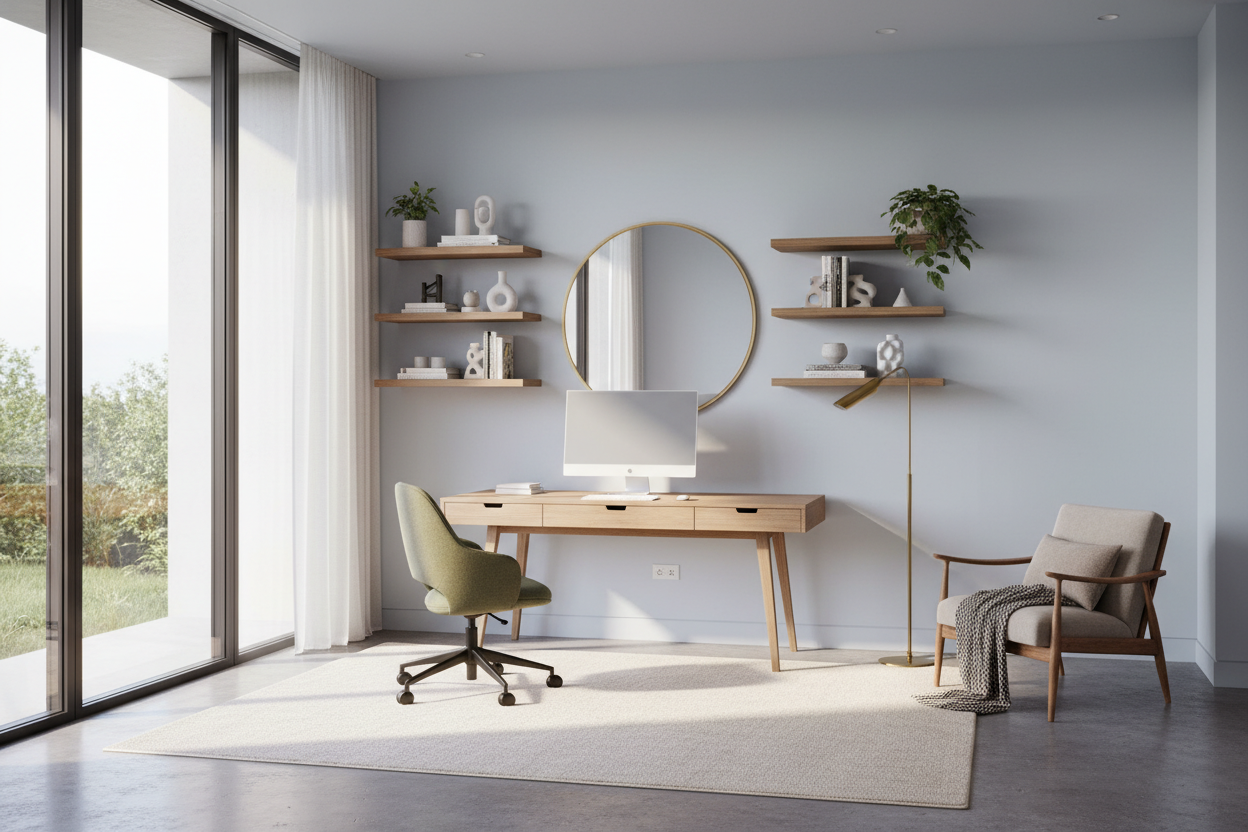
Absolutely. A vintage mid-century desk lamp can add soul to a sleek, modern room. Just ensure you rewire it for safety and equip it with a modern LED bulb that mimics the warmth of incandescent light to match your other fixtures.

Dejar un comentario
Este sitio está protegido por hCaptcha y se aplican la Política de privacidad de hCaptcha y los Términos del servicio.