










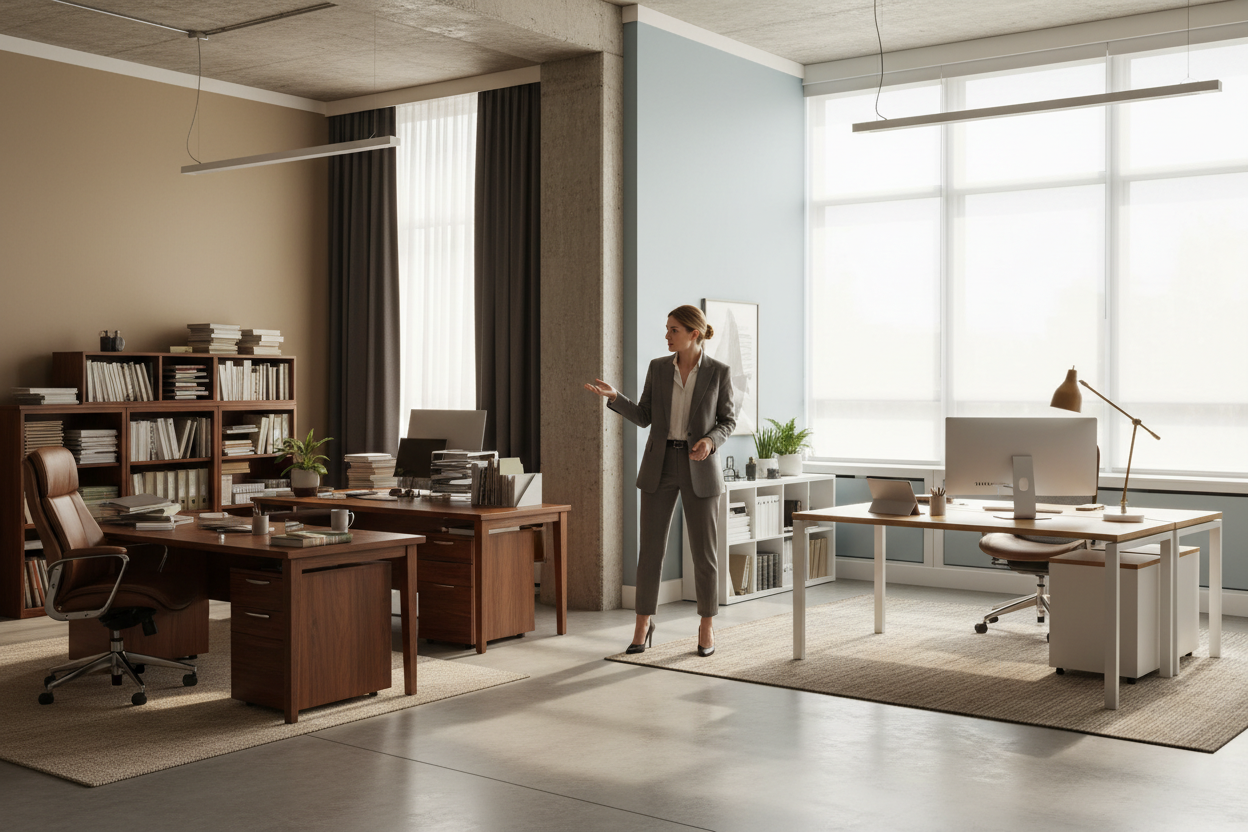
We have all walked into a workspace that feels sterile, uninspiring, or conversely, so chaotic that focusing becomes a battle. Whether you are outfitting a corporate headquarters or refining a home workspace, the layout and finish selections directly impact cognitive load and output. The dilemma often lies in prioritizing aesthetics over function—or ignoring the 'feel' of the space entirely. As a professional office interior decorator, I have seen how the right environment does more than just look good; it dictates how people perform, interact, and feel throughout the day.
Key Features to Look For in Office Design
- Ergonomics First: Prioritize chairs with lumbar support and adjustable seat depth over purely sculptural pieces.
- Acoustic Control: Look for sound-dampening materials like acoustic baffles, heavy drapery, or PET felt panels.
- Lighting Layers: Ensure a mix of ambient (general), task (focused), and accent lighting to reduce eye strain.
- Material Durability: Select commercial-grade fabrics (high double-rub counts) and scratch-resistant surfaces like HPL or solid surface.
- Spatial Flow: Maintain clear circulation paths (minimum 36 inches) to prevent congestion and visual clutter.
Defining the Scope: Decorator vs. Designer
Before diving into swatches, it is vital to understand who you are hiring. While an office interior designer often handles structural changes and code compliance, a decorator focuses on the surface level—furnishings, color palettes, and accessories. However, in today’s market, the lines blur. An expert interior designer for office space projects will integrate both disciplines, ensuring the structural layout supports the decorative elements.
Materiality and Visual Weight
When selecting furniture, consider the "visual weight" of the pieces. In a smaller interior design studio office, heavy, solid oak desks with modesty panels can make the room feel claustrophobic. Instead, opt for pieces with exposed legs or glass tops to maintain an airy silhouette.
The Truth About Surfaces
For high-traffic zones, I always steer clients toward High-Pressure Laminate (HPL) or commercial-grade veneer rather than softwoods. Solid wood is beautiful, but in a busy office, a softwood pine desk will show every signature you have ever written within a week. The tactile experience matters—surfaces should feel cool and smooth, not sticky or rough.
Lighting: The Invisible Decorator
Lighting is the most undervalued asset in an office interior designing service package. Relying solely on overhead fluorescent grids is a design crime. To create a luxury look that boosts focus, aim for a color temperature between 3500K and 4000K. This mimics natural daylight without the harsh blue tint of standard office bulbs. Layering is key: add a desk lamp with a warm glow to create a 'pool of light' that anchors the worker to their task.
Color Psychology and Branding
Your color palette should do more than match your logo. Deep blues and greens can induce focus and calm, while pops of yellow or orange in breakout areas stimulate creativity. However, restraint is necessary. I often see interior designer offices use neutral bases (greys, taupes, creams) for 80% of the space, using bold colors only on accent chairs or artwork to prevent visual fatigue.
My Personal Take on Office Interior Decorators
In my years of practice, the biggest lesson I learned came from a project where we prioritized the "executive look" over practical acoustics. I specified these stunning, sleek glass-walled conference rooms with polished concrete floors. Visually? It was architectural digest material. Functionally? It was a disaster.
The first time the client held a confidential meeting, the sound bounced off the hard surfaces so violently that people outside could hear every word, and the people inside left with headaches. I had to go back and retrofit the space with acoustic ceiling clouds and heavy wool rugs. It taught me that an office interior decorator must be an advocate for the ears as much as the eyes. Now, I never specify a hard surface without a soft counterpart to balance it out. It is those invisible details—the acoustics, the way a drawer glides, the resistance of a chair recline—that define true luxury.
Conclusion
Creating a workspace that resonates with your brand and supports your workflow is an investment in your future success. Whether you are hiring a full-service team or curating the space yourself, remember that every texture, light fixture, and chair plays a role in your daily productivity. Don't settle for "good enough"—design a space that works as hard as you do.
Frequently Asked Questions
What is the difference between residential and commercial office furniture?
Commercial furniture is built to withstand 8+ hours of daily use and meets stricter fire and safety codes (ANSI/BIFMA standards). Residential furniture typically cannot withstand the wear and tear of a busy office environment.
How much does an office interior designing service typically cost?
Costs vary wildly based on square footage and scope. Some designers charge a flat fee per room, while others charge an hourly rate plus a percentage of furniture purchases. Always clarify the fee structure upfront.
Can I use an interior designer for office space if I rent?
Absolutely. A skilled designer focuses on non-structural improvements—paint, lighting, modular furniture, and window treatments—that transform a rental without violating lease agreements.


Dejar un comentario
Este sitio está protegido por hCaptcha y se aplican la Política de privacidad de hCaptcha y los Términos del servicio.