










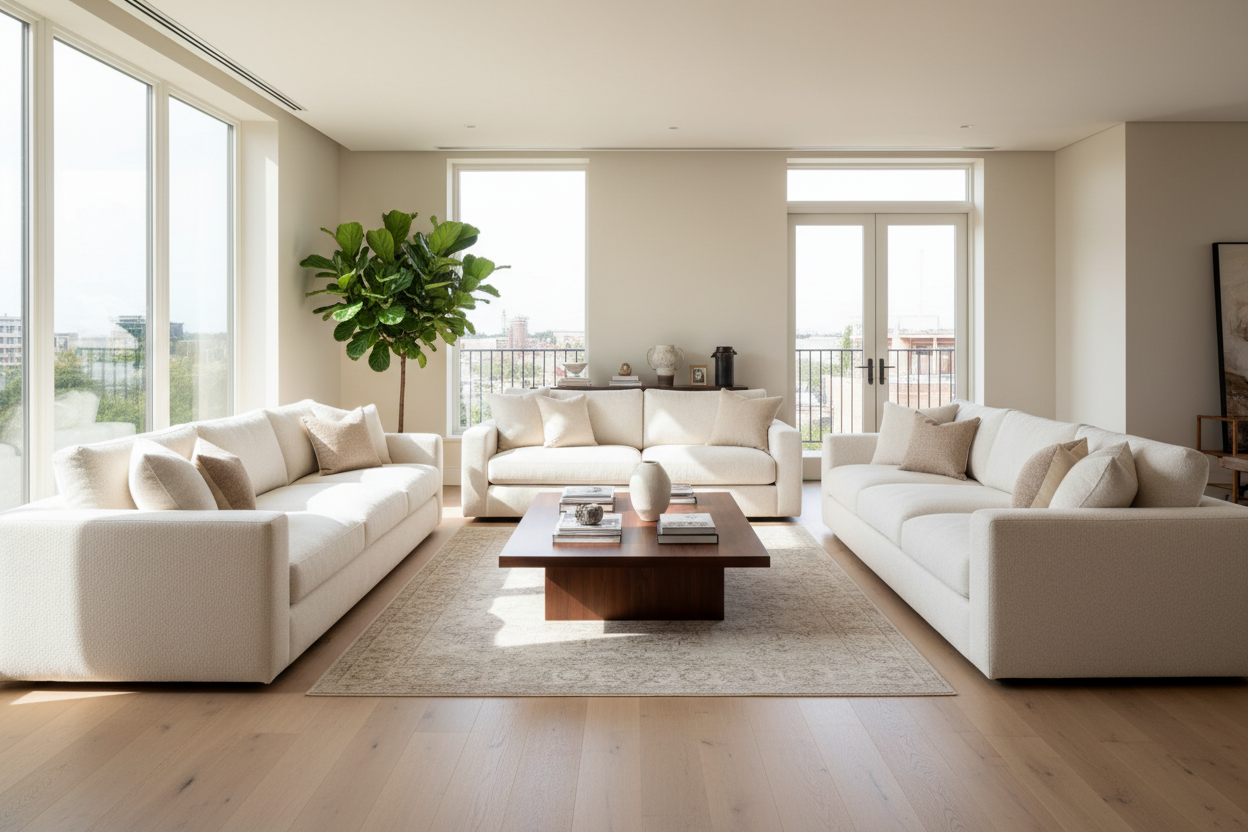
When clients walk into my studio, their requests often center on one specific desire: "I want a room where I can truly collapse at the end of the day." This is where lounge sofas shine. Unlike formal settees designed for upright conversation, a lounge sofa is an invitation to recline, offering deeper seats and softer silhouettes. However, integrating these substantial pieces into a living space is a delicate balancing act between supreme comfort and visual weight. If chosen incorrectly, they can quickly overwhelm a room, turning a sophisticated living area into a cluttered obstacle course.
Quick Decision Guide: Key Features to Look For
Before committing to a purchase, review this checklist to ensure the piece meets both functional and aesthetic standards:
- Seat Depth: Look for a depth of at least 24 inches (60cm) for true lounging capability; standard sofas usually sit at 21 inches.
- Fill Composition: A high-density foam core wrapped in feather-down provides the necessary structure while maintaining that "sink-in" feeling.
- Fabric Durability: For high-traffic areas, prioritize performance velvets or crypton fabrics with a Martindale rating above 30,000.
- Module Configuration: Ensure the chaise or lounge section does not block the primary traffic flow of the room.
Mastering the Layout: Flow and Proportion
The most common error I see is ignoring spatial flow. Because these pieces are inherently bulky, placing them requires precision. When positioning a sofa and lounge combination, you must maintain a minimum of 30 inches of clearance around the perimeter for walkways. If the lounge section extends too far into the room, it creates a visual barrier that makes the space feel smaller than it is.
Visual Weight and Balance
To counteract the heaviness of a deep-seated sofa, consider the leg style. A sofa that sits flush to the floor (plinth base) feels heavier and grounds the room, which works well in large, open-concept lofts. Conversely, sofas with lounge extensions raised on slender legs allow light to pass underneath, creating an illusion of airiness essential for apartments or modest living rooms. Balance this large focal point with substantial coffee tables; a delicate glass table will disappear next to a robust lounge sofa.
Material Selection: Beyond the Swatch
Selecting the right upholstery is about more than just color; it is about how the material interacts with the form. Lounge sofas have large surface areas, meaning the texture becomes a dominant architectural feature.
The Tactile Experience
I often steer clients toward textured weaves or bouclé for these pieces. Because the fabric surface is vast, a flat cotton or linen can look wrinkled and messy the moment someone stands up. A textured fabric hides life's little imperfections—shadows, creases, and the occasional crumb—much better than a flat weave. If you desire a leather finish, opt for a full-aniline leather that patinates over time; corrected-grain leathers can feel slippery and cold, which contradicts the cozy intent of the design.
Lessons from My Own Projects: The "Cloud" Effect Reality
I learned a hard lesson early in my career regarding cushion fill. I specified a stunning, 100% down-filled lounge sofa for a client with two large dogs and three teenagers. In the showroom, it sat like a dream—the ultimate "cloud" experience.
Three months later, I visited the client, and the sofa looked like a deflated balloon. The reality of 100% down is that it requires aggressive fluffing every single time you stand up to maintain its shape. It looked unkempt and sloppy, ruining the sharp architectural lines of the rest of the room. Since then, I strictly advise clients: unless you have a housekeeper dedicated to fluffing cushions daily, always choose a high-resiliency foam core wrapped in down. You get the soft crown and comfort without the constant maintenance headache. It keeps the aesthetic crisp.
Conclusion
Investing in the right lounge sofa changes the psychology of your home. It signals that this is a space for decompression and comfort. By paying attention to the internal fill, the scale relative to your room, and the durability of the textile, you ensure that your investment serves you well for years. Prioritize quality construction over fleeting trends, and your living room will thank you.
Frequently Asked Questions
How do I know if a lounge sofa is too big for my room?
A good rule of thumb is the "two-thirds rule." The sofa should take up roughly two-thirds of the wall it is placed against. If the lounge extension (the chaise part) crosses the center point of the room or blocks a doorway, the scale is too large for the space.
What is the difference between a sectional and a sofa with a lounge?
While often used interchangeably, a sectional is modular and can wrap around corners with equal back support on both sides. Sofas with lounge attachments typically feature a standard sofa body with one seat extending outward (a chaise) which usually lacks a full backrest on the extended side, making it less bulky visually.
Can I put a lounge sofa in a formal living room?
Absolutely, provided you choose the right silhouette. Avoid slouchy, overstuffed styles. Instead, opt for a piece with a tight back (no loose cushions), structured arms, and a tailored fabric like velvet or a wool blend. This maintains a formal aesthetic while providing superior comfort.


Dejar un comentario
Este sitio está protegido por hCaptcha y se aplican la Política de privacidad de hCaptcha y los Términos del servicio.