










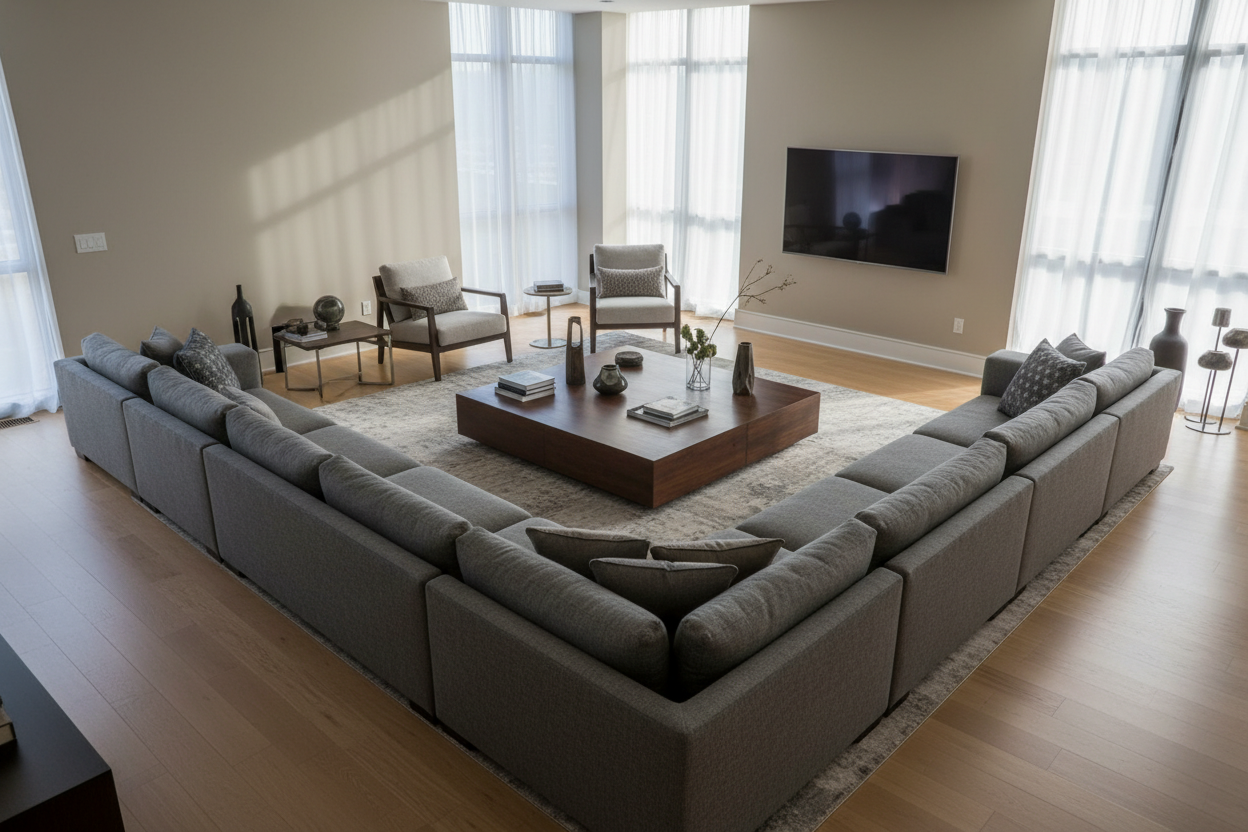
There is a specific gravity to large furniture. It anchors a room, dictates the traffic flow, and sets the tone for every interaction within the space. However, many homeowners fall into the trap of purchasing a piece that looks stunning in a showroom but dominates their living room aggressively once delivered. When designing a sectional home environment, the goal is not just to fill space, but to curate a balance between mass and negative space.
Quick Decision Guide
- Orientation: Determine if you need Left-Facing (LAF) or Right-Facing (RAF) based on your focal point (TV or fireplace).
- Frame Construction: Look for kiln-dried hardwood frames rather than plywood to prevent warping over time.
- Cushion Fill: High-density foam wrapped in down offers the best balance of structure and "sink-in" comfort.
- Fabric Durability: Check the "double rub" count; anything over 50,000 is suitable for high-traffic family use.
Mastering the Layout and Flow
The most frequent error I see in client floor plans is pushing a large home sectional directly against two walls. While this seems like a space-saver, it often creates a "waiting room" effect that feels cold and uninviting. Instead, float the furniture.
The 18-Inch Rule
Ideally, pull the sectional away from the wall by at least three to four inches to let the room "breathe." If you are floating the piece in the center of an open-concept room, ensure you have a minimum of 18 to 24 inches of clearance for walking paths around the perimeter. This preserves the ergonomic flow and prevents shin collisions.
Selecting the Right Material
When curating home furniture sectional pieces, the textile choice dictates longevity. For homes with pets or children, I almost exclusively recommend performance crypton or velvet. Velvet is surprisingly durable because it has no loose weave for claws to snag on, whereas a loose linen weave is a recipe for disaster.
Visual Weight and Color
A dark, heavy home sectional couch can suck the light out of a room if not balanced correctly. If you choose a charcoal or navy velvet, ensure your rug is light and extends at least six inches beyond the front legs of the sectional. This grounds the furniture and defines the zone.
Lessons from My Own Projects
I want to share a specific detail that rarely makes it into glossy brochures but has saved my sanity on multiple installs. A few years ago, I sourced a beautiful modular sectional for a client with polished concrete floors. It looked architectural and sleek.
However, within a week, the client called to say the pieces were drifting apart every time someone sat down. It looked messy and felt cheap. The fix wasn't in the design, but the hardware. I learned that heavy-duty "alligator clips" (sectional connectors) are non-negotiable, especially on slick flooring. Now, I personally check the undercarriage of every floor model to see if the brackets are metal and ratcheted. If they rely on simple plastic slides, I walk away. It’s a small, unpolished detail, but it determines whether your living room looks curated or chaotic after a movie night.
Final Thoughts
Integrating a large sectional is an exercise in proportion. It requires respecting the architecture of your room while prioritizing the tactile experience of daily living. Focus on the frame quality and the flow of movement, and the aesthetic will follow.
Frequently Asked Questions
How do I know if a sectional is too big for my room?
Tape the dimensions out on your floor using painter's tape. If the taped area blocks walking paths or forces you to shimmy past a coffee table (less than 15 inches of clearance), the scale is too large for the space.
What is the difference between Left-Facing and Right-Facing?
This refers to the arm placement when you are standing facing the sofa, not sitting on it. If the arm is on your left as you look at the piece, it is Left-Arm Facing (LAF).
Can I use a sectional in a small apartment?
Absolutely. Look for a "chaise sectional" rather than a full L-shape with a corner wedge. This provides the lounging comfort of a sectional without the massive footprint of a full corner unit.

Dejar un comentario
Este sitio está protegido por hCaptcha y se aplican la Política de privacidad de hCaptcha y los Términos del servicio.