










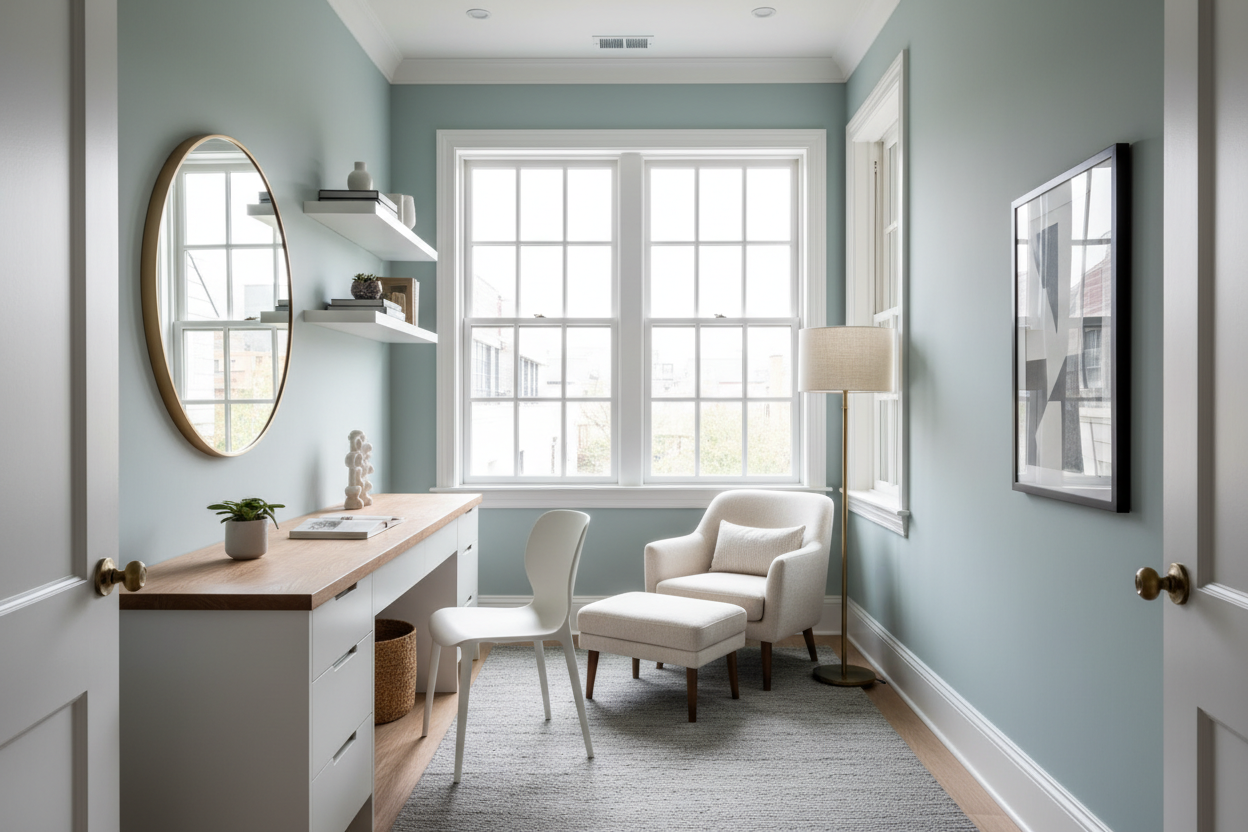
There is a distinct difference between a workspace that feels cozy and one that feels claustrophobic. When clients approach me with limited square footage, they often assume they must sacrifice aesthetics for utility. That is a misconception. The constraint of a smaller footprint actually forces us to be more intentional with every texture, silhouette, and sightline. By applying strategic decorating ideas for small office spaces, we can turn a cramped corner into a zone of high productivity and sophisticated design.
Core Design Principles for Compact Zones
Before purchasing furniture, review these critical factors to ensure your space remains functional rather than cluttered:
- Visual Weight: Opt for furniture with slender legs or glass surfaces rather than heavy, blocky bases to keep the room feeling open.
- Vertical Utilization: Maximize floor space by moving storage up the walls using floating shelves or tall, narrow bookcases.
- Lighting Temperature: In small spaces, lighting quality is paramount; aim for 3000K-4000K LED task lighting to reduce eye strain without creating a clinical atmosphere.
- Scale and Proportion: Ensure your chair width allows for at least 30 inches of clearance to push back and rotate freely.
Mastering the Layout: Narrow and Nook Solutions
When considering narrow office space ideas, the layout must prioritize flow. A common error is placing a desk directly against a wall in a way that blocks the room's energy. In a narrow room, consider a "galley" layout where the desk sits on one side and shallow storage runs along the parallel wall.
If you are working with a multi-purpose room, define the zone using a rug. However, be careful with sizing; a rug that is too small will make the room look disjointed. Select a low-pile rug that anchors the desk and chair, ensuring the chair casters don't catch on the edge when you roll back.
The Art of Verticality: Small Office Wall Ideas
In a limited footprint, your walls are your most valuable asset. Small office wall ideas should go beyond simple decoration; they must serve a dual purpose. I often recommend magnetic boards framed in walnut or oak to match the furniture—this elevates a standard office supply into a piece of decor.
Floating vs. Grounded Storage
For tiny office decorating ideas, floating shelving is superior to closed cabinets. It preserves the visible floor area, which tricks the eye into perceiving the room as larger. If you must use closed storage to hide paperwork, choose cabinets with a finish that matches the wall color. This monochromatic approach allows the bulk of the cabinet to recede visually, reducing visual clutter.
Furniture Selection: Material and Ergonomics
Learning how to decorate a small office at home requires a critical eye for materials. In a spacious executive suite, a mahogany pedestal desk commands respect. In a 50-square-foot nook, it dominates oppressively. Instead, look for materials like acrylic, glass, or light wood veneers.
The Chair Dilemma
The chair is the most critical investment for small office design ideas home setups. While high-back executive chairs look plush, they can overwhelm a small room. Consider a mid-back task chair with a breathable mesh profile or a high-quality fabric in a neutral tone. It provides necessary lumbar support without the visual bulk of heavy leather upholstery.
My Personal Take on Decorating Ideas for Small Office Spaces
I learned a hard lesson about scale during a project for a client living in a historic brownstone. We were converting a large closet into a "cloffice." I specified a gorgeous, custom white oak floating desk. It looked stunning in the renderings.
However, once installed, we realized I hadn't accounted for the depth required for the monitor arm clamp plus the cable drop behind the desk. The desk was flush to the wall. We had to drill a grommet hole on site, ruining the pristine finish I had promised. Furthermore, in such a tight space, matte finishes are forgiving, but high-gloss lacquer is a nightmare. Every fingerprint and dust mote was visible because the light source was so close to the surface. Now, I always advise clients: in small spaces, touchable, matte textures are not just an aesthetic choice; they are a maintenance necessity.
Conclusion
Designing a compact workspace is an exercise in editing. It requires you to be ruthless with clutter and thoughtful about form. By prioritizing vertical storage, selecting visually light furniture, and managing your lighting, you can create a workspace that feels expansive regardless of the square footage. Start with the layout, invest in the right chair, and let the function dictate the form.
Frequently Asked Questions
How do I light a small office that has no windows?
Layer your lighting. Start with ambient lighting (ceiling fixtures) to wash the room, then add focused task lighting for work. Crucially, add a small accent light, like a warm LED strip behind a monitor or under a shelf, to create depth and prevent the room from feeling like a box.
Can I use dark colors in a small office?
Absolutely. While white reflects light, a deep charcoal or navy can blur the corners of a room, creating an illusion of infinite space. This "jewel box" effect creates a cozy, focused atmosphere perfect for deep work.
What is the best desk depth for a laptop-only setup?
If you are strictly using a laptop, you can get away with a depth of 18 to 20 inches. However, if you plan to add an external monitor later, aim for at least 24 inches deep to maintain proper focal distance and prevent eye strain.

Dejar un comentario
Este sitio está protegido por hCaptcha y se aplican la Política de privacidad de hCaptcha y los Términos del servicio.