










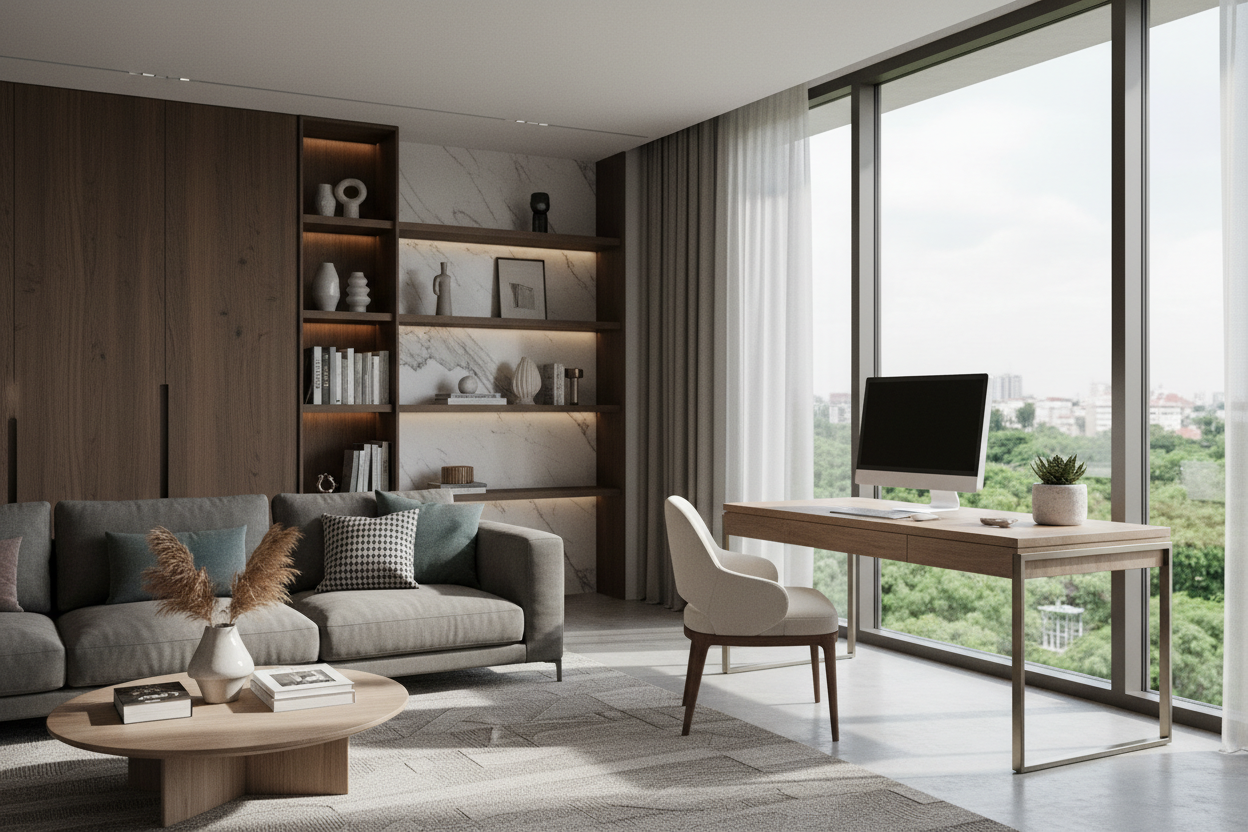
Integrating a workspace into a primary social zone is one of the most common challenges I encounter in residential design. The fear is always the same: sacrificing the relaxed, inviting atmosphere of a lounge for the sterile utility of an office. However, when approached with architectural sensitivity, a desk for living room area layouts can actually enhance the room's functionality without disrupting its visual flow. It is not about shoving a table into a corner; it is about curating a piece that speaks the same language as your sofa and coffee table.
Key Features to Look For
- Visual Weight: Opt for leggy, open silhouettes (parsons or writing styles) to maintain sightlines in shared spaces.
- Material Continuity: Select finishes that match your existing millwork or accent furniture (e.g., walnut, brass, or marble).
- Finished Backs: Essential if the desk floats in the room; the piece must look polished from all 360 degrees.
- Concealed Storage: Shallow drawers are vital to hide laptops and papers, instantly reverting the space to 'living mode' after hours.
Mastering the Layout and Zoning
The success of a desk setup in living room environments relies heavily on placement. In open-concept floor plans, floating the desk behind the sofa is a sophisticated move. It utilizes the 'dead zone' often found behind a large sectional and creates a natural partition. This placement allows the desk to function as a console table when not in use—simply style it with a pair of lamps and a stack of books.
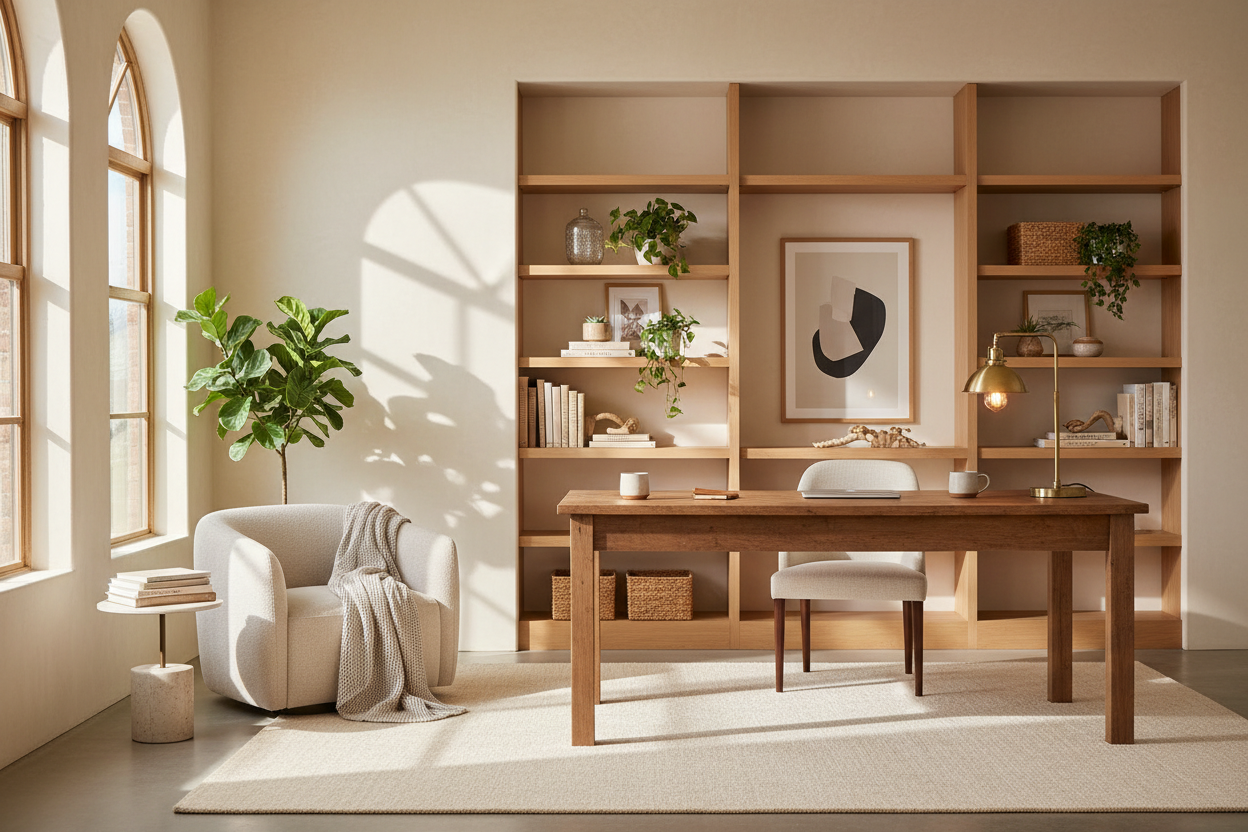
For smaller footprints, consider the alcove approach. Utilizing the recesses on either side of a fireplace is a classic architectural solution. By installing floating shelves or a custom built-in, you create family room desk ideas that feel structural rather than additive. This method draws the eye to the focal point (the fireplace) rather than the workspace itself.
Materiality and The "Anti-Office" Aesthetic
To ensure your workspace doesn't scream "corporate," avoid materials typically associated with cubicles, such as melamine or grey laminate. Instead, lean into desk in living room decor that mimics high-end residential furniture. A burled wood writing desk or a piece with leather-wrapped legs adds texture and warmth.
Choosing the Right Chair
The chair is often the giveaway. Avoid high-back ergonomic mesh chairs if the desk is visible from the main seating area. Instead, select a dining-style chair or a low-profile upholstered swivel chair. The goal is for the chair to look like it could be pulled up to the coffee table for extra guest seating during a gathering.
Office Desk in Living Room Ideas: Lighting and Ambience
Lighting is critical for both ergonomics and mood. In a living room, overhead recessed lighting is often too harsh or positioned incorrectly for desk work. Layer your lighting by adding a sculptural table lamp. Unlike a utilitarian task lamp, a ceramic or brass table lamp provides the necessary lumens for work while contributing to the room's ambient glow in the evening.
My Personal Take on Desk Integration
In my early years as a designer, I made a specific mistake that I now warn all my clients about: the "Console Table Trap." I once specified a beautiful, slim antique console table to act as a desk for a client who wanted something invisible. It looked stunning in the photos.
However, three months later, the client called me. The issue wasn't the look; it was the apron height. Most console tables have a deep apron (the wood panel beneath the top) or a lower shelf that restricts knee clearance. My client couldn't cross their legs or sit comfortably for more than twenty minutes. I learned the hard way that while aesthetics are paramount in a living room, if the ergonomics don't work, the desk becomes nothing more than an expensive shelf for mail. Now, I always physically measure the "knee-well" height—aiming for at least 24 to 26 inches of clearance—before approving a piece for a workspace.
Conclusion
Merging work and leisure zones requires a delicate balance of form and function. By prioritizing furniture-grade finishes, strategic placement, and proper scale, you can introduce a workspace that feels like a natural extension of your home's narrative. It is time to stop viewing the desk as an intruder and start seeing it as an opportunity to layer your design.
Frequently Asked Questions
How do I hide cables for a desk in the middle of the room?
If floor outlets aren't an option, use a rug to conceal cords running to the nearest wall. Additionally, invest in a desk with internal cable management channels or use adhesive clips to route wires down the inside of a desk leg, keeping the visual silhouette clean.
What is the minimum depth for a functional living room desk?
For occasional laptop work, a depth of 18 to 20 inches is sufficient. However, if you use an external monitor or require space for physical paperwork, aim for a minimum depth of 24 inches to prevent the setup from feeling cramped.
Can I use a desk in a small family room without crowding it?
Absolutely. Look for "ladder desks" or wall-mounted drop-leaf desks. These utilize vertical space and have a minimal footprint. When closed or styled, they read as shelving units rather than workstations.

Dejar un comentario
Este sitio está protegido por hCaptcha y se aplican la Política de privacidad de hCaptcha y los Términos del servicio.