









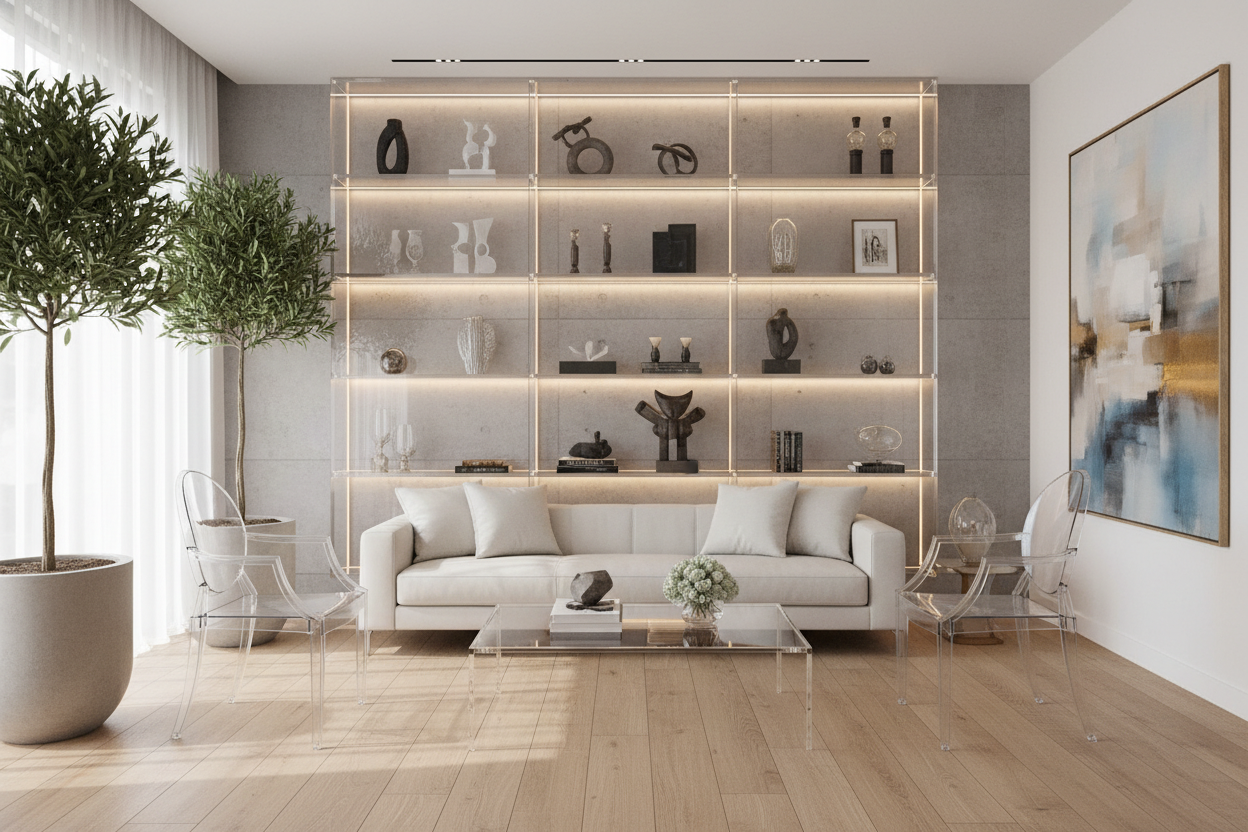
I once spent three hours trying to make a $15 plastic shelf look like a high-end gallery piece. Spoiler: it didn't work. It looked like I was displaying my sunglasses in a CVS aisle. I almost swore off lucite forever until I realized the problem wasn't the material—it was my execution.
The secret to a acrylic display box wall mount isn't just the box itself; it's the context you give it. When you get it right, your collectibles look like they are floating in mid-air, protected by a museum-grade barrier. When you get it wrong, it looks like a leftovers container taped to the wall.
- Choose acrylic that is at least 4mm to 5mm thick to avoid the 'flimsy plastic' look.
- Always use a backing texture like velvet or wallpaper to ground the display.
- Never skip dedicated lighting; shadows are the enemy of clear displays.
- Follow a 'rule of one'—one major item per box for a curated feel.
The Floating Box Dilemma (And Why I Was Skeptical)
I used to think a wall mounted acrylic display case was strictly for signed baseballs or retail stores. Every time I saw one in a home, it felt cold and a bit 'dorm room.' I was skeptical that plexiglass wall display cases could ever feel like 'real' furniture. But then I saw a designer use a series of staggered cubes to house a collection of vintage cameras, and I changed my mind.
The magic happens when you stop treating the acrylic wall display case as a storage bin and start treating it as a frame. Because it’s clear, the eye goes straight to the object. If that object is lit well and the box is high-quality, the 'floating' effect is genuinely stunning. It’s the ultimate minimalist hack for small apartments where heavy wooden shelving would just swallow the room whole.
Thickness Matters: How to Spot a High-End Cube
If you buy the cheapest acrylic wall mount box you find on a discount site, you're going to regret it. Cheap acrylic is thin (usually 2mm or 3mm), which means it bows under the slightest weight. It also tends to have a blue or yellow tint that screams 'cheap plastic.' You want a plexiglass wall display with a thickness of at least 1/4 inch (6mm) for that high-end, glass-like clarity.
Look for beveled edges and seamless joints. A high-quality acrylic wall box won't have messy glue drips or visible seams at the corners. If you are eyeing a large acrylic display case wall mount to hold something substantial—like a heavy ceramic sculpture—that thickness is non-negotiable. Thicker material handles the stress of the mounting hardware without cracking around the screw holes, which is where most cheap displays fail.
The Background Hack: Stop Leaving the Back Totally Clear
The biggest mistake people make with a clear wall display case is leaving the back completely transparent against a plain white wall. It disappears too much. To make the display look intentional, you need to ground it. I’ve found that adding a custom backing—think a swatch of grasscloth wallpaper or a piece of matte black acrylic—makes the object inside pop.
Sometimes, buying an acrylic display case with black wall mount shelf components is the move. The black shelf creates a visual 'floor' for your item, making the wall mounted acrylic display look like a custom architectural feature. It stops the 'floating bubble' effect and gives the eye a place to land. If you’re feeling fancy, a piece of adhesive velvet on the back panel makes even a plastic toy look like a million-dollar artifact.
Lighting Is Non-Negotiable (Even for Clear Boxes)
Light is what separates a 'box on a wall' from a 'gallery installation.' Even though a wall mounted clear display case lets light in from all sides, it usually creates weird, muddy shadows inside. You need a dedicated light source. For a clean look, I use rechargeable LED puck lights hidden at the very top or micro-LED strips tucked into the back corners.
If you don't want to deal with charging batteries or hiding wires, you might want to look at larger, integrated solutions. For instance, a 4 layer glass door display case with led light is a great alternative if you have the floor space and want that pre-wired, professional glow without the DIY headache. But for wall units, stick to warm-toned LEDs to avoid that 'refrigerator' vibe.
How to Hang Them Without Ruining Your Paint Job
I’ve made the mistake of over-tightening a screw and watching a hairline fracture spiderweb across a brand-new wall hanging acrylic display case. It’s heartbreaking. When mounting these, use rubber washers between the screw head and the acrylic. This distributes the pressure and prevents the plastic from cracking as the house settles or as you add weight to the box.
Don't even think about using those tiny nails that come in some kits. Use real drywall anchors. If you're nervous about the process, reading up on How to Hang a Collectible Wall Display Case Without Ruining Your Drywall will save you a lot of patching and painting later. A wall mounted plexiglass display cases setup is only as good as its stability; if it’s tilting even half a degree, the whole 'expensive' illusion is ruined.
Strict Styling Rules for Acrylic Wall Displays
The 'less is more' rule is the law of the land here. The moment you cram three things into one acrylic wall display, it starts looking like a junk drawer. I limit myself to one statement piece per box. If I’m displaying a collection, like vintage sneakers or rare books, each one gets its own dedicated clear display case wall unit.
This creates a rhythm on your wall. It looks like a curated collection rather than a storage solution. Keep the items centered and give them breathing room. If the item is small, use a tiny acrylic riser inside the box to give it some height. It’s these small, intentional choices that make a simple plastic box look like a high-end design choice.
FAQ
How do I clean acrylic without scratching it?
Never use Windex or paper towels. The ammonia in glass cleaners will cloud the acrylic over time, and paper towels are abrasive enough to leave swirl marks. Use a dedicated acrylic cleaner (like Novus) and a clean microfiber cloth.
Will my acrylic display yellow in the sun?
If you buy 'museum-grade' or UV-resistant acrylic, it won't yellow for years. Cheaper 'plexiglass' from big-box hardware stores isn't always UV-stabilized, so keep those out of direct sunlight if you want them to stay crystal clear.
Can I mount these on a brick wall?
Yes, but you’ll need a masonry bit and lead anchors. The same rules apply regarding rubber washers—you don't want the rigid acrylic pressing directly against the uneven surface of the brick, or it might snap when you tighten the screws.



Dejar un comentario
Este sitio está protegido por hCaptcha y se aplican la Política de privacidad de hCaptcha y los Términos del servicio.