










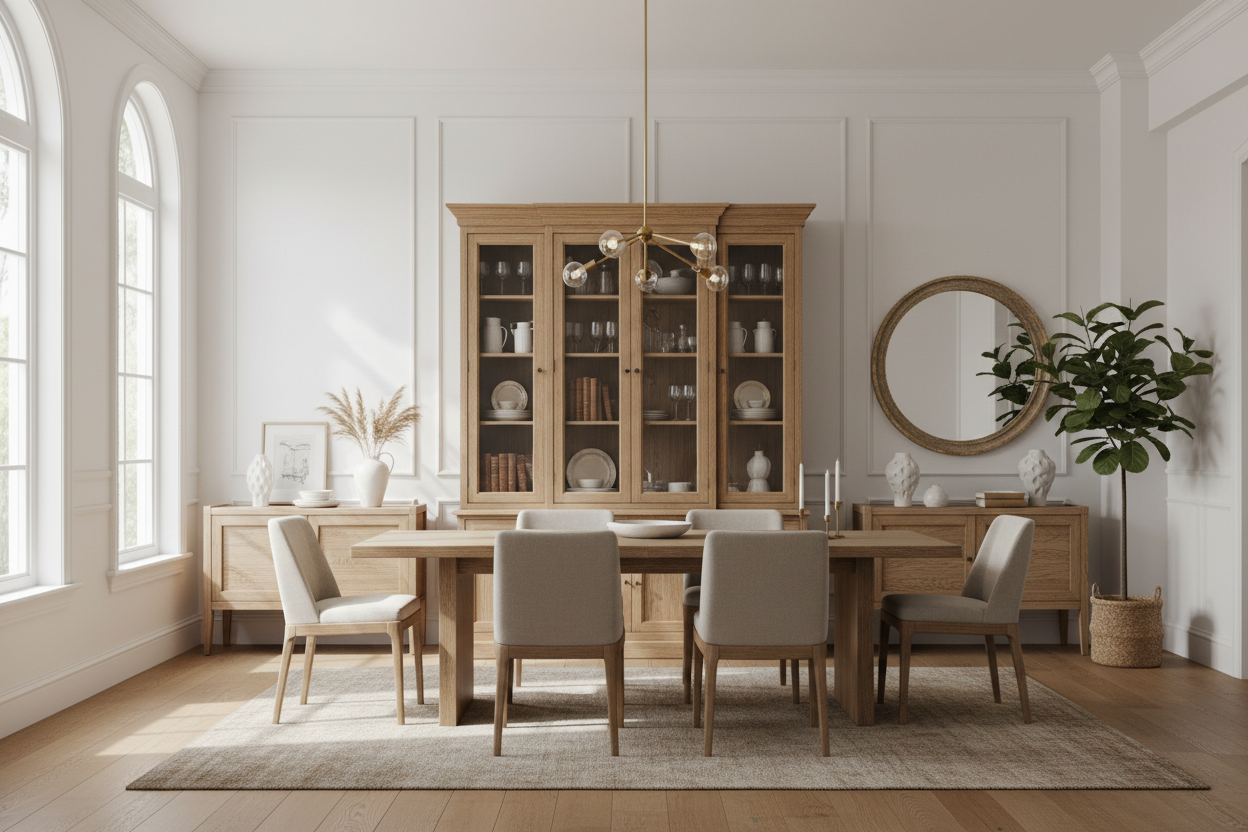
I remember walking into a client's new home last year. They'd just moved from a modern condo to a century-old house and were staring at their empty dining room, completely lost. 'We want something with character,' they said, 'but everything we see online looks either too fragile or too... shiny.' That's when I suggested we hunt for an oak china cabinet. After furnishing over 200 homes, I've learned that a well-chosen vintage piece like this isn't just furniture—it's the soul of a dining room.
Quick Takeaways
- Check for solid oak construction, not veneer over particleboard, by examining the weight and underside.
- Inspect glass doors for original wavy glass (crown glass) and secure, period-appropriate hardware.
- Measure your space: a typical two-piece hutch is 18-22 inches deep and 60-84 inches tall.
- Look for dovetail joints in drawers and a level, wobble-free base structure.
- Consider finish: light oak brightens a room; dark oak adds formal weight.
Why Oak China Cabinets Remain Timeless Dining Room Staples
You're not just buying storage. You're investing in a piece of history built to last. Oak's tight grain and density make it incredibly durable—I've seen 100-year-old cabinets that still feel rock-solid. Unlike fast-furniture pieces that chip if you look at them wrong, an antique oak cabinet develops a richer patina over time. In modern North American homes, which often lean toward open-plan spaces, a vintage oak hutch adds instant warmth and character. It tells a story. I recently placed a 1920s oak china cabinet with glass doors in a minimalist dining room; its honey-toned wood and slight imperfections became the focal point, making the sleek table and chairs around it feel more inviting.
The Designer's Checklist: 5 Things to Examine Before Buying
When I'm evaluating a piece with a client, I have a physical checklist. First, construction. Knock on the sides and back. Solid oak should feel substantial and sound dense, not hollow. A true solid piece often weighs over 150 pounds for a base cabinet alone. Check the back panel—historically, it might be a thinner oak board or even pine, which is fine, but avoid modern particleboard replacements. Second, examine the joinery. Look for hand-cut dovetails in drawers (uneven and slightly irregular is a good sign of age) and mortise-and-tenon joints in the frame. Third, glass doors. Original glass often has subtle waves or bubbles (crown glass). Check for cracks and ensure the glazing points (the tiny metal tabs holding the glass) are secure. New, perfectly flat glass can indicate a replacement, which isn't a deal-breaker but affects value. Fourth, hardware. Are the hinges, knobs, or locks original? Brass or iron hardware that shows a natural wear pattern adds authenticity. Finally, structural integrity. Open and close all doors and drawers. They should operate smoothly. Place a level on top—significant warping is a red flag. For a deeper dive on why solid construction matters for long-term value, see our solid oak display cabinet investment guide.
Decoding Styles: From Victorian to Mid-Century Oak Hutches
Not all vintage oak is the same. Knowing the style helps you assess age, value, and if it fits your home. Victorian-era oak china cabinets (circa 1880-1910) are often heavy and ornate. Look for carved details, turned spindles, and dark, almost fumed oak finishes. They're statement pieces, typically 84 inches tall or more. Arts & Crafts or Mission style (1900-1920s) features cleaner lines, through-tenon joinery (where the joint peeks out the side), and quarter-sawn oak with a distinctive 'ray flake' or tiger-stripe grain. These work beautifully in craftsman bungalows. Mid-century modern oak hutches (1950s-1960s) are lighter in scale and color. They often have tapered legs, simpler slab doors, and may mix oak with other materials like teak accents. I once sourced a mid-century light oak china cabinet with glass doors for a post-war ranch home; its low profile (around 72 inches tall) and minimalist hardware were perfect for the space.
Light vs. Dark Oak: Choosing the Right Finish for Your Space
This choice impacts the whole room's feel. Light oak china cabinets—think honey, golden, or white oak tones—reflect light and make a space feel larger and airier. They're fantastic in north-facing rooms or smaller dining areas. I used one in a 12x14 foot dining room with pale gray walls; it lifted the entire space. However, light finishes show water rings and scratches more easily, so consider a protective wax. Dark oak—like quarter-sawn oak with a fumed or stained espresso finish—feels more formal and substantial. It anchors a large room and pairs well with rich wall colors. In a recent project with a dark oak table, I chose a matching antique oak china hutch to create a cohesive, library-like feel. Remember, you can often refinish oak, but stripping an original patina can diminish its character and value. For specifics on maintaining lighter tones, our article on white oak cabinet considerations has useful tips.
Glass Door Considerations: Protection, Visibility, and Style
The glass doors are what make a china cabinet functional. First, consider the type. Original wavy glass is charming but can distort the view of your collection. Modern tempered glass is safer and clearer. Check the thickness—vintage glass is often thinner (1/8 inch), while replacements are usually 1/4 inch. Look for secure glazing; the putty or rubber gasket should be intact with no gaps. For safety, especially in homes with kids, ensure the doors have functional latches or locks. Stylistically, the glass treatment matters. Clear glass offers full visibility. Leaded or stained glass adds decorative appeal but reduces what you can see inside. Frosted or reeded glass provides a softer, more diffused display, ideal for hiding less-than-perfect dishware sets. If you're tight on space, a corner china cabinet with frosted glass can be a smart solution that tucks neatly away.
Integrating Vintage Oak into Contemporary Dining Rooms
The magic happens in the mix. Don't feel you need to create a period room. Start by balancing scale. A massive Victorian hutch can overwhelm a modern dining set. Try pairing it with a simple, leggy table (like a tulip table) to create visual contrast. For color, let the oak be the warm wood tone in the room. Complement it with cool metals (brushed nickel or chrome in light fixtures) and neutral upholstery on dining chairs. Lighting is key. Aim a picture light or a small, modern sconce above the cabinet to highlight your display. For a bold mix, I once styled an antique oak china cabinet with a sleek, black glass door cabinet in the same room. The contrast between the warm, textured oak and the glossy black modern piece created a dynamic, collected-over-time look. Leave at least 36 inches of walkway between the cabinet and your dining table for comfortable circulation.
Where to Find Quality Oak China Cabinets (And What to Avoid)
My go-to sources are estate sales, reputable antique dealers, and specialized online marketplaces like Chairish or 1stDibs. Local auctions can yield treasures, but you need to inspect in person or get very detailed photos. When browsing online listings, red flags include: photos that only show the front (ask for shots of the back, sides, interior, and underside), vague descriptions like 'vintage style' (which often means new reproduction), and sellers who can't answer specific questions about construction or repairs. Always ask: 'Is this solid oak or veneer?', 'Have any parts been replaced (glass, hardware, feet)?', and 'Are there any structural repairs?' I advise clients to budget for professional moving—these pieces are heavy and fragile. Avoid pieces with significant woodworm damage (look for tiny exit holes and frass, a sawdust-like substance), major water damage that's caused swelling or rot, or cabinets that have been poorly painted over (stripping can be a nightmare).
Personal Experience: The One That Got Away (And The Lesson Learned)
Early in my career, I found a stunning Arts & Crafts oak china hutch at an estate sale. The quarter-sawn grain was spectacular, the price was right, and I bought it on the spot for a client. The downside? I failed to check the back panel thoroughly. Once in their home, we discovered the bottom foot of the back was completely rotted from sitting on a damp floor, compromising the structure. The repair cost nearly matched the purchase price. The lesson? My checklist now always includes running my hand along the very bottom edge of the back and base, feeling for soft spots or crumbling wood. No detail is too small to inspect.
FAQ
Can I refinish an antique oak china cabinet myself?
It's possible, but I urge caution. Stripping an original finish can drastically reduce its value and character. If the finish is just dull, try a gentle cleaning with a solution of mild soap and water, followed by a quality furniture wax. For significant damage, consult a professional furniture restorer.
How much should I expect to pay for a quality vintage piece?
Prices vary wildly by style, condition, and region. A solid, unrestored oak china cabinet in good condition can range from $800 to $3,500. Exceptional, museum-quality pieces or rare styles command more. Remember, you're paying for craftsmanship that's nearly impossible to find new at any price.
Are old oak china cabinets safe for everyday use?
Absolutely, if they're structurally sound. Ensure shelves are secure and can hold the weight of your dishes (reinforce if needed). Check that doors close securely so they don't swing open. I recommend using felt pads under heavy items to prevent scratching the shelves.
How do I clean the glass on an old cabinet?
Use a vinegar and water solution or a dedicated glass cleaner. Spray onto a soft cloth first, not directly onto the glass, to avoid liquid seeping into the wood frame or old glazing putty. Gently wipe, taking care around the edges.


Dejar un comentario
Este sitio está protegido por hCaptcha y se aplican la Política de privacidad de hCaptcha y los Términos del servicio.