










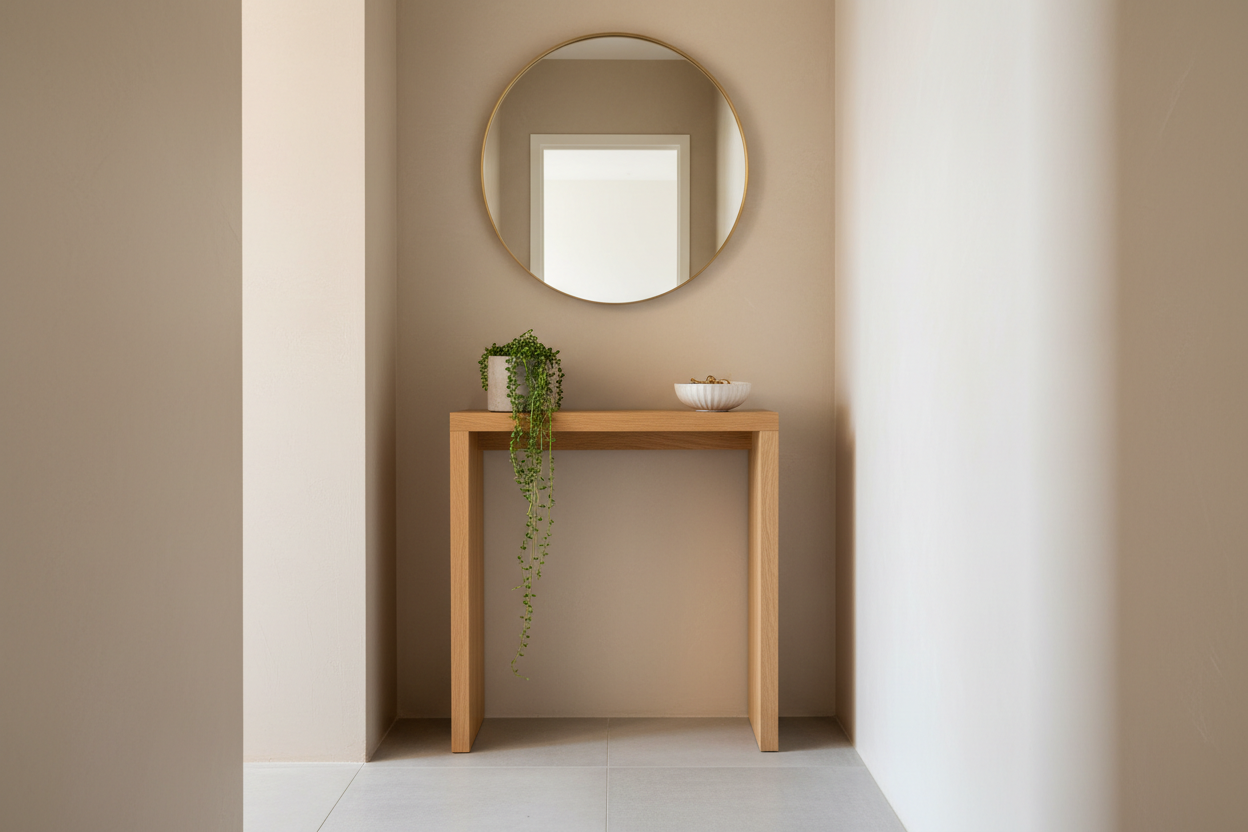
The hallway is often the most neglected area of a home, treated merely as a tunnel to get from the front door to the living room. Yet, it sets the tone for your entire house. The challenge, of course, is that most corridors are notoriously tight on space. You want a place to drop your keys and display a welcoming vase of flowers, but you don't want to be bruising your hip every time you walk past. Finding the right small table for hall spaces is less about compromising on style and more about understanding the geometry of your home.
A well-chosen surface does more than just fill a gap; it anchors the space. It turns a transitional area into a destination. Whether you are working with a Victorian terrace corridor or a compact apartment entry, the goal is to maximize utility without sacrificing the flow of traffic. The trick lies in balancing visual weight with physical dimensions.
Measuring for Flow and Function
Before you fall in love with a piece of furniture online, you need to get realistic about your square footage. A standard console table is often too deep for a narrow corridor. In a tight area, every inch of depth counts. Generally, you want to maintain at least 36 inches of walking clearance to prevent the space from feeling claustrophobic. If your hallway is particularly narrow, look for a small table for hallway use that has a depth of 10 to 12 inches. These "skinny" consoles are specifically designed to hug the wall.
Visual weight is just as important as physical measurement. A chunky wooden table with solid sides will make a narrow hall feel even smaller. Instead, opt for open legs, glass tops, or floating designs. These allow the eye to travel through the piece to the wall behind it, creating an illusion of more space. If you have high ceilings, you can get away with a taller table, which draws the eye up and away from the limited floor footprint.
The Multi-Purpose Landing Strip
We need to talk about what happens when you walk through the door. You have mail, keys, sunglasses, and maybe a bag. Without a designated drop zone, these items migrate to the kitchen island or the dining table, creating clutter. A small table for hallway entrance areas acts as a barrier against this migration. It is your home's first line of defense against mess.
To make this work, the table needs to be styled with intention. A simple tray can catch keys and loose change, keeping the surface looking tidy. If the table has a drawer, even better. That drawer becomes the home for dog leashes, spare batteries, and those other odds and ends that usually end up in a junk drawer. If you choose an open table, consider placing a textured basket underneath. This grounds the furniture and provides hidden storage for shoes or umbrellas, keeping the floor clear.
My Experience with the "Impossible" Hallway
I once lived in a walk-up apartment where the entryway was essentially a dark, three-foot-wide chute. For months, I left it bare because I was convinced nothing would fit. The space felt cold and echoed unpleasantly. Eventually, I found a vintage demilune (half-moon) table that was barely 11 inches deep at its widest point. Because it had rounded edges, there were no sharp corners to catch on grocery bags or coats. I hung a large round mirror above it to reflect the little light that came from the living room. That tiny addition changed the entire psychology of coming home. It wasn't just a hallway anymore; it was a foyer. It proved that even the most awkward architectural mistakes can be corrected with the right furniture.
Turning a Hallway into a Workspace
With more people working from home, maximizing square footage has become a priority. If your corridor has a slightly wider alcove or a dead end, you might consider a small hallway desk instead of a traditional console. This is a brilliant way to carve out an office niche without sacrificing a bedroom.
The key here is choosing a desk that doesn't look like a corporate workstation. Look for a ladder desk or a wall-mounted secretary desk that can fold up when not in use. When you aren't working, it functions as a display surface for a lamp and books. When you need to send an email, you pull up a stool. This dual functionality is essential for smaller homes where every piece of furniture needs to earn its keep.
Materials and Aesthetics
The material you choose dictates the mood of the entrance. Acrylic or Lucite tables are the ultimate "ghost" furniture—they provide surface area while remaining visually invisible, which is perfect for minimalist or ultra-small spaces. However, they can lack warmth. If your home feels too sterile, a warm walnut or oak small table hallway piece can add necessary texture.
Metal consoles with stone tops offer a great middle ground. They are usually durable and slim, making them practical for high-traffic zones where bumps and scuffs are inevitable. Marble tops, in particular, reflect light and add a touch of luxury to an otherwise utilitarian space. Just be mindful of the base; a heavy pedestal base can get in the way of your feet, while four slender legs usually offer better clearance.
Lighting and Accessories
A table in the dark is a missed opportunity. Lighting is the partner that makes the furniture shine. In a narrow hall, you likely don't have space for a massive table lamp with a wide shade. Instead, look for tall, slender buffet lamps or install wall sconces flanking the table. This creates a pool of light that welcomes you in.
Mirrors are the oldest trick in the book for a reason. Placing a mirror above your console doubles the visual width of the hallway and bounces light around. It also gives you a place for a final check before you leave the house. Grouping objects in threes—perhaps a lamp, a stack of books, and a small plant—creates a balanced vignette that looks curated rather than cluttered. Remember, the surface area is limited, so edit your decor ruthlessly. Negative space is your friend.
Making the Final Decision
Selecting the right piece requires patience. Mock it up before you buy. Use painter's tape to mark the dimensions of the potential table on the floor and the wall. Walk past it. Carry groceries past it. If you find yourself naturally shying away from the wall to avoid the tape, the table is too deep. The perfect piece should feel like it has always been there, blending into the architecture while serving a distinct purpose. Whether it’s a floating shelf acting as a console or a slim antique, the right table transforms a hallway from a pass-through into a pause.
Frequently Asked Questions
How much space do I need to leave for a walkway in a hall?
Ideally, you should maintain a minimum clearance of 36 inches (about 90 cm) for a comfortable walkway. If your hallway is tighter than that, consider a wall-mounted floating shelf or a table with a depth of 10 inches or less to prevent the space from feeling cramped.
Can I use a radiator cover as a hallway table?
Absolutely. A radiator cover is an excellent way to reclaim space in a narrow hall. It masks the unsightly radiator while providing a long, narrow shelf for keys, mail, and decor without encroaching further into the walking path.
How do I style a small hallway table without it looking cluttered?
Follow the rule of three and focus on height rather than width. Use a tall lamp or vase to draw the eye up, a tray to corral small loose items like keys, and one decorative object for personality. Leave some empty surface area to keep the look airy.

Dejar un comentario
Este sitio está protegido por hCaptcha y se aplican la Política de privacidad de hCaptcha y los Términos del servicio.