










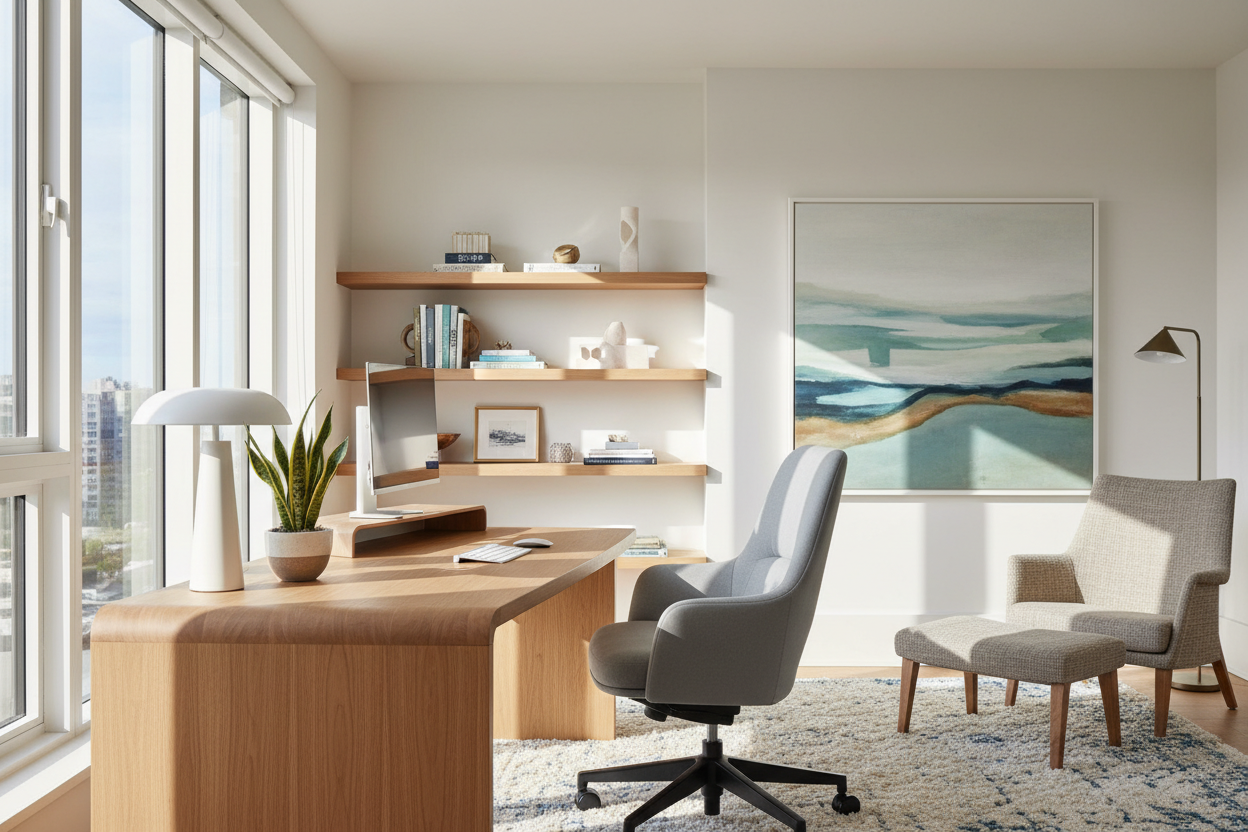
You have likely spent hours scrolling through Pinterest or Instagram, saving dozens of beautiful office images to your inspiration boards. Yet, standing in your own spare room or corner nook, the disconnect between those curated pixels and your reality feels vast. As a designer, I see this constantly: clients fall in love with a vibe but struggle to deconstruct the specific elements—furniture silhouettes, material palettes, and lighting layers—that make the space work. This guide is not about looking at more pictures; it is about analyzing them to make smart, lasting furniture investments.
Key Design Pillars to Replicate the Look
- Visual Weight: Balance heavy pieces (like a solid oak desk) with lighter elements (like a wire-frame chair or glass shelving).
- Texture Layering: Combine hard surfaces (wood, metal) with soft textiles (rugs, drapes) to avoid a sterile "showroom" feel.
- Lighting Temperature: Opt for 2700K-3000K bulbs to mimic the warm, inviting glow seen in high-end editorial shots.
- Ergonomics Hidden in Style: Ensure that aesthetic chairs actually offer lumbar support and seat depth suitable for your height.
- Cord Management: The hidden hero of every clean image; look for desks with integrated modesty panels or grommets.
Decoding the Furniture: Materiality and Finish
When you look at beautiful office pictures, what often catches your eye is the interplay of light and texture. Achieving this starts with material selection. Avoid flat-pack furniture with high-gloss synthetic veneers; they reflect light harshly and tend to peel at the edges within a year.
Instead, look for matte or satin finishes on natural wood veneers or solid timber. Walnut and white oak are staples in luxury design because they develop a patina over time rather than just wearing out. If you prefer a modern industrial aesthetic, seek out powder-coated metals rather than painted steel, as the former resists chipping and maintains that premium matte look.
The Focal Point: Choosing the Right Desk
Silhouette and Scale
The desk anchors the room. In high-end design, we talk about "negative space." If your room is small, a heavy pedestal desk will make the room feel claustrophobic. Instead, opt for a writing desk with high legs—seeing the floor underneath the furniture tricks the eye into perceiving more space.
Functionality vs. Aesthetics
Many beautiful office images show pristine surfaces with zero clutter. Realistically, you have cables, hard drives, and stationery. When buying, prioritize desks with shallow drawers (pencil drawers) to keep the surface clear without adding bulk. If you need deep storage, separate it from the desk using a credenza behind you; this keeps the main focal point clean.
Seating: Where Comfort Meets Sculpture
The chair is often the sculptural element in a room, but it is also where you spend eight hours a day. Vintage leather executive chairs look incredible in photos, but vintage foam often lacks resilience. If buying new, look for high-density foam (2.5 lbs or higher) upholstered in breathable fabrics or top-grain leather. Avoid bonded leather; it lacks the durability and breathability required for long sessions.
My Personal Take on beautiful office images
I once designed a home office for a client who was obsessed with a specific photo featuring a stunning, high-gloss black lacquer desk. It looked sleek, architectural, and incredibly expensive. Against my practical advice regarding maintenance, we sourced a nearly identical custom piece.
Two weeks after installation, I received a call. The issue wasn't the look—it was the life. Every single fingerprint, speck of dust, and coffee mug ring was visible instantly. The client felt like they couldn't work for fear of messing up the "art." We eventually swapped it for a textured rift-sawn oak desk. The lesson? A matte or textured finish is forgiving. It hides the dust of daily life and allows you to actually work in your office, rather than just admire it. Always prioritize a finish that serves your lifestyle, not just the camera lens.
Conclusion
Creating a workspace that rivals the best design editorials isn't about buying the most expensive items; it is about curating textures and respecting the scale of your room. By focusing on quality materials and smart ergonomics, you can build a space that feels as good as it looks.
Frequently Asked Questions
How do I make a small office look like the professional images?
Focus on verticality. Use floor-to-ceiling shelving or hang art higher on the wall to draw the eye up. Keep the furniture profile low and leggy to maximize visible floor space.
What lighting is best for a photogenic yet functional office?
Layer your lighting. You need a mix of ambient light (overhead), task light (desk lamp), and accent light (a floor lamp or LED strip in shelves). This creates depth and eliminates harsh shadows.
Are beautiful office chairs ever comfortable?
Yes, but you have to look past the "accent chair" category. Look for brands that specialize in "ergonomic conference seating" rather than standard task chairs. They often bridge the gap between sleek design and 8-hour comfort.

Dejar un comentario
Este sitio está protegido por hCaptcha y se aplican la Política de privacidad de hCaptcha y los Términos del servicio.