










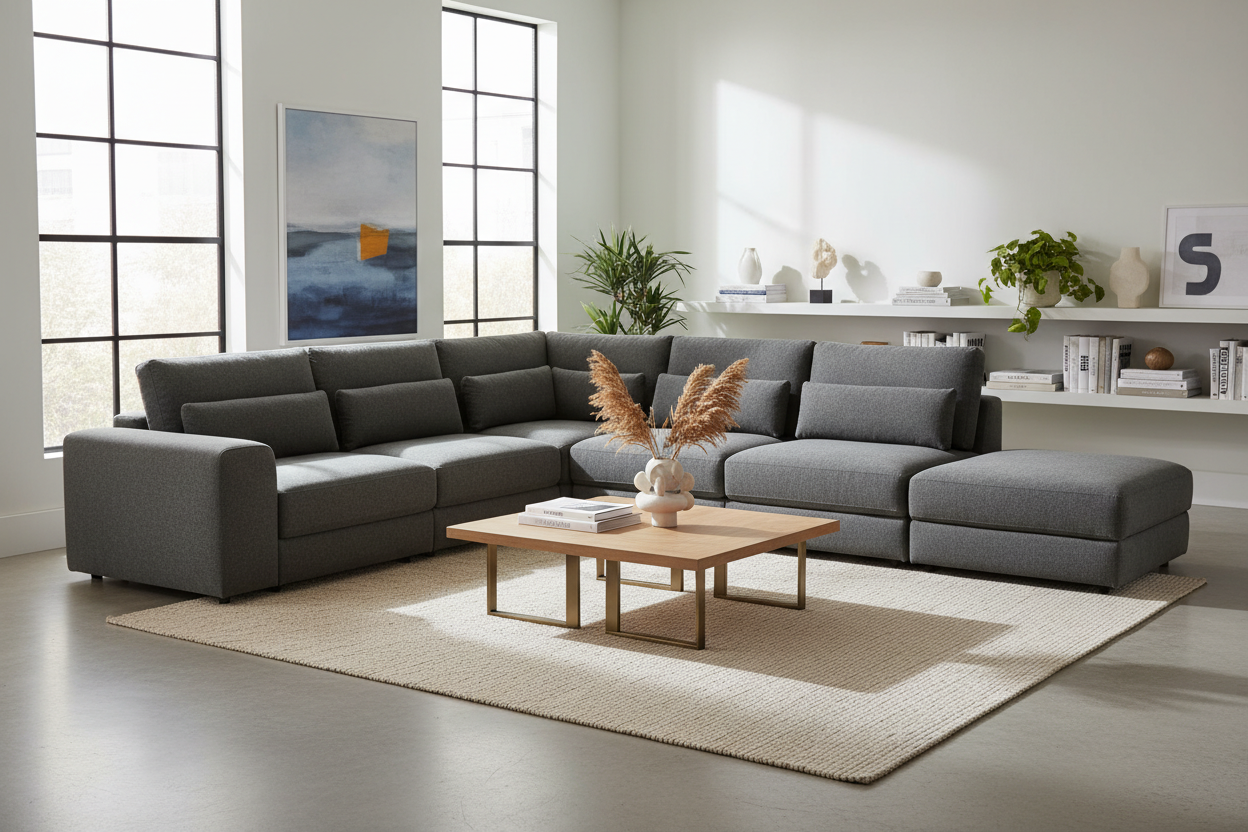
We have all encountered the rigid constraints of a standard sofa. You fall in love with a silhouette in the showroom, only to realize the chaise is on the wrong side for your living room, or the length blocks a vital walkway by mere inches. This is where the concept of a sectional sofa by the piece shifts from a luxury to a functional necessity. Unlike static furniture, purchasing modular components allows you to curate a seating arrangement that respects the architectural flow of your home rather than fighting against it.
As an interior designer, I often recommend this approach not just for the immediate fit, but for the longevity of the design. It allows you to build a piece that evolves with your life—whether you are moving to a larger home or simply need to reconfigure a room for a holiday gathering. Below, I break down exactly how to select these pieces to ensure visual balance and lasting quality.
Quick Decision Guide: Key Features to Look For
If you are rushing to make a purchase, prioritize these four factors to ensure your modular setup stands the test of time and comfort:
- Connector Quality: Ensure the pieces use heavy-duty metal alligator clips or ratcheting connectors underneath. Without these, pieces will separate and drift on hard flooring.
- Frame Construction: Look for kiln-dried hardwood frames. Since each piece stands alone, the frame integrity is crucial to prevent warping over time.
- Seat Depth & Height: Since you are buying by the piece, verify that the seat depth (standard is 21"-24") matches your lounging preference.
- Upholstery Continuity: If buying pieces over time, check if the manufacturer guarantees "stock" fabrics or if dye lots vary significantly.
The Anatomy of Modular Design
When we talk about buying a sectional by the piece, we aren't just talking about size; we are talking about geometry. The beauty of this approach lies in the specific components available: the armless chair, the corner wedge, and the ottoman.
The Power of the Armless Chair
The armless chair is the workhorse of the modular sectional. It acts as the bridge between corners, determining the overall length of your sofa. However, in smaller urban apartments, I often use two armless pieces paired with an ottoman to create a "floating" chaise effect. This reduces visual bulk because there are no heavy arms boxing in the space, making the room feel airier.
The Corner Wedge
This is your anchor. A common mistake homeowners make is underestimating the footprint of the corner piece. A curved wedge offers a softer, more organic aesthetic but takes up significantly more square footage than a standard 90-degree corner. If your room is rectangular and narrow, stick to the 90-degree angle to maximize floor space.
Materiality and Durability
Buying by the piece often means a higher price point per seat compared to a pre-bundled set, so the materials must justify the investment.
Suspension and Foam
Because each module has its own suspension system, consistency is key. You want to avoid a situation where the frequently used corner piece sags while the rarely used end piece remains stiff. Look for 8-way hand-tied springs or sinuous springs made of heavy-gauge metal. For cushioning, I recommend a high-resiliency foam core wrapped in a down-blend. This provides the structural rebound needed to keep the pieces looking uniform while offering that sink-in comfort.
Fabric Direction
Here is a nuanced detail often overlooked: patterns. If you choose a directional fabric (like a stripe or a heavy corduroy), ensure the pattern aligns perfectly across the modules. This is why I generally advise clients to stick to textured solids or performance velvets when buying by the piece—it masks slight misalignments that can occur if the floor isn't perfectly level.
Lessons from My Own Projects: The "Drifting" Dilemma
I want to share a specific challenge I faced during a project for a loft in downtown Chicago. The client wanted a massive, cloud-like sectional purchased by the piece to fit a sunken living area. We ordered five armless units and two corners.
Visually, it was stunning. However, within a week, the client called me. Every time someone sat down, the modules on the polished concrete floor would slide apart, creating annoying gaps that swallowed remote controls and phones. The issue wasn't the sofa itself, but the lack of friction.
We learned that standard plastic connectors weren't enough for lightweight modular pieces on slick floors. We ended up installing heavy-duty rubber non-slip pads on every single leg and upgrading the under-sofa connectors to metal ratchets that locked the frames together with a vice-like grip. If you have hardwood or tile floors, do not rely solely on the weight of the furniture to keep it in place. Treat the connection hardware as a critical component of the sofa's functionality.
Conclusion
Investing in a sectional sofa by the piece is a commitment to flexibility. It grants you the freedom to act as the architect of your own comfort, allowing for configurations that a standard furniture store simply cannot offer. By focusing on robust connectors, consistent cushion density, and strategic layouts, you can build a seating area that is as resilient as it is stylish.
Frequently Asked Questions
Can I buy more pieces later if I move to a bigger house?
Yes, this is the main benefit. However, be aware of "dye lot" variations. Fabric dyed in one batch may differ slightly in shade from a batch produced two years later. If you plan to expand later, choose a neutral, textured fabric where slight color shifts are less consistent.
How do I stop the pieces from separating?
Most high-quality modular sections come with alligator clips or metal brackets on the underside. If yours did not, or if they are flimsy, you can purchase universal sectional connectors from hardware stores. Additionally, using rubber furniture grippers on the feet is essential for hard surfaces.
Is a modular sectional less comfortable than a standard sofa?
Not if chosen correctly. The only potential comfort drawback is feeling the "seam" between cushions if you lay across them. To mitigate this, look for pieces with "bench" style cushions or tight upholstery where the gap is minimized.

Dejar un comentario
Este sitio está protegido por hCaptcha y se aplican la Política de privacidad de hCaptcha y los Términos del servicio.