










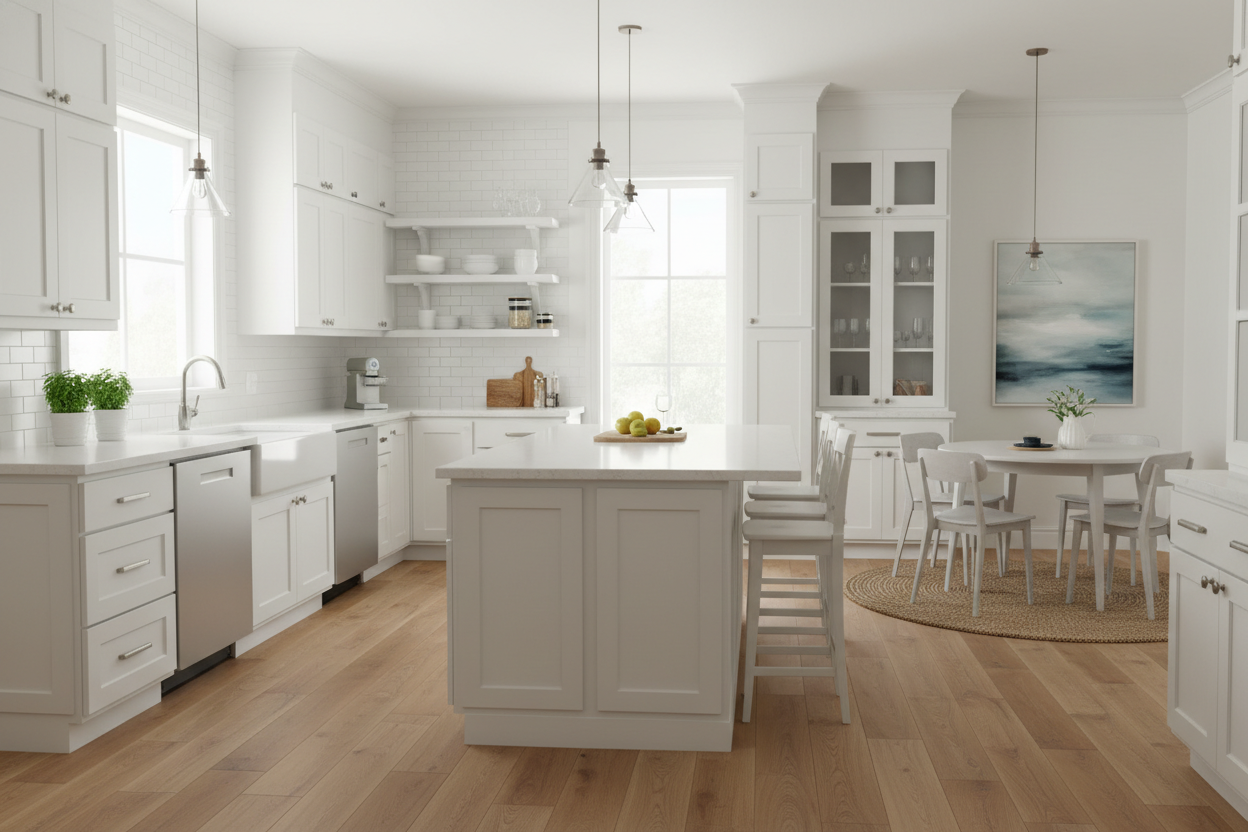
I remember staring at my old kitchen cabinets—white, glossy, and so perfectly uniform they felt like they belonged in a lab. If I got a single scratch on one door, the whole illusion shattered. I spent years chasing a Pinterest-perfect aesthetic where every line was laser-straight, only to realize my house felt like a sterile showroom rather than a place where people actually lived.
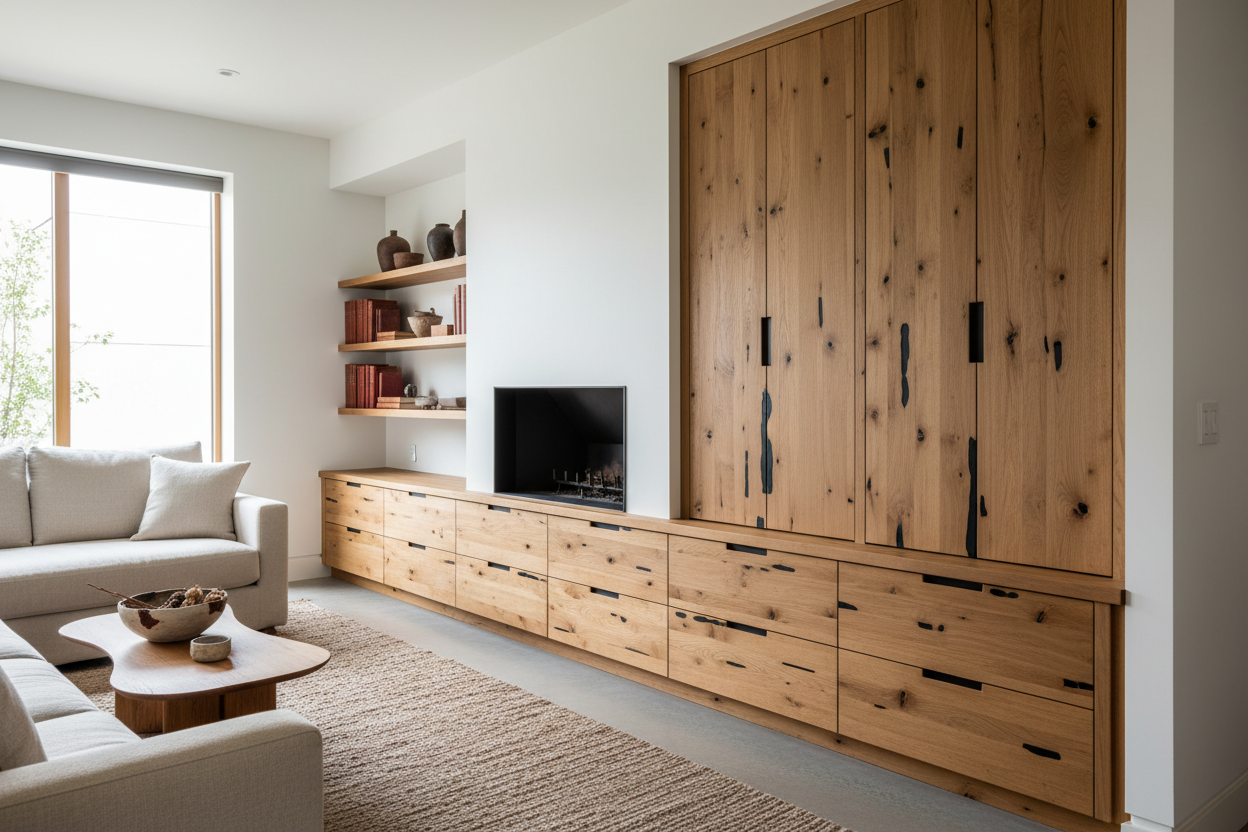
That is why I went in the opposite direction for my latest renovation. I went looking for handmade cabinets that actually looked like they were made by a human being. I didn't want 'factory-second' junk, but I did want to see the subtle evidence of a chisel and the natural, chaotic beauty of real wood grain that hasn't been sanded into oblivion.
- Factory furniture is designed to be replaced; handmade is designed to be repaired.
- Slight variations in grain and tool marks are design features, not defects.
- Solid wood joinery beats cam-locks and staples every single day.
- Character ages significantly better than sterile, plastic-coated perfection.
Confession: I Used to Be Obsessed with Factory Perfection
For a long time, I thought 'quality' meant 'identical.' I wanted every cabinet door to be a perfect mirror image of the one next to it. Big-box stores have conditioned us to expect this. They use CNC machines and heavy coats of lacquer to hide the fact that the 'wood' underneath is often just compressed sawdust and glue. It’s predictable, sure, but it’s also incredibly lifeless.
When you fill a room with items that have zero variation, the room feels flat. There’s no shadow play, no texture, and no story. I finally hit a breaking point when a 'premium' laminate cabinet I bought for $800 started peeling at the edges after just six months. It couldn't be fixed because the material underneath was basically paper. That was the moment I stopped caring about symmetry and started caring about substance.
Realizing that a slight 1/16th-inch variation in a door frame isn't a mistake—it's a signature—changed how I look at my entire home. It’s the difference between a mass-printed photo and an oil painting. One is perfect and forgettable; the other has depth you can actually feel when you run your hand over it.
The Difference Between 'Sloppy' and a True Maker's Mark
Let’s be clear: I’m not advocating for cabinets that don’t close or drawers that stick. There is a massive canyon between artisanal character and bad craftsmanship. A true maker’s mark might be a slight ripple from a hand-plane on the interior of a drawer or a grain pattern that doesn't perfectly 'book-match' because the carpenter wanted to use the strongest part of the plank. These are signs of life.
On the flip side, you have to watch out for cheap dropshipping scams disguised as handmade. If you see 'handmade' cabinets online for prices that seem too good to be true, check the joinery. Authentic handmade pieces usually feature dovetail or mortise-and-tenon joints. If you see staples, plastic corner brackets, or thin plywood backing that flexes when you touch it, you aren't looking at a maker’s piece—you're looking at a factory reject with a fancy marketing label.
I look for 'honest' construction. I want to see that the person building it understood how wood moves. Wood is a living material; it breathes, expands, and contracts. A machine-made cabinet fights that movement until it cracks. A handmade cabinet is built with 'floating' panels that allow the wood to live without self-destructing. That’s the kind of 'flaw' I’ll pay a premium for.
Testing the Waters in the Hardest-Working Room
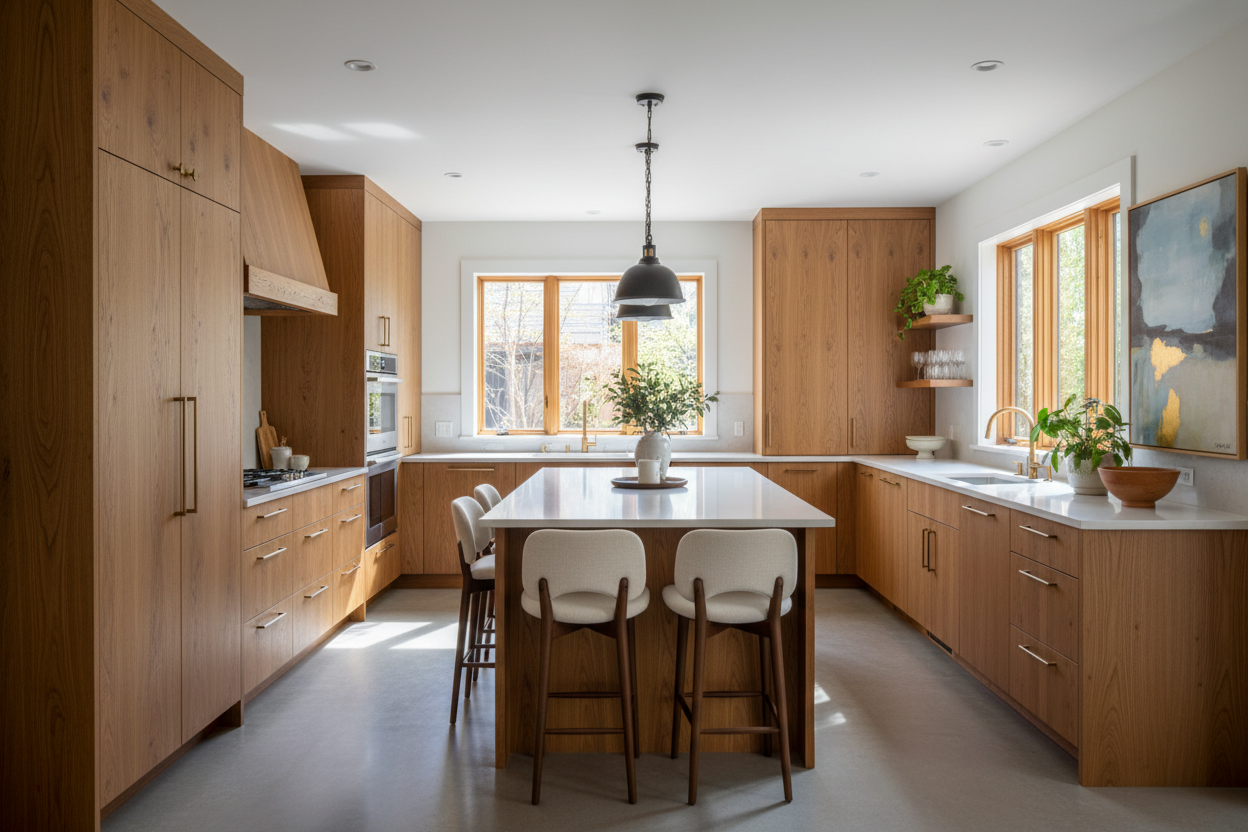
I didn't swap the whole house at once. I started in the kitchen storage zone—specifically the area that holds my heavy cast iron pans and the 20-pound bags of flour. I decided to upgrade our standard pantry cabinets to something built from solid white oak by a local woodworker. I told him specifically: 'Don't over-sand it. I want to see the wood.'
The result was a 84-inch tall beast of a cabinet that had tiny, beautiful knots in the wood and a finish that felt like, well, wood—not plastic. It wasn't 'perfect.' One door had a slightly more aggressive grain pattern than the other. But when the morning light hits it, those variations create a texture that makes the whole kitchen feel warmer.
It also didn't wobble. Not even a little. I loaded it with probably 150 pounds of gear, and the shelves didn't even think about bowing. My old factory-built pantry would have been screaming for mercy under half that weight. That’s the irony: the 'flawed' handmade piece was infinitely more capable than the 'perfect' factory one.
Sturdy Enough for Heavy Traffic (And Heavy Boots)
After the pantry success, I looked at our entryway. This is the combat zone of our house. Muddy boots, heavy grocery bags, and kids who think doors should only be closed by slamming them. We were replacing our flimsy shoe cabinets every two years because the particle board hinges would literally rip out of the frame.
I replaced them with a bench-made cabinet featuring thick, solid-wood stiles and heavy-duty brass hardware. The wood has some 'character' marks—a few spots where the chisel went a hair deeper—but the structural integrity is lightyears ahead of anything I’ve owned. If a kid slams this door, the house shakes before the cabinet does.
That’s the thing about 2.0 lb/ft³ density wood versus the cheap stuff. It has mass. It has gravity. When you touch it, it doesn't sound hollow. It sounds permanent. I’ve stopped worrying about the occasional 'ding' or scratch because, on a handmade piece, those marks just blend into the existing story of the wood. You can’t 'ruin' something that already embraces its own nature.
How to Embrace the Quirks in Your Own Space
If you’re ready to ditch the sterile look, don't feel like you need to replace every stick of furniture you own. Start small. Mix a hand-planed side table with your existing sofa. The contrast actually makes both pieces look better. The 'perfection' of the mass-produced item provides a backdrop that makes the handmade piece pop.
Stop looking for mistakes and start looking for intent. When you see a slight variation in color or a visible joint, remind yourself that a person sat at a bench and made a series of decisions to create that object. That human connection is what makes a house feel like a home. Let the wood be wood, let the maker be a maker, and let go of the idea that your kitchen needs to look like a computer render.
Are handmade cabinets harder to clean?
Not really, but it depends on the finish. If they have a hand-rubbed oil finish, you just wipe them with a damp cloth. Avoid harsh chemicals that strip the natural oils. Because the wood is real, you can actually buff out most scuffs, which you can't do with laminate.
Do handmade cabinets warp more than factory ones?
Actually, they usually warp less. A skilled maker understands grain direction and uses joinery techniques that allow the wood to move without twisting the whole frame. Factory cabinets often use 'balanced' veneers that can peel or bubble if they get too damp.
Why are they so much more expensive?
You're paying for time and material density. A factory can pump out a cabinet in minutes using thin sheets of MDF. A maker might spend forty hours on a single unit using kiln-dried hardwoods. You're buying something that will last 50 years instead of five.

Dejar un comentario
Este sitio está protegido por hCaptcha y se aplican la Política de privacidad de hCaptcha y los Términos del servicio.