










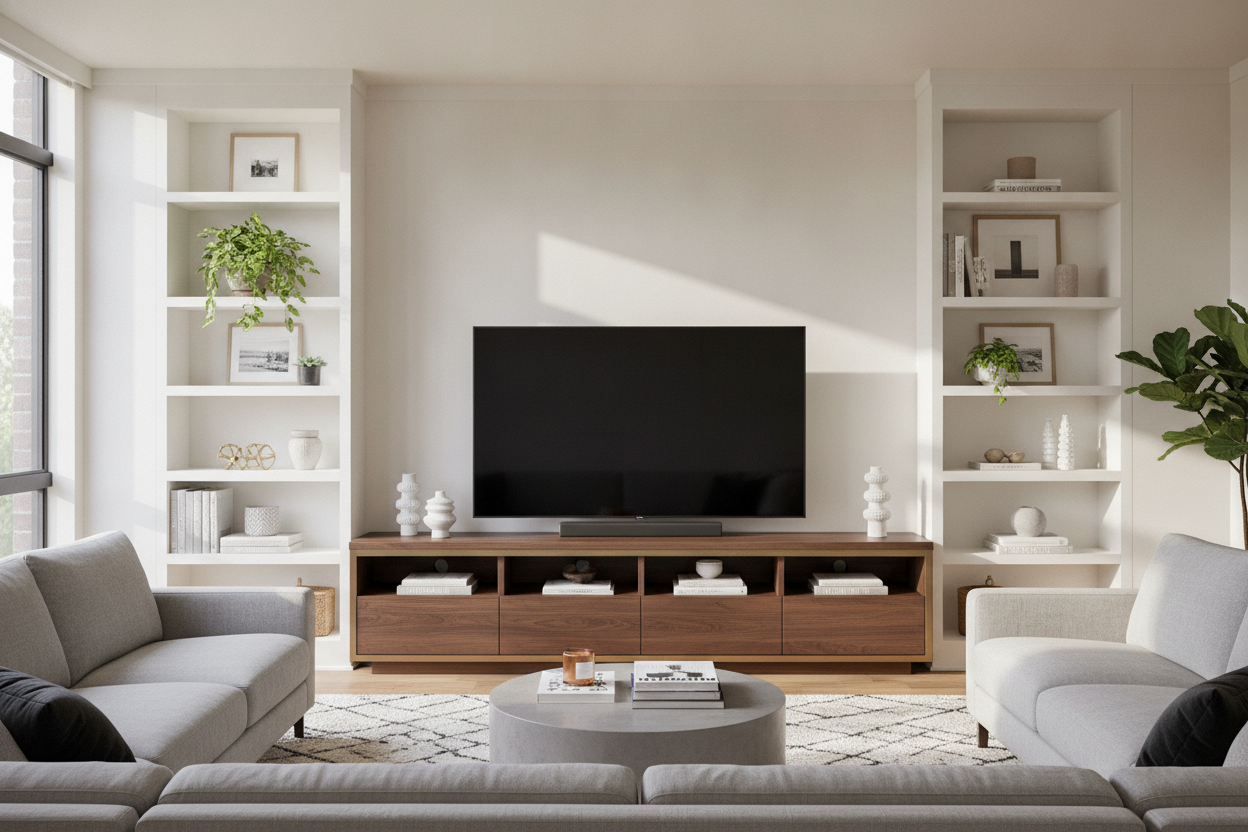
I remember the exact moment I realized my living room looked like a college dorm. I had just finished unboxing a beautiful 65-inch 4K screen, and I perched it on a 50-inch dresser I’d hauled through three apartments. It looked like a lollipop—a massive, expensive head on a tiny, spindly body. It didn’t just look off; it felt precarious. After years of obsessing over floor plans and assembly manuals, I’ve learned that a 64 inch tv stand is the absolute baseline for anyone who wants their home to feel intentional rather than accidental.
- Proportion is king: A stand should always be wider than the screen it supports.
- The 64-inch width provides the perfect buffer for the industry-standard 65-inch television.
- Hidden storage in larger units eliminates the 'cable spaghetti' look behind your console.
- Wider units anchor the wall, making small rooms feel grounded rather than cluttered.
The Top-Heavy Trap We All Fall Into
When you are shopping for TV stands, the temptation is to buy only as much furniture as you 'need' to hold the weight of the screen. This is a trap. If your console is the same width as your TV—or worse, narrower—you create a top-heavy silhouette that makes the whole room feel unstable. It’s basic visual physics. A large black rectangle hovering over a small base creates a sense of 'visual anxiety' that you can feel the moment you sit on the sofa.
I’ve seen plenty of friends spend thousands on a sofa and rug, only to ruin the vibe with a console that looks like it’s struggling to hold up the tech. A 64 inch tv stand changes the geometry of the room. It moves the eye horizontally rather than vertically, which actually makes your ceilings feel taller and your walls feel more expansive. It’s the difference between a piece of furniture that looks like an afterthought and one that looks like an architectural choice.
Why a 64 Inch TV Stand is the Magic Number
There is a reason why a 64 in tv stand is the sweet spot for modern decorators. Most of us are gravitating toward 65-inch televisions. Here’s the secret the salespeople don't tell you: a 65-inch TV isn't actually 65 inches wide. Because screens are measured diagonally, a 65-inch TV usually clocks in at about 56 to 58 inches in actual horizontal width. This is where the 64 tv stand becomes pure magic.
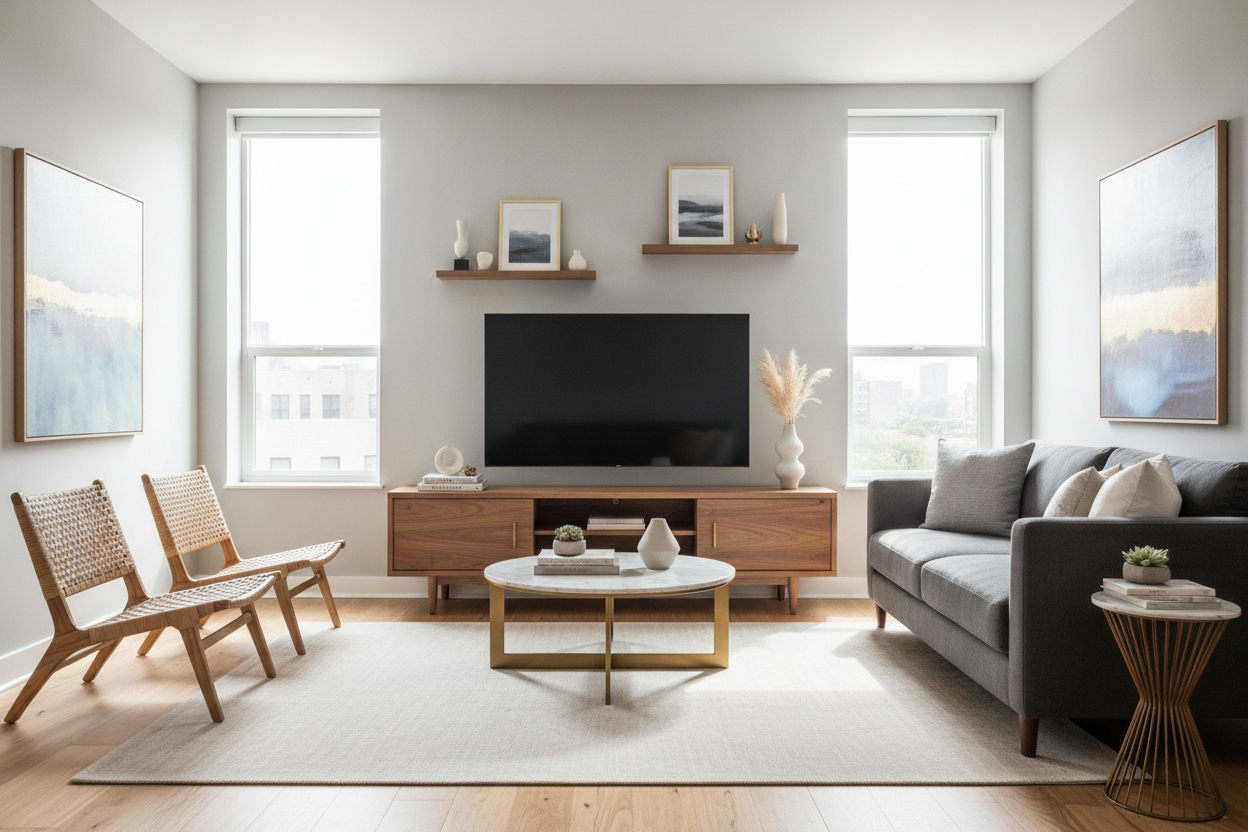
By choosing a unit that is 64 inches wide, you get roughly three to four inches of breathing room on either side of the screen. That little bit of 'white space' is what makes a room look high-end. It allows you to place a small ceramic vase or a stack of books on the ends without the TV feeling crowded. If you go smaller, the TV overshoots the edges, which is the fastest way to make your expensive tech look like it doesn't belong in the house. It’s about framing the experience, not just supporting the hardware.
Understanding the Diagonal Screen Myth
It’s easy to get confused by the math when you’re staring at a spec sheet. Remember, that 65-inch label is the distance from the top-left corner to the bottom-right. When you buy a tv stand 64 inch wide, you are giving yourself about 6 to 8 inches of extra physical furniture width compared to the actual glass. This prevents the 'overhang' that makes a setup look cheap. This extra width also provides a wider footprint for the legs of the TV, which are often pushed to the very edges of modern screens to provide stability.
Storage Wars: Hiding the Ugly Cords and Consoles
Let’s talk about the dirty secret of home theaters: the cords. A 64 inch media console isn’t just about the top surface; it’s about the volume of space underneath. In my last apartment, I tried to make a 40-inch stand work. I had a PS5, a router, a soundbar, and a Nintendo Switch. It was a disaster. The PS5 barely fit, and the heat it generated in that tiny cubby was enough to melt plastic.
Upgrading to a 64-inch unit gives you the internal real estate to actually manage your gear. You get wider cabinets that allow for proper airflow, which is non-negotiable if you don't want your gaming console to sound like a jet engine. Plus, you have enough room to tuck away a power strip and all the associated 'wall warts.' When everything is tucked behind closed doors or organized in a wide, deep shelf, the room feels instantly calmer. You’re not just buying a stand; you’re buying a way to make the clutter disappear.
What If Your Space Can't Handle the Width?
I get it. Not every studio apartment has a long, unbroken wall. If you are working with a truly awkward floor plan where a 64-inch unit would block a doorway or a radiator, you have to get creative. Sometimes, you have to admit defeat and look for a TV stand 47 inch wide. But if you do that, you should strongly consider downsizing the TV as well to keep the proportions in check.
If you’re dead set on a huge screen but have zero floor space for a wide console, skip the traditional stand entirely. I’ve recommended an electric vertical lift TV cabinet to several clients in cramped urban lofts. It lets you keep the big screen experience without having a permanent 60-inch piece of furniture hogging the walkway. It’s a bit of an investment, but it solves the 'big TV, small room' dilemma without making the space look like a Best Buy showroom.
Personal Experience: The 50-Inch Disaster
I once bought a gorgeous, mid-century walnut stand that was only 50 inches wide. I loved the wood grain, and I thought I could make it work with my 65-inch Sony. The day I set it up, I realized my mistake. The TV's feet were literally half an inch from the edge of the wood. Every time my dog ran past, the screen wobbled. It looked ridiculous—like a bodybuilder standing on a barstool. I ended up selling it on Marketplace for half what I paid and replaced it with a 64-inch unit. The moment the new stand was in place, the whole room felt 'locked in.' I’ll never go back.
FAQ
Is a 64-inch stand too big for a small apartment?
Usually, no. A wider, lower piece of furniture often makes a room feel larger by drawing the eye across the longest wall. It’s the tall, skinny pieces that make a room feel cramped.
What is the best material for a media console?
Look for kiln-dried hardwood or high-quality MDF with a real wood veneer. Avoid the cheap, paper-thin laminates that peel the first time you spill a drink on them.
Should the TV be centered on the stand?
Visually, yes. Centering the screen on a 64-inch stand gives you that balanced 'breathing room' on both sides that makes the setup look professional and polished.
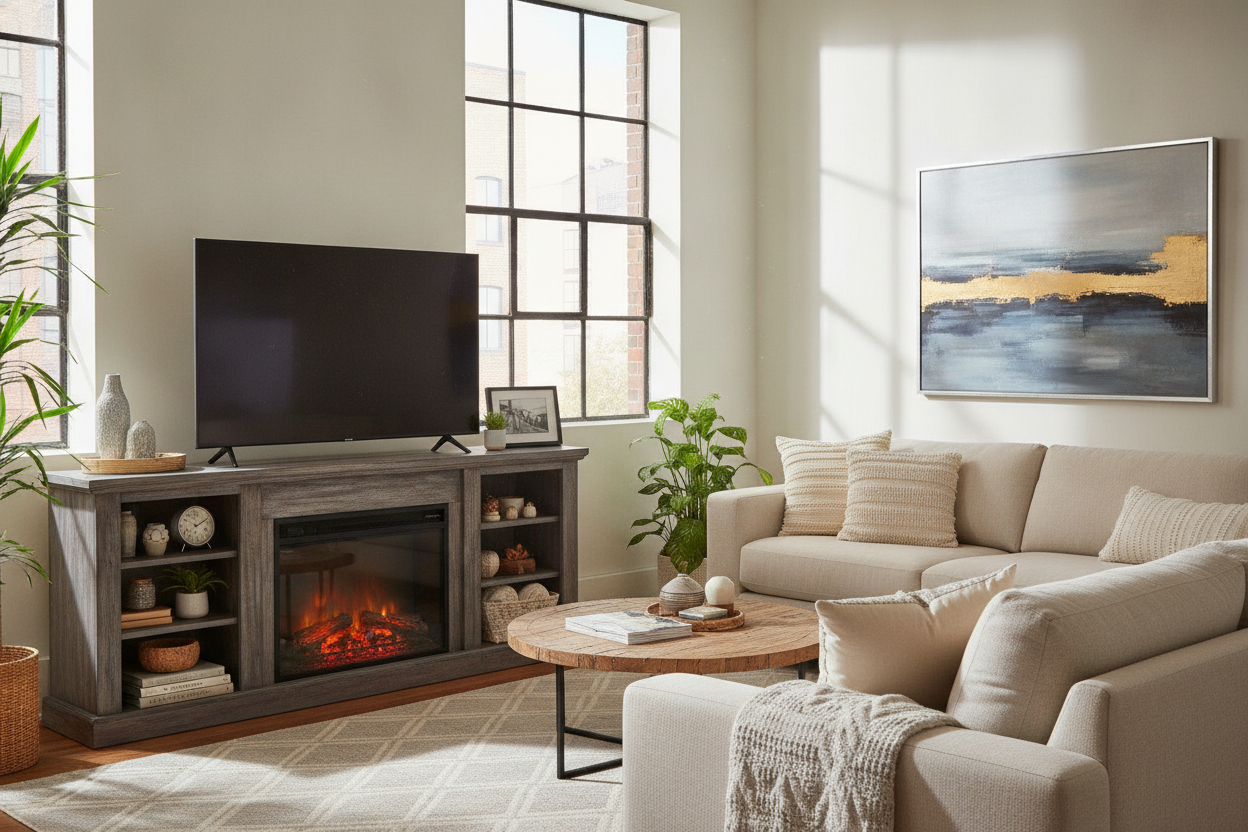

Dejar un comentario
Este sitio está protegido por hCaptcha y se aplican la Política de privacidad de hCaptcha y los Términos del servicio.