










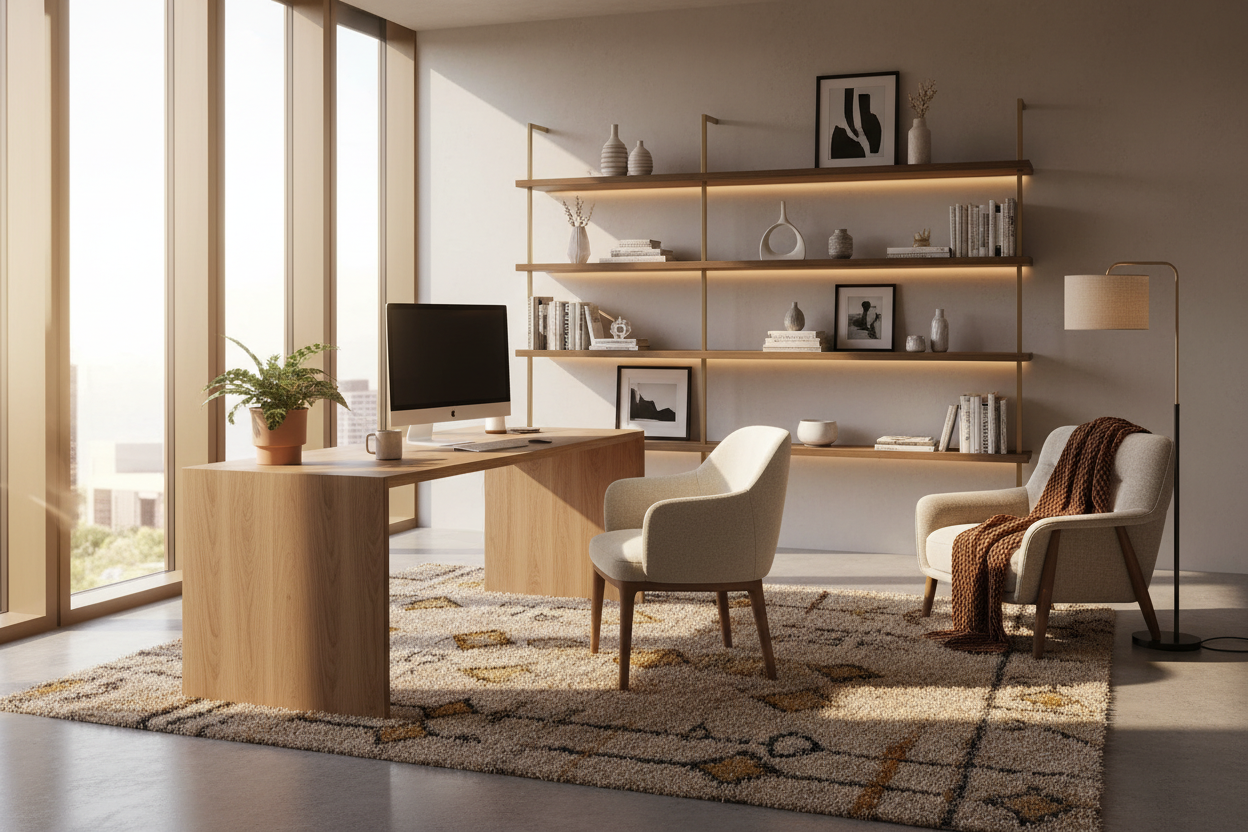
We have all walked into a workspace that looks stunning in photographs but feels sterile and uninviting in person. It is a frequent dilemma: you want clean lines and minimalism, but you end up with a room that lacks soul and echoes uncomfortably. True contemporary office design is not just about stripping away clutter; it is about curating a balance between architectural precision and human comfort.
Key Features of a Balanced Workspace
- Material Warmth: Mixing cool metals (chrome, steel) with organic textures (walnut, wool, leather) to prevent sterility.
- Ergonomic Integration: choosing chairs and desks where mechanisms are concealed or aesthetically streamlined, rather than bulky.
- Layered Lighting: moving beyond overhead grids to incorporate ambient floor lamps and focused task lighting (aim for 2700K-3000K color temperature).
- Acoustic Control: utilizing rugs, drapery, or acoustic panels to soften the echo common in minimalist spaces.
- Biophilic Accents: integrating plant life to bridge the gap between the built environment and nature.
Defining the Contemporary Office Architecture
When we discuss contemporary office architecture, we are looking at the bones of the room. In a home setting or a private executive suite, this often means maximizing natural light. However, a common error is placing a desk directly facing a window, creating harsh silhouettes and eye strain. Instead, position your desk perpendicular to the light source. This allows the light to wash across your work surface without blinding you, highlighting the textures of your furniture.
Selecting Furniture: The Anchor Pieces
The desk is your focal point, but in office contemporary design, it should not dominate the room with visual bulk. Look for "floating" tops or legs with negative space.
Material Matters: Solid Wood vs. Veneer vs. Laminate
For a luxury finish, solid wood like walnut or white oak offers longevity, but be wary of humidity changes. High-quality architectural veneers are often more stable and offer consistent grain patterns, which is crucial for that sleek, uniform contemporary look. Avoid cheap laminates; they reflect light poorly and degrade the perceived value of the room instantly. If you need durability, look for Fenix NTM surfaces—they are matte, soft to the touch, and heal micro-scratches thermally.
The Seating Silhouette
Your chair must be ergonomic, but it does not need to look like a cockpit. Contemporary design favors task chairs with lower profiles and breathable mesh or high-grade fabric upholstery that complements the room's palette. Avoid over-stuffed leather executive chairs; they disrupt the clean lines of a contemporary office interior.
Softening the Edges: Textiles and Layout
A contemporary office space often suffers from being too "hard." To counter this, introduce a low-pile wool rug. It anchors the furniture grouping and creates a distinct zone, especially in open-plan homes. Drapery is equally important; floor-to-ceiling sheer curtains can diffuse harsh daylight and add a vertical element of softness without compromising the minimalist aesthetic.
My Personal Take on Contemporary Office Design
I learned a hard lesson early in my career regarding glass desks. I specified a stunning, architectural glass desk for a client who wanted a "weightless" look. It photographed beautifully. However, two weeks later, the client called me in frustration.
The issue wasn't the look; it was the reality of living with it. Glass is cold on the forearms, amplifies the sound of putting down a coffee cup, and—most annoyingly—requires constant cleaning to remove fingerprints and dust. Furthermore, there was nowhere to hide the cables. We ended up swapping it for a matte-finished wood desk with a leather writing inlay. The leather provided warmth for his wrists and the wood concealed a sophisticated cable management tray. Now, I always advise clients: if you are actually working at the desk for eight hours a day, prioritize tactile warmth over visual transparency.
Conclusion
Creating a refined workspace is about editing. It requires selecting pieces that serve a purpose while maintaining a cohesive visual language. By focusing on tactile materials, proper lighting layers, and ergonomic flow, you can build a space that inspires focus rather than fatigue. It is time to elevate your workday.
Frequently Asked Questions
What is the difference between modern and contemporary office design?
"Modern" refers specifically to the Mid-Century Modern era (roughly 1930s-1960s) featuring specific wood tones and iconic shapes. "Contemporary" is fluid—it is what is happening now. It often borrows from modernism but incorporates current trends like sustainable materials, integrated technology, and softer, curved lines.
How do I make a small room feel like a spacious contemporary office?
Focus on "leggy" furniture. Desks and sofas raised on slender legs reveal more floor space, tricking the eye into perceiving the room as larger. Also, utilize vertical storage to keep the horizontal surfaces clear of clutter.
Is a standing desk compatible with contemporary style?
Absolutely. Many high-end manufacturers now produce standing desks with concealed motors and beautiful finishes (like linoleum or solid wood) that look like fixed architectural tables. Avoid the industrial-looking, T-leg bases found in generic office catalogs.

Dejar un comentario
Este sitio está protegido por hCaptcha y se aplican la Política de privacidad de hCaptcha y los Términos del servicio.