










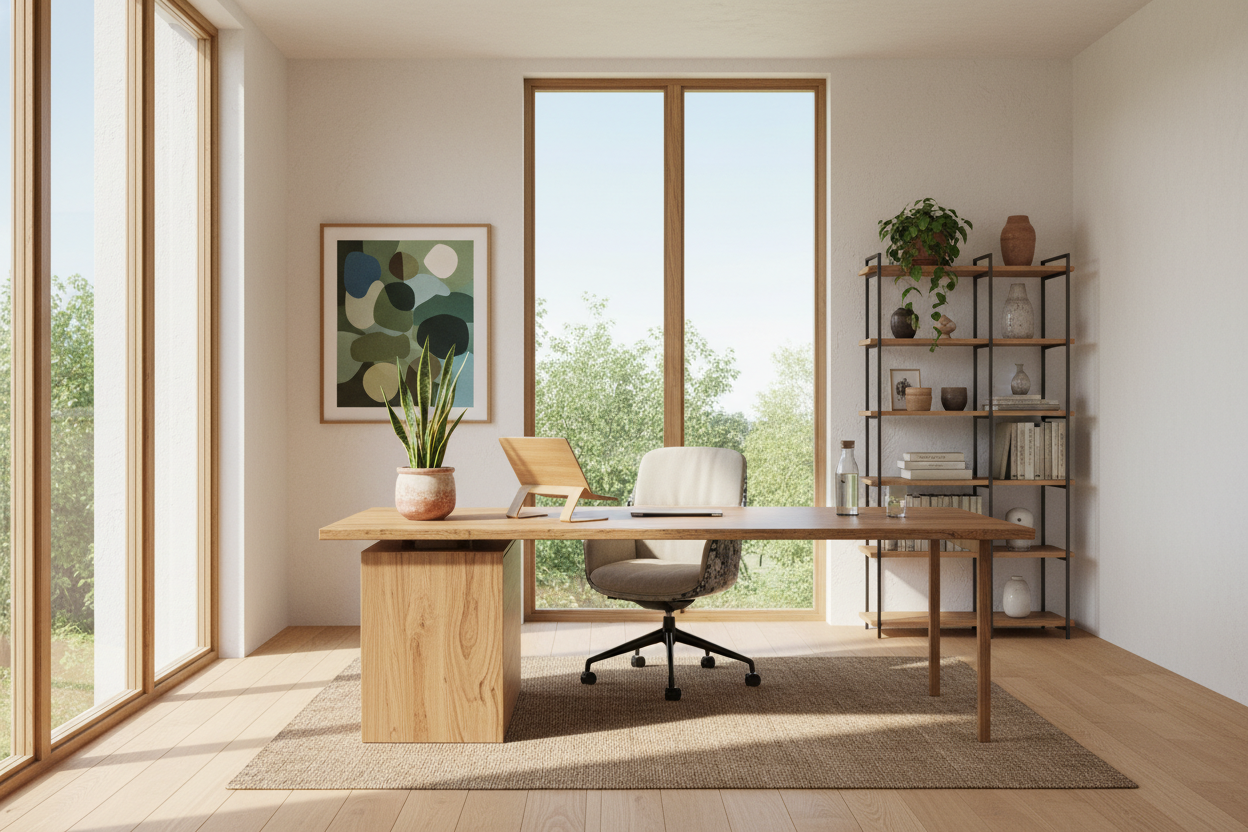
We all remember the scramble of 2020. Dining tables became conference rooms, and empty corners were hastily filled with whatever flat-pack desks were still in stock. Years later, that temporary setup has become a permanent fixture for many of us. But as the dust settles, a glaring issue has emerged in North American homes: the physical and ecological toll of these makeshift spaces. Creating a healthy work from home environment is no longer just about squeezing a monitor onto a tiny surface; it requires a hard look at longevity, ergonomics, and how our furniture choices impact the planet.
As an interior designer, I constantly field questions from clients wanting a stylish office that doesn't feel like a corporate cubicle. But increasingly, the conversation has shifted toward ethics. People want to know how to design a space that looks beautiful, functions perfectly, and doesn't contribute to the mounting crisis of fast furniture sitting in landfills. If you are re-evaluating your home office, here is what you need to know about building a space that truly lasts.
Key Takeaways for a Sustainable Office
- Prioritize solid materials: Opt for FSC-certified solid wood or high-quality metal over cheap particleboard, which often warps and off-gasses harmful VOCs.
- Maximize natural light: Positioning your desk perpendicular to a window reduces the need for artificial lighting and helps regulate home heating.
- Invest in ergonomics over aesthetics: A highly styled accent chair will ruin your posture; invest in a proper task chair built for eight-hour support.
- Buy vintage or second-hand: The most eco-friendly furniture is the piece that already exists. Mid-century wooden desks offer incredible durability.
- Measure your clearance: Always leave at least 36 to 42 inches of space behind your desk to push your chair back without damaging walls or baseboards.
The Real Environmental Impact of Working From Home
When we skip the daily commute, it is easy to assume we are doing the earth a favor. However, the true environmental impact of working from home is more complex. While we save on gas, residential energy consumption spikes. More importantly from a design perspective, the explosion of remote work triggered a massive surge in cheap, disposable furniture. Millions of poorly constructed desks and chairs were purchased, many of which are already breaking down.
Fast Furniture and the Landfill Crisis
Discussions around remote work climate change effects usually ignore the sheer volume of waste generated by our home offices. Engineered wood wrapped in thin laminate veneer might look like oak on a screen, but it chips easily and cannot be sanded or refinished. When assessing work from home sustainability, the lifespan of your furniture is a critical metric. Investing in a solid oak or walnut desk means buying a piece that can be repaired, restained, and passed down, drastically reducing your personal footprint.
Designing for Remote Work Sustainability
Clients often ask me, is remote work sustainable when you factor in heating, cooling, and furnishing a house all day? The answer is yes, but it requires intentional design choices. Your layout and material selection play a massive role in both your comfort and your home's efficiency.
Space Planning for Natural Efficiency
Where you place your furniture dictates how much energy you consume. I always try to position a desk perpendicular to the largest window in the room. Facing the window directly causes severe eye strain from glare, while having your back to it creates shadows on your screen. A perpendicular layout maximizes natural daylight, minimizing your reliance on overhead fixtures. Furthermore, keeping heavy furniture away from HVAC vents ensures proper air circulation, making your heating and cooling systems work less aggressively.
Choosing Materials with Visual Weight
A productive wfh environment needs to feel grounded. If you have a small space, a bulky wooden executive desk will visually swallow the room. Instead, look for pieces with a lighter silhouette—like a glass top or slim steel legs—which preserve negative space. Conversely, in a large, open-concept suburban living room, a delicate desk will look entirely out of place. Here, a substantial reclaimed wood desk anchors the space and defines the 'office' zone without needing physical walls.
Designer's Honest Take: The Fast Furniture Trap
I will be the first to admit I have made this mistake. Early in my career, I designed a beautiful, minimalist home office for myself using a trendy, budget-friendly MDF desk with a matte black finish. It photographed beautifully. But within six months of daily use, the edge banding started peeling right where my forearms rested. Every coffee cup left a micro-scratch.
By year two, the desk was structurally wobbly and completely unrepairable. I had to throw it out and start over. That experience forced me to rethink the overall work from home environmental impact. I learned the hard way that spending $200 on a desk every two years is far worse for your wallet—and the environment—than spending $800 once on a vintage teak desk that has already survived four decades. If you are wondering, is working from home better for the environment, you have to look honestly at your consumption habits. Buying disposable decor completely negates the emissions saved by not driving to an office.
Frequently Asked Questions
Is work from home sustainable long-term?
Yes, provided you set up a dedicated, ergonomic space. Working from a sofa or a poorly sized dining chair leads to musculoskeletal issues over time. A sustainable setup requires a proper desk height (usually around 29 to 30 inches) and an adjustable chair to maintain physical health.
What is the most eco-friendly desk material?
Reclaimed wood and vintage furniture are the best choices since they require zero new raw materials. If buying new, look for FSC-certified solid woods, bamboo (which grows rapidly), or furniture made from recycled steel and aluminum.
Does remote work climate change impact interior design trends?
Absolutely. We are seeing a massive shift away from 'disposable chic' toward biophilic design and durable materials. Homeowners are increasingly aware of the environmental impact of working from home, leading to higher demand for non-toxic finishes, natural fibers, and heirloom-quality craftsmanship over quick-ship trends.

Dejar un comentario
Este sitio está protegido por hCaptcha y se aplican la Política de privacidad de hCaptcha y los Términos del servicio.