










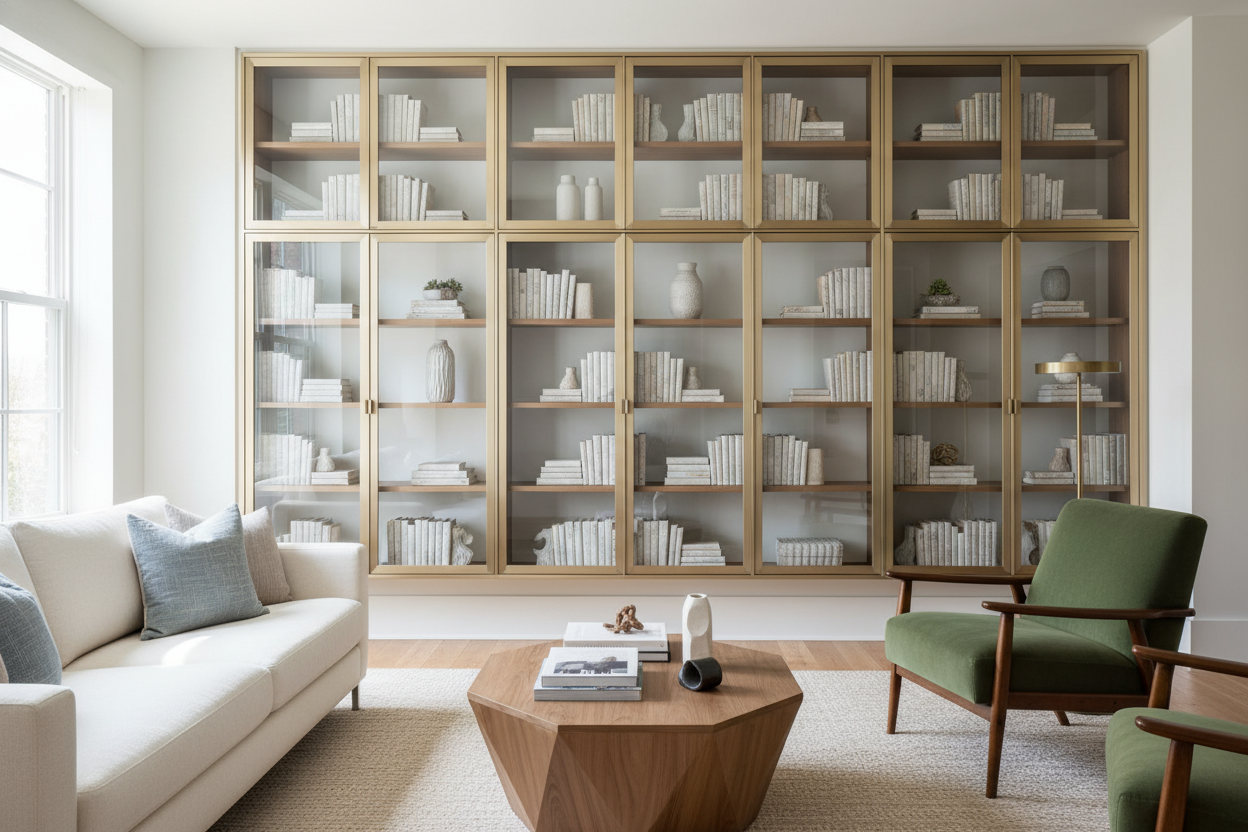
I spent three hours last night moving a floor lamp around my living room, trying to figure out why the corner by my books looked like a scene from a horror movie. No matter how many lumens I threw at it, the dark wood and dense paperbacks just swallowed the light. That is when I realized my open shelving was basically a black hole for my apartment vibe. Upgrading to bookshelves glass doors was not just about aesthetics; it was about reclaiming the light I was paying for in rent.
Quick Takeaways
- Glass fronts reflect natural and artificial light, making rooms feel 20% larger.
- Enclosed storage reduces dusting frequency from weekly to maybe once a season.
- Hybrid units with bottom drawers are essential for hiding 'ugly' essentials.
- Glass etageres are the best choice for small apartments with limited floor space.
The 'Black Hole' Effect of Open Wood Shelving
We have all been there. You buy a massive, dark espresso-colored unit because it looks 'stately' in the showroom. You get it home, fill it with your favorite reads, and suddenly the entire wall feels like it is leaning in on you. Open wood shelving, especially in deep finishes, is a light sponge. It absorbs every sunbeam that hits it and creates deep shadows between the books.
In a small 12x14 room, a wall of open shelves can make the space feel cramped and heavy. It is not just the visual weight, either. Every single one of those book spines is a ledge for dust. If you are like me and hate cleaning, open shelves are a prison sentence of micro-fiber cloths and sneezing fits. They look great in professional staged photos, but in a real home with a real HVAC system, they are high-maintenance nightmares.
Why a Bookcase With Glass Front Changes the Lighting Game
Switching to a bookcase with glass front is the oldest trick in a designer's book for a reason. Glass behaves like a mirror but with depth. It catches the light from your windows and bounces it back into the center of the room. This simple physics trick makes your ceilings feel higher and your walls feel further apart.
I used to worry that dark furniture was the enemy of a bright room. I was wrong. Even a black cabinet with glass doors can work in a small space because the glass panels break up the solid mass of the wood. The reflection creates a 'window' effect where there was once just a solid slab of MDF or oak. It makes the furniture feel intentionally designed rather than just a place to dump your stuff.
Lighter Alternatives: The Glass Etagere With Doors
If you are dealing with a tight corner or a studio apartment, a full-sized cabinet might be overkill. This is where a glass etagere with doors shines. These units usually have slimmer metal or wood frames and more glass surface area. They offer that same glorious dust protection but with a much lighter visual footprint.
I personally prefer an etagere for my 'display' items—the vintage cameras and the ceramics I bought on vacation. It keeps the room feeling airy while still providing a clear boundary. It says, 'this is a collection,' not 'this is a storage unit.'
The Holy Grail: Glass on Top, Drawers on the Bottom
Let's be honest: not everything we own is beautiful. I have a collection of beat-up paperbacks from college and a nest of charging cables that I don't want anyone to see. A unit that is glass from top to bottom is a trap. You end up stressed about whether your stapler looks 'aesthetic' enough behind the glass.
The solution is the hybrid model. I always recommend something like the white arched 5-tier bookcase. You get the beautiful glass display area at eye level to reflect light and show off your hardcovers, but you have solid drawers at the base. This is where the board games, the messy paperwork, and the extra candles live. It is the only way to stay organized without losing your mind.
How to Style Behind Glass (Without It Looking Chaotic)
The biggest mistake people make with glass-front units is packing them edge-to-edge. If you do that, you lose the 'brightening' effect because the light has nowhere to bounce. You need negative space. Aim for about 20% empty space on every shelf. It gives the eye a place to rest and lets the glass do its job.
I like to color-block my books or turn some of them horizontally to create 'pedestals' for small objects. If you really want to go all out, consider adding built-in lighting inside the cabinet. A simple LED strip hidden behind the door frame can make your books look like a curated gallery exhibit at night. It adds a layer of warmth that a standard ceiling light just can't touch.
My Personal Experience: The Great Dust War
I once owned a massive, 7-foot open industrial shelf. I loved the 'loft' look until I realized I had to wipe down every single book spine every two weeks or they’d feel gritty. I finally traded it for a glass-front unit I found at a local vintage shop. My cleaning time dropped by 90%. My only regret was not doing it sooner. The room felt five degrees brighter immediately, and I stopped feeling like I was living in a dusty library basement.
Frequently Asked Questions
Are glass doors on bookshelves hard to keep clean?
Not really. A quick spray of glass cleaner once a month is much faster than individually dusting 100 books. If you have kids with sticky fingers, just keep the glass at the top and solid doors at the bottom.
Is tempered glass necessary for bookshelves?
Yes. Never buy a unit with standard plate glass. Tempered glass is much stronger and, if it does break, it shatters into small, blunt pieces rather than dangerous shards. It is a non-negotiable for safety.
Does glass shelving hold as much weight as wood?
Usually not. If you have heavy encyclopedias, keep them on the bottom wood shelves or look for units with wood shelves and glass doors. Glass shelves are better for standard novels and decor items.


Leave a comment
This site is protected by hCaptcha and the hCaptcha Privacy Policy and Terms of Service apply.