










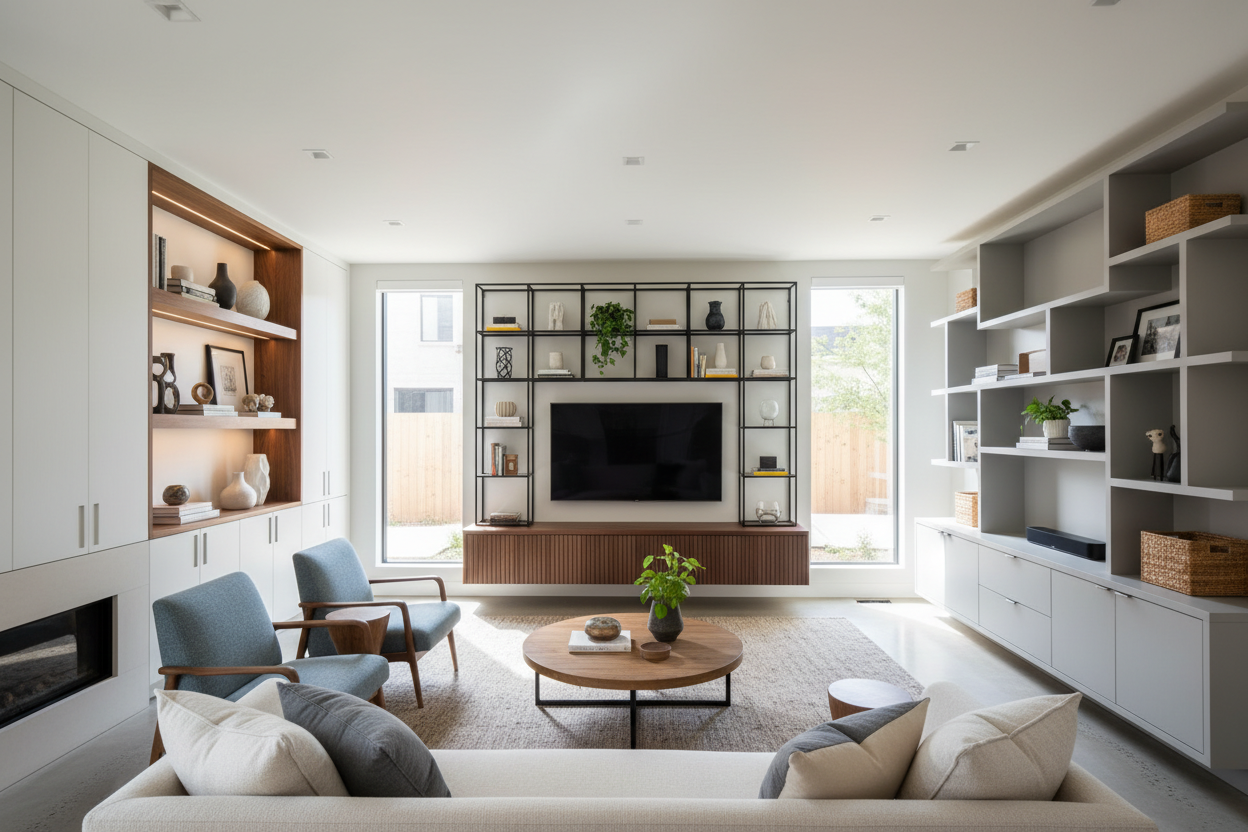
I once spent three months staring at a 14-foot wall in my living room, convinced that if I just bought the right media console, the clutter would magically vanish. It did not. I ended up with a graveyard of mismatched baskets and a TV that looked like it was floating in a void. If you are tired of the mess, it is time to talk about built in cabinets designs for living room that actually work.
Most people treat millwork like a 'set it and forget it' solution, but bad design is permanent. I have seen too many homeowners drop five figures on cabinetry that makes their room feel like a claustrophobic doctor's waiting room. We are going to avoid that.
- Depth is everything: Keep upper shelves between 11 and 13 inches so they do not swallow the room.
- The 90/10 Rule: Aim for 90% closed storage at the bottom and 10% open display on top.
- Symmetry vs. Balance: You do not always need a mirror image, but you do need visual weight.
- Lighting: If you do not wire for puck lights or picture lights now, you will regret it every night at 7 PM.
Please Stop Building 1990s Entertainment Centers
We all know the look: a massive, honey-oak beast with a giant square hole in the middle specifically sized for a 32-inch Sony Trinitron. These living room inbuilt cabinets are the reason people are afraid of commitment. They are too deep, usually around 24 inches, which eats up nearly two feet of your floor plan for no reason. Unless you are hiding a literal refrigerator in there, you do not need that kind of depth.
Modern built in designs living room pros use today prioritize a 'slim-fit' profile. When you build something that sticks out too far into the traffic pattern, the room feels heavy and dated before the paint even dries. I have walked into beautiful homes where the custom millwork felt like a physical barrier because the designer forgot that humans need to walk past the sofa without shimming. Keep your base cabinets to 16-18 inches deep and your uppers even shallower.
Also, please stop with the arched headers. Unless you live in a literal French chateau, those swooping wood details scream 'suburban tract home 1994.' Clean lines and simple shaker or flat-panel doors will save you from a renovation-induced headache five years from now.
Layout 1: The Symmetrical Fireplace Flank
This is the gold standard for a reason. If you have a fireplace, you already have a focal point; flanking it with best built ins is like giving that fireplace a better supporting cast. When upgrading your living room layout, symmetry provides an immediate sense of calm and order that freestanding furniture just cannot replicate.
The trick here is the ratio of the 'base' to the 'shelf.' I always recommend a solid base cabinet that sits about 30 to 36 inches high. This hides the router, the gaming consoles, and the pile of board games with missing pieces. For the shelves above, do not use 3/4-inch MDF. It looks cheap and it sags. Go for a 1.5-inch thickness. It looks substantial, expensive, and custom. It makes your built in living room cabinet ideas look like they were part of the original architecture rather than an afterthought.
How to Handle the Awkward TV Situation
The biggest struggle with living room ideas with built ins is the 'black hole' effect of a giant television. If you center the TV over the fireplace, your neck will hate you. If you put it in one of the side units, the room feels lopsided. My favorite fix? Paint the back panel of the built-in a dark, moody color—think charcoal or navy. When the TV is off, it disappears into the dark background instead of screaming for attention.
Layout 2: The Moody, Wall-to-Wall Library
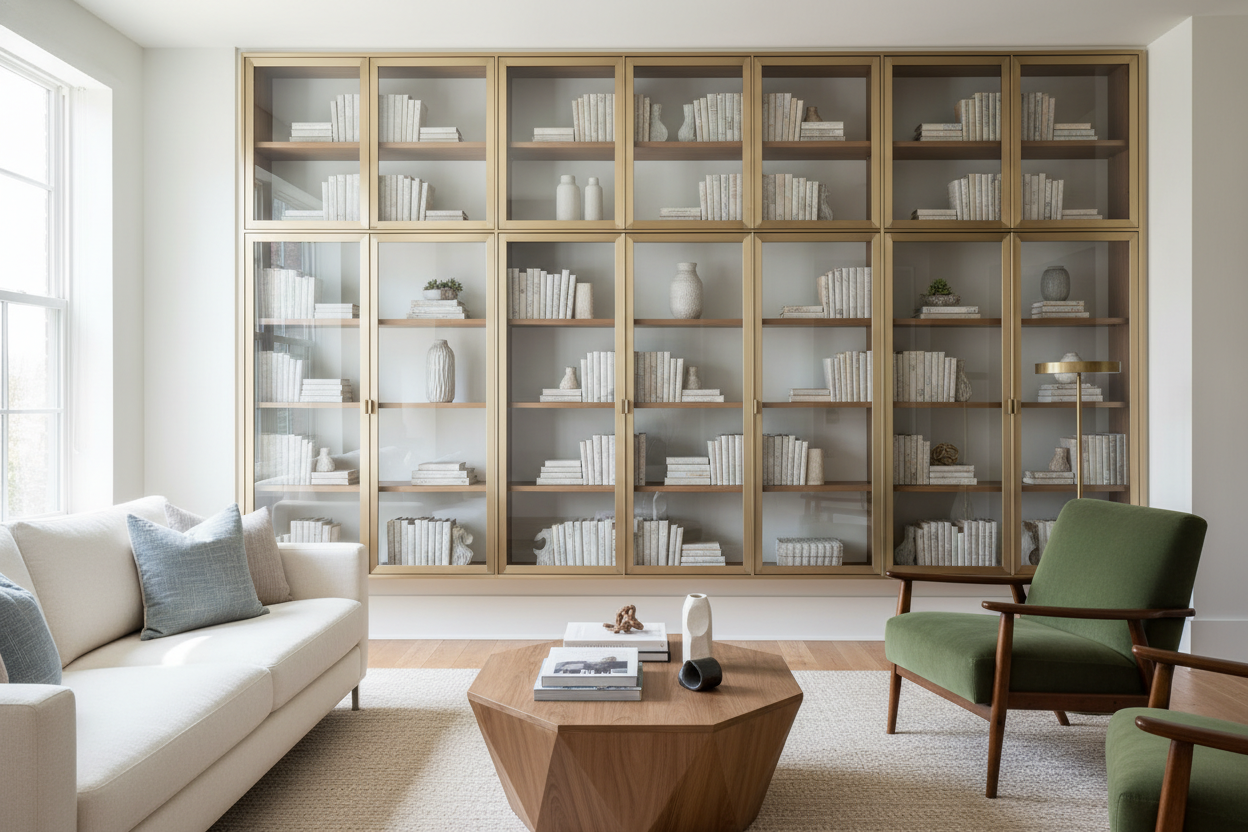
If you do not have a fireplace, go for the wall-to-wall library. This is one of the most effective built-in wall units for family room spaces because it turns a boring drywall box into a cozy sanctuary. We are talking floor-to-ceiling. If you leave a 12-inch gap at the top, it just becomes a dust shelf. Take it all the way to the crown molding.
I love this look when it is painted a single, bold color—satin finish on the wood, matte on the walls. It creates a seamless look that makes the room feel larger, not smaller. Add a rolling ladder if you want to be extra, but even just adding brass picture lights at the top of each vertical section will make your built in cabinet design living room look like a million bucks. It is about the verticality; it draws the eye up and makes eight-foot ceilings feel like ten.
What If Your Room Is Tiny?
When you are looking for built-ins for small living room solutions, you have to be ruthless. Avoid the floor-to-ceiling monolith. Instead, try a 'floating' built-in or a very shallow lower unit. If your square footage is truly tight, a massive wall unit can feel like it is closing in on you. In those cases, I often tell people to skip the contractor and just get a high-quality small cabinet with doors to act as a focal point without the permanent footprint.
Layout 3: The 'Fake Built-In' Cheat Code
Not everyone has $8,000 for a custom carpenter. This is where you use the 'cheat code.' You can create incredible built-in cabinets living room plans by using high-end freestanding pieces and 'boxing' them in with trim. I have done this in three different apartments and it fools everyone.
Start with a solid base, like a large display buffet sideboard. Position it against the wall, then build simple bookshelves on top of it. The 'magic' happens when you add baseboards to the bottom of the sideboard and crown molding to the top of the shelves that connects to the ceiling. Once you prime and paint everything the same color, the seams disappear. You can even find guides on how to style Ikea built in cabinets to get this look for a fraction of the price. It is the best way to get built in designs living room aesthetics on a budget.
Your Pre-Construction Sanity Checklist
Before you let anyone start sawing wood, you need to check these three things. First: Outlets. Do not cover your only wall outlet with a permanent cabinet. Have an electrician move them to the back of the cabinet or into the toe-kick. Second: Baseboards. Your built-ins should look like they grew out of the floor, which means your baseboards need to wrap around the unit. Third: Heat vents. If you cover a floor vent with a cabinet, you are going to have a very hot cabinet and a very cold living room. Use a toe-kick ducted vent to redirect the air.
I once built a beautiful 10-foot run of shelves using 3/4-inch plywood without a middle support because I wanted that 'airy' look. Three weeks later, my collection of heavy design books turned those shelves into a series of sad smiles. I had to rip the whole thing out and start over with 1.5-inch solid wood. Don't be like me. Over-engineer your shelf thickness from day one.
FAQ
How deep should my built-ins be?
For most living rooms, 12 inches for the upper shelves and 16-18 inches for the base cabinets is the sweet spot. Anything deeper than 18 inches and you are just losing floor space for things you will never reach.
Is it cheaper to build them myself?
Yes, if you use the 'cheat code' method with existing furniture and trim. However, if you are buying raw hardwoods and high-end tools, the cost of materials and your time might actually exceed a local carpenter's quote.
Should I paint built-ins the same color as the walls?
If you want them to blend in and make the room feel larger, yes. If you want them to be a statement piece, go two shades darker or a completely contrasting color. Just make sure you use a durable trim paint, not standard wall emulsion.


Leave a comment
This site is protected by hCaptcha and the hCaptcha Privacy Policy and Terms of Service apply.