










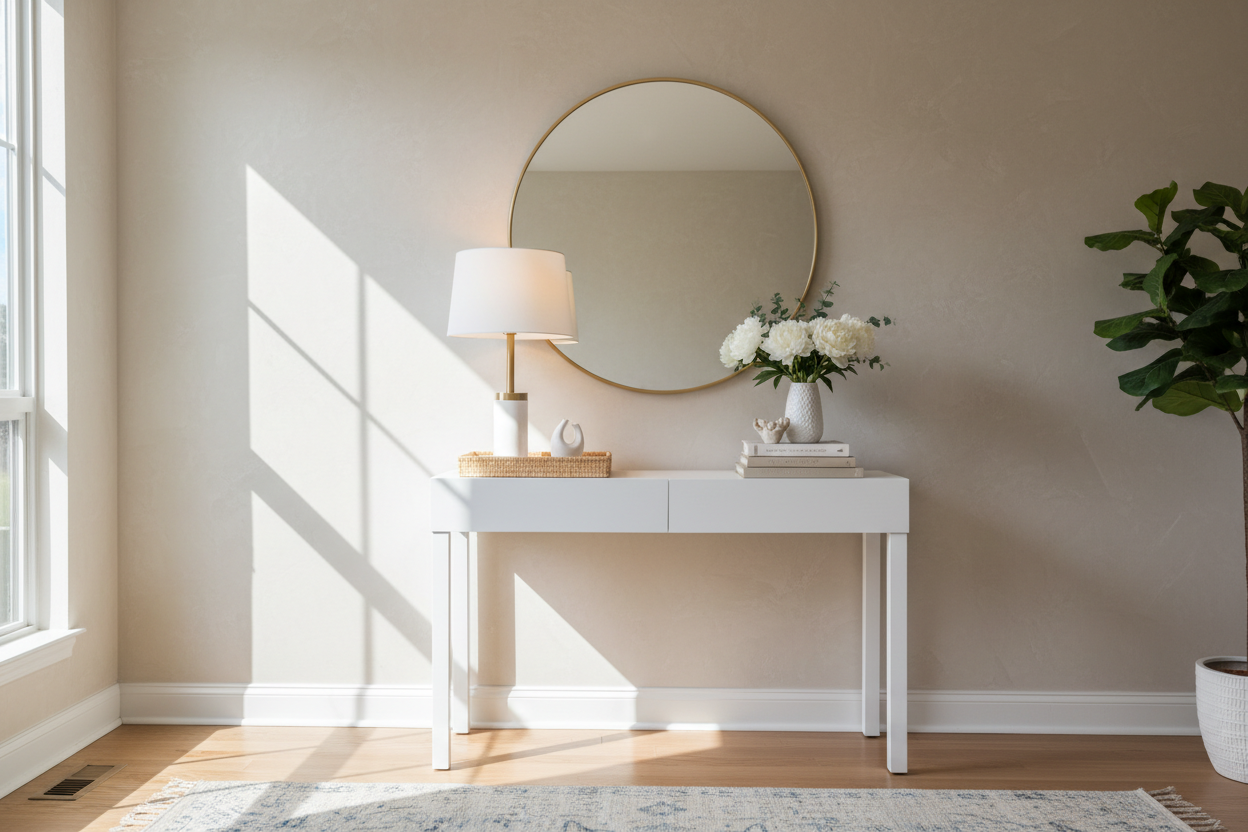
Entryways are often the most neglected spaces in a home, treated merely as a pass-through rather than a proper room. The challenge usually lies in the dimensions; many corridors are long, dark, and tight, leaving homeowners paralyzed by the fear of overcrowding the space. A narrow white entryway table acts as the perfect solution to this dilemma. By combining a slim profile with a light-reflecting finish, this piece of furniture anchors the area, provides essential functionality for keys and mail, and visually expands the hallway rather than closing it in.
Choosing the right console involves more than just picking a color. You have to balance depth, material durability, and styling to ensure the piece serves your lifestyle without becoming a hip-bruising obstacle. The goal is to create a welcoming vignette that hints at your home's personality the moment you walk through the door.
My Battle with the Bowling Alley Hallway
I learned the value of scale the hard way. In my second apartment, the front door opened into a corridor that felt endless but was barely four feet wide. Desperate for a place to drop my keys, I initially dragged in a vintage mahogany desk I had inherited. It was beautiful, but it was a disaster. It absorbed all the light, making the hall feel like a cave, and I bumped into the sharp corners almost daily.
Replacing that heavy, dark piece with a narrow hall table white finish completely altered the physics of the room. The white surface bounced the limited natural light from the living room back into the hall, and the 10-inch depth meant I could walk past with grocery bags without turning sideways. It wasn't just furniture; it was a spatial correction. That experience taught me that in tight quarters, visual weight is just as important as physical dimensions.
Why White Works Best in Tight Quarters
Color psychology plays a massive role in interior design, especially in small square footage. Dark colors recede visually, but heavy dark furniture often feels denser. White, on the other hand, blurs the lines between the object and the wall (assuming your walls are light), which reduces visual clutter. A narrow hallway table white in color creates a sense of airiness.
This approach is particularly effective if your hallway lacks windows. A white gloss or satin finish can act almost like a mirror, catching ambient light from adjoining rooms and brightening the immediate area. It creates a clean slate that allows your decor accents—like a colorful vase or a textured tray—to pop without fighting for attention.
Defining "Narrow": Measurements That Matter
When shopping for this specific piece, the definition of "narrow" varies by manufacturer. For a truly tight hallway, you should look for a table depth between 8 and 12 inches. Anything deeper than 14 inches begins to encroach on the walking path. Standard building codes generally suggest maintaining a walkway width of at least 36 inches. If your hallway is 48 inches wide, a 12-inch table is the absolute maximum you should consider.
Height is equally important. A table that is too low looks like a bench and becomes a catch-all for clutter near the floor. Aim for a height of 30 to 34 inches. This places the surface at a comfortable level for dropping off mail without having to stoop, and it helps the table feel substantial enough to anchor a mirror or piece of art hanging above it.
Selecting the Right Style for Your Home
Even within the specific category of a small hallway table white finish, the stylistic variations are vast. Your choice should complement the architectural integrity of your home.
Modern Minimalist
These tables often feature high-gloss finishes, chrome or acrylic legs, and sharp, clean lines. They lack drawers or heavy ornamentation. The beauty lies in the silhouette. If your home leans towards contemporary design, a floating white shelf or a simple metal console with a white powder coat works wonders. The lack of visual bulk keeps the floor visible, which tricks the eye into thinking the space is larger.
Farmhouse and Traditional
If you prefer a warmer aesthetic, look for white painted wood with a bit of distressing. Turned legs or a trestle base add character. These tables often include small drawers, which are incredibly practical for hiding unsightly items like dog leashes or spare change. Just ensure the hardware (knobs or pulls) doesn't protrude too far out, or it will snag your pockets as you walk by.
Styling Your Console Without Clutter
The surface area of a narrow table is prime real estate, meaning you cannot afford to overcrowd it. The rule of three is your best friend here. Group three items of varying heights to create visual interest. For example, a tall slender lamp, a medium-sized framed photo leaning against the wall, and a small ceramic bowl for keys.
Vertical styling is crucial for a narrow white entryway table. Since you don't have depth, you must use the wall space above the table. A large round mirror is a classic choice because it breaks up the linear nature of the hallway and reflects light. Alternatively, a gallery wall of vertical art draws the eye upward, making the ceiling feel higher.
Don't forget the space underneath. If your table has open legs, the negative space below can look empty or unfinished. A pair of matching baskets or stools tucked underneath adds texture and provides hidden storage for shoes or umbrellas. Just ensure the baskets are not so wide that they stick out past the table legs.
Material Durability and Maintenance
Entryways are high-traffic zones. Your table will face an onslaught of keys being tossed, wet mail, and bags being dropped. While a pristine white finish is beautiful, it can show wear if you choose the wrong material. A lacquered finish is generally easier to wipe down than a matte, chalk-paint finish, which tends to absorb oils from hands and dirt.
If you have children or pets, consider a table with a laminate top or a tempered glass layer over the white wood. This protects the paint from chipping. For those who love the look of painted wood but fear the maintenance, keeping a magic eraser handy handles most scuffs on white furniture instantly.
Lighting the Space
Lighting a narrow surface requires specific fixtures. Standard table lamps often have wide shades that will bump against the wall or overhang the table edge, creating a hazard. Look for "buffet lamps" which are naturally taller and have slimmer shades. Sconces installed on the wall above the table are an even better option if you can do the electrical work, as they free up the entire tabletop for decor and daily necessities.
Battery-operated picture lights are a fantastic alternative for renters. You can mount them above artwork over the table to create a moody, sophisticated focal point without needing an outlet or an electrician.
Frequently Asked Questions
How much walking space do I need to leave in front of the table?
You should aim to keep at least 36 inches (3 feet) of clear walking path. If your hallway is 4 feet wide, your table should not be deeper than 12 inches to ensure comfortable traffic flow.
Can I use a floating shelf instead of a table?
Absolutely. A floating shelf is an excellent alternative to a traditional narrow hallway table white unit, especially in extremely tight spaces. It provides the surface area you need without taking up any floor space, making the hall appear wider.
How do I keep a white table from looking sterile?
Texture is the key to warming up white furniture. Add organic elements like a woven runner, a wooden bowl, or a plant with trailing vines. Mixing materials prevents the space from looking like a hospital corridor.


Leave a comment
This site is protected by hCaptcha and the hCaptcha Privacy Policy and Terms of Service apply.