










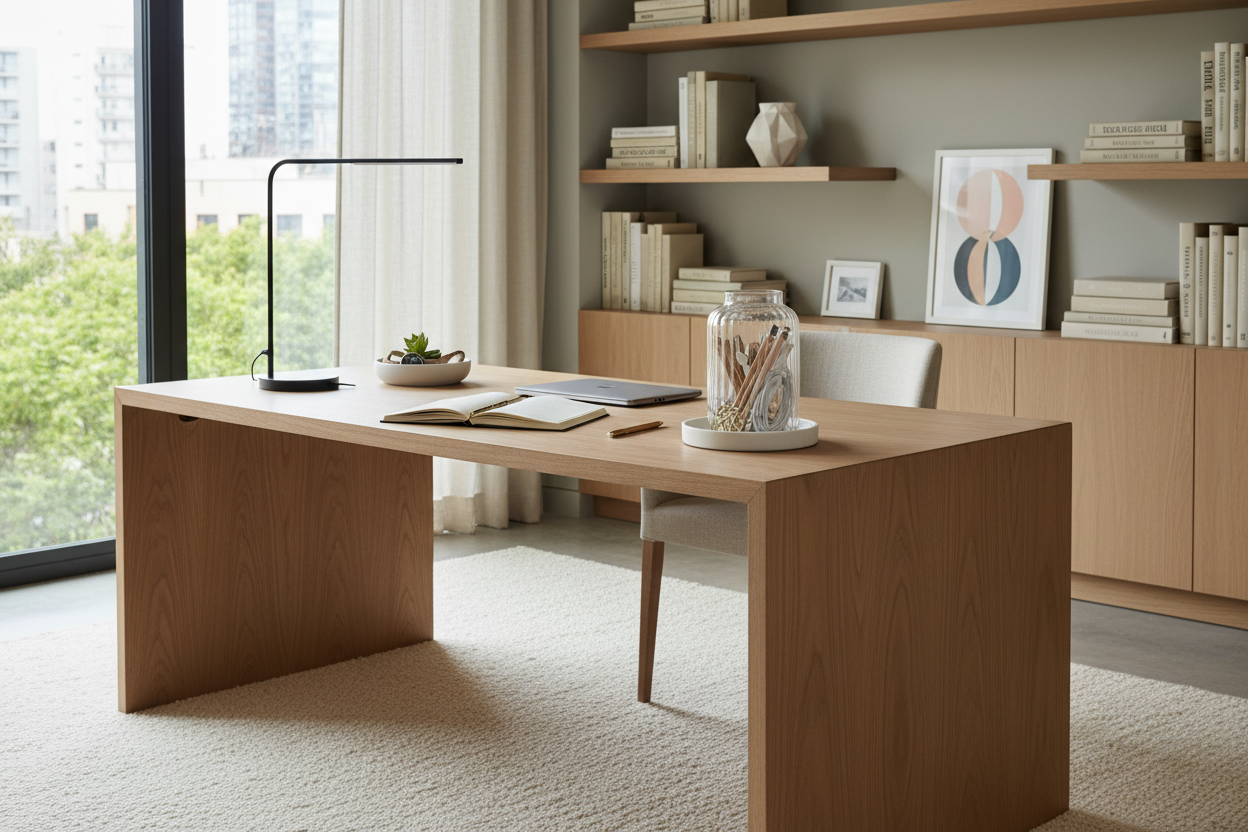
There is a distinct difference between a workspace that feels like a utility closet and one that feels like an executive sanctuary. Often, that difference isn't found in the mahogany desk or the ergonomic chair, but in the micro-details of organization. Visual noise—stray paperclips, uncapped highlighters, and scattered coins—fractures focus. The solution is not just a bin, but a curated desk jar that bridges the gap between functional storage and sculptural art.
Key Features to Look For
- Weighted Base: Essential to prevent tipping when storing heavy items like scissors or fountain pens.
- Aperture Width: The opening must be wide enough for easy retrieval but narrow enough to keep items upright.
- Interior Finish: Look for glazed or lined interiors to prevent graphite or ink from permanently staining the vessel.
- Visual Texture: Choose materials that contrast with your desk surface (e.g., matte ceramic on glossy lacquer).
Choosing the Right Material for Tactile Balance
When selecting accessories for a client's office, I treat the desk surface as a landscape. If your desk is a sleek, cold glass or laminate, you need warmth and earthiness. Conversely, a heavy timber desk benefits from lighter, more refined materials.
Ceramic and Stoneware
Artisan pottery or stoneware brings an organic, grounded element to the workspace. The irregularity of a hand-thrown vessel breaks up the rigid, straight lines of monitors and keyboards. From a practical standpoint, stoneware is heavy, making it the ideal candidate for holding top-heavy tools without the risk of toppling over.
Glass and Acrylic
For smaller desks or dark rooms, transparency is your ally. A heavy, blown-glass jar occupies less "visual weight" than an opaque one, making the desk feel less cluttered. However, be mindful that glass exposes the contents completely; if your supplies are messy or mismatched, a glass vessel will amplify the chaos rather than hide it.
Scale and Silhouette
The silhouette of your container dictates the flow of the desktop vignette. A common error is selecting a piece that is too tall relative to the user's seated reach.
Ideally, the rim should sit below eye level when you are seated, allowing you to grab a pen instinctively without looking. A cylindrical shape is classic and space-efficient, while a ginger-jar style (bulbous body, narrower neck) offers more volume for storage while maintaining a smaller footprint on the desk surface.
My Personal Take on desk jar
I once sourced a stunning, unglazed terracotta vessel for a client who was an architect. It looked incredible against his drafting table. However, two weeks later, he called me with a specific complaint I hadn't anticipated: the noise.
Every time he dropped a metal drafting pencil into the jar, it made a harsh, grating "clack" against the raw clay. Furthermore, the unglazed bottom was slowly creating micro-abrasions on his walnut desktop. I had to go back and line the interior bottom with a circle of thick wool felt and apply a cork pad to the exterior base. It’s a small detail, but that "thud" versus "clack" changes the entire sensory experience of using the item. Now, I never buy a vessel without checking the bottom texture and the acoustic resonance first.
Conclusion
A well-chosen vessel does more than hold pens; it anchors your workspace. By selecting a piece with the right weight, texture, and scale, you turn a mundane necessity into a focal point of design. Clear the clutter, choose a piece that speaks to your style, and let your desk breathe.
Frequently Asked Questions
How do I clean the inside of a narrow desk jar?
If the vessel is too narrow for your hand, use a bottle brush with warm soapy water. For ink stains in unglazed ceramic, a paste of baking soda and water often lifts the pigment without damaging the material.
Can I use vintage items as desk jars?
Absolutely. Vintage sugar bowls, creamers, or apothecary jars make excellent workspace accessories. Just ensure the rim is smooth to avoid scratching your hand when reaching for supplies.
What is the ideal height for a pen holder?
The sweet spot is usually between 3.5 to 4.5 inches tall. Anything shorter allows pens to tip out; anything taller makes it difficult to retrieve shorter items like mechanical pencil leads or USB drives.



Leave a comment
This site is protected by hCaptcha and the hCaptcha Privacy Policy and Terms of Service apply.