










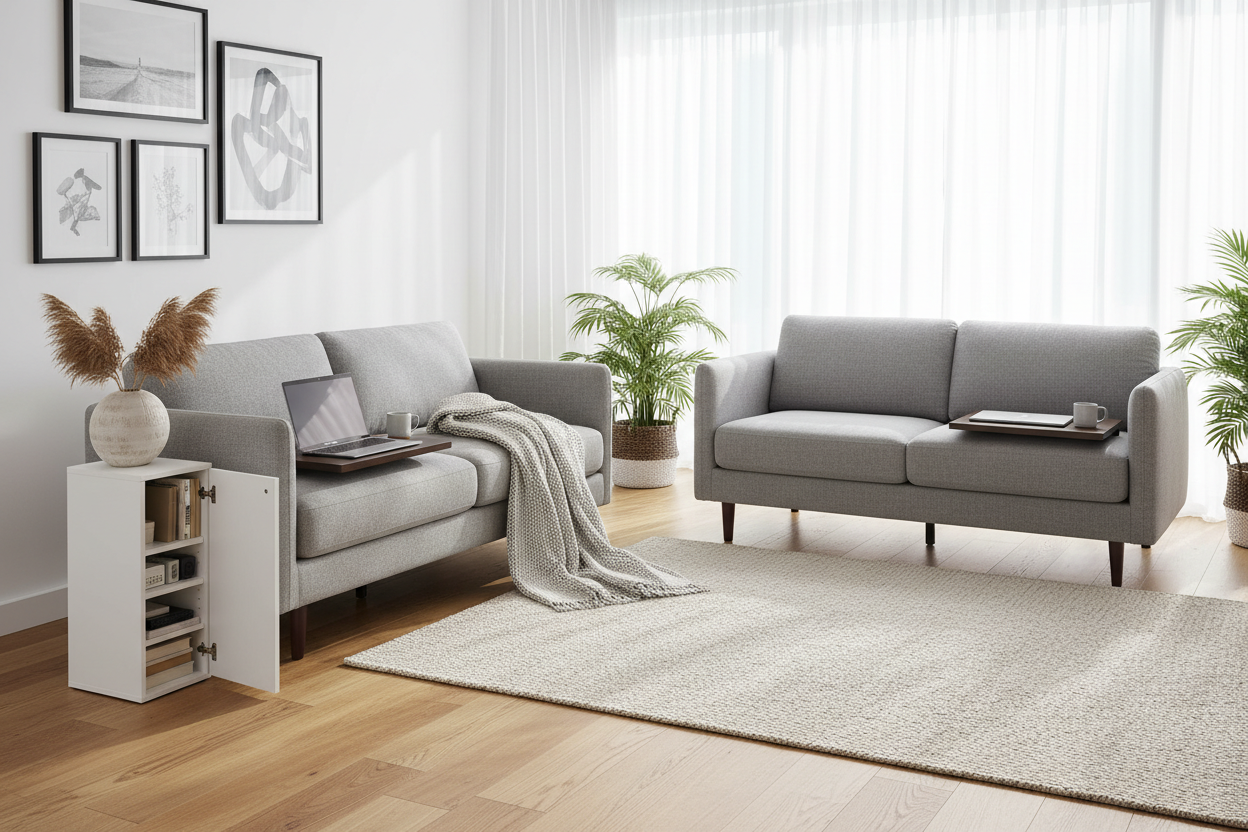
I spent eighty bucks on a marble-topped C-table because I saw it on a 'minimalist apartment' mood board and thought I’d finally achieved peak adulthood. Two weeks later, my living room looked like a tech graveyard. The C-table was a tangled nest of MacBook chargers, three different remotes, and a half-empty LaCroix can. It didn't solve my clutter problem; it just put it on a pedestal.
That was the moment I realized that open-leg furniture is a trap for anyone who actually lives in their home. If you’re tired of staring at 'tech spaghetti' every time you sit down to watch Netflix, a narrow side cabinet is the only logical upgrade. It’s the difference between pretending you don’t have mess and actually hiding it.
Quick Takeaways
- C-tables offer zero concealment for cords and controllers.
- A cabinet with a door provides a 'visual reset' for the room.
- Measure your sofa arm height before buying; you want the cabinet flush or slightly lower.
- Look for units with adjustable interior shelves to accommodate tall books or small baskets.
Why I Finally Gave Up on Minimalist C-Tables
C-tables are a visual lie. They look incredible in a showroom with nothing but a single copy of a thick art book and a espresso cup. In my 12x14 living room, the reality was much grittier. Because they have no sides, my laptop charger was constantly sliding off into the abyss between the sofa and the table. It was a daily struggle of fishing for cables in the dust bunnies.
Beyond the cord chaos, C-tables are notoriously wobbly. Most are built with a single support arm that flexes the moment you put any real weight on it—like a heavy ceramic lamp or a laptop. I lived in constant fear that one aggressive tail-wag from my dog would send my coffee flying. They lack the 'heft' needed to feel like a permanent part of the room's architecture.
The Upgrade: Why a Short Narrow Storage Cabinet Actually Works
I eventually swapped the spindly table for a closed-storage unit, and the room instantly felt five times cleaner. A short narrow storage cabinet occupies the exact same footprint—usually about 10 to 12 inches wide—but it acts as a vault for your daily junk. It grounds the end of the sofa in a way a thin metal frame never could.
When I was hunting for the right piece, I spent three nights measuring the gap between my sofa arm and the radiator to choose the perfect narrow storage cabinet that wouldn't feel like a bulky intruder. The solid sides of a cabinet create a hard visual boundary. When you look into the room, you see a clean furniture line, not the pile of coasters and Kindle chargers hidden behind the door.
How Much Can a Short Skinny Cabinet Really Hold?
You would be surprised at the capacity of a short skinny cabinet. Mine currently holds two PS5 controllers, a stack of coasters, my oversized reading glasses, and a bulky power bank. If you choose one with an adjustable shelf, you can even tuck away those awkward 13-inch laptops when you’re done working for the day.
It’s a much more efficient use of a tight corner than a traditional small standing cabinet that might be too tall and block your line of sight. By keeping the height around 24 to 28 inches, you maintain that 'end table' feel while gaining a massive amount of hidden cubic inches.
Sneaking a Super Thin Cabinet Between the Wall and Sofa
Most apartments have that awkward 8-to-10-inch 'dead zone' between the sofa and the wall. Usually, it just collects dust and lost socks. I shoved a short thin cabinet into that gap, and it transformed the space. It’s a super thin cabinet that basically functions as a stealth charging station. I drilled a small hole in the back panel to run a power strip inside, so all my devices charge behind a closed door.
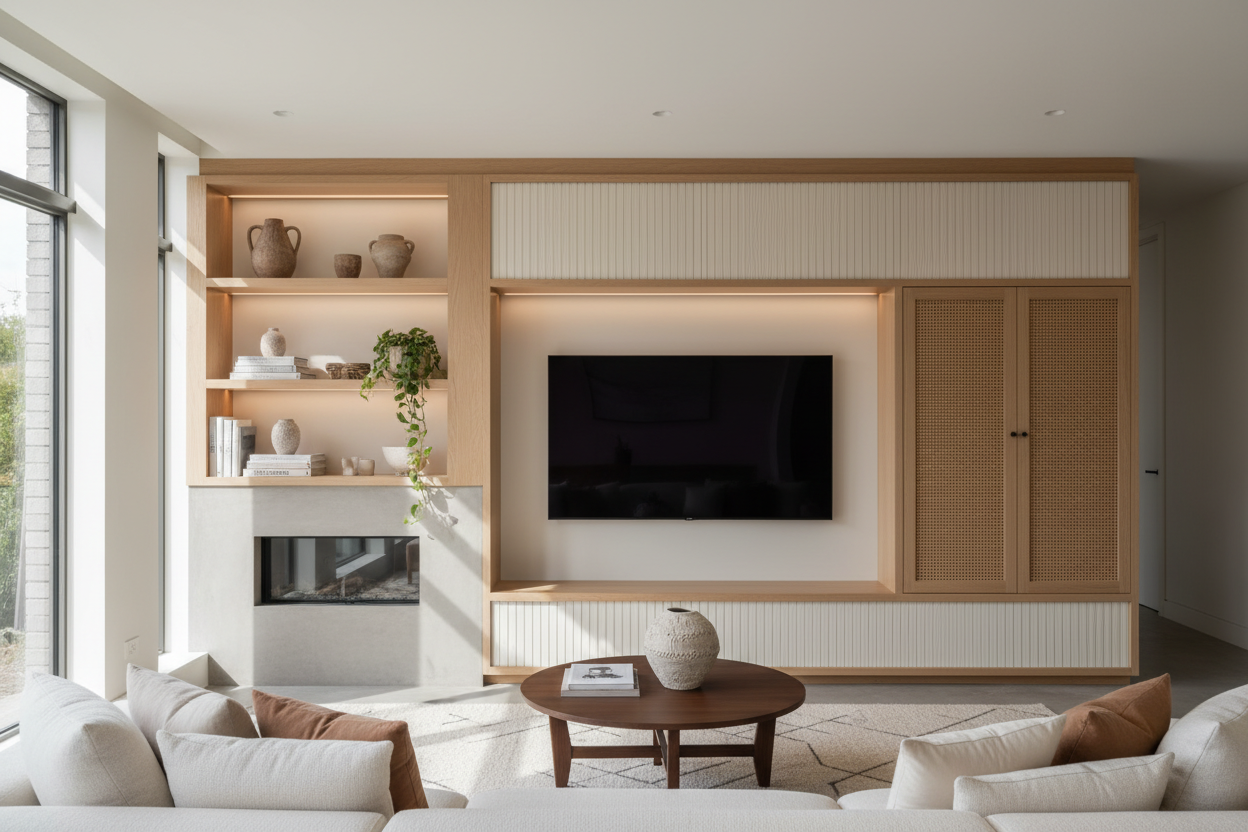
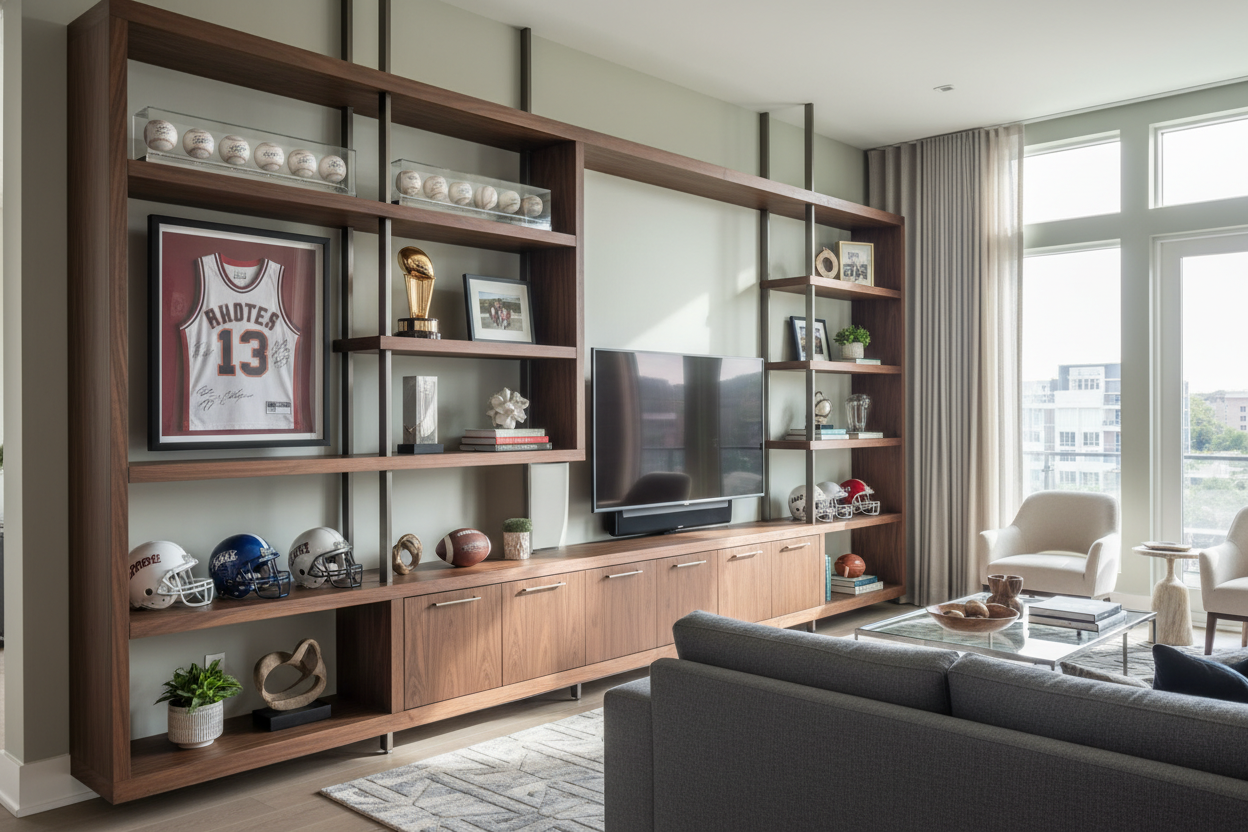
The trick to making this look intentional is coordination. Pairing a slim side piece with a modern TV cabinet with storage in a matching finish makes the room feel designed rather than decorated with random leftovers. It makes the furniture feel like it was built for the space, even if you're just renting.
Styling a Modern Narrow Cabinet Without Losing Surface Space
The top of a modern narrow cabinet is prime real estate, so don't clutter it with 'decor for decor's sake.' I keep mine strictly functional: a small lamp with a heavy base and a single stone coaster. If you over-style the top, you lose the ability to actually use it for your coffee or phone.
One word of advice on the door style: go opaque. While I love the look of a black cabinet with glass doors for displaying vintage glassware in a dining room, you do not want glass next to your sofa. The whole point of this upgrade is to hide the plastic remotes and messy cords. Seeing them through a glass pane defeats the purpose of the 'visual reset.'
Personal Experience: The 'Cheap Wood' Lesson
I once bought a $40 particle board cabinet from a big-box store that used that flimsy, fold-out cardboard for the back panel. Big mistake. The first time I spilled a drink, the 'wood' swelled up like a sponge and the door never closed right again. Now, I always look for solid MDF or high-grade plywood with decent hardware. It’s worth spending an extra $50 to get a door hinge that doesn't squeak every time you reach for a remote.
FAQ
How wide does a side cabinet need to be to stay stable?
Don't go narrower than 8 inches unless you plan to anchor it to the wall. Anything thinner than that becomes a tipping hazard, especially on carpet. 10 to 12 inches is the sweet spot for stability and storage.
Should the cabinet be taller than the sofa arm?
Ideally, no. You want it level with the arm or about 1-2 inches lower. If it’s significantly taller, you’ll find yourself bumping your elbow on it, which is the opposite of cozy.
Is assembly difficult for these narrow units?
Usually, it's a 20-minute job. Because they are small, they don't have the complex structural needs of a wardrobe. Just make sure you have a real screwdriver; the 'L-shaped' ones that come in the box are a recipe for hand cramps.

Leave a comment
This site is protected by hCaptcha and the hCaptcha Privacy Policy and Terms of Service apply.