










I remember staring at my $1,200 OLED screen while my two-year-old used it as a canvas for a half-eaten grape. The traditional low-profile media console I bought in my twenties was basically an invitation for disaster. It was the perfect height for sticky fingers and a convenient ladder for curious toddlers. Switching to a tv hanging cabinet wasn't just a design choice; it was an act of tech preservation.
Quick Takeaways
- Elevation is the ultimate childproofing strategy for expensive electronics.
- Enclosed units hide the blinking lights that attract kids like moths to a flame.
- Stud-mounting is non-negotiable—never rely on drywall anchors alone.
- Ventilation is key to preventing your gaming consoles from melting inside.
The Floor Console Was a Toddler's Playground
For months, my living room felt like a high-stakes obstacle course. My floor-standing console had those glowing power buttons right at eye level for a crawler. Every time I turned my back, the Xbox was being 'fed' plastic coins and the HDMI cables were being yanked like they were part of a tug-of-war game. It’s impossible to relax when you’re constantly policing the 'no-touch zone' around the TV.
Standard low-profile stands might look sleek in a bachelor pad, but in a family home, they are magnets for dust, pet hair, and chaos. I realized that if I didn't get my gear off the ground, I’d eventually be replacing a cracked screen. The struggle wasn't just about the mess; it was about the constant anxiety of living in a room where the most expensive items were the most vulnerable.
Enter the Wall Mounted Enclosed TV Cabinet
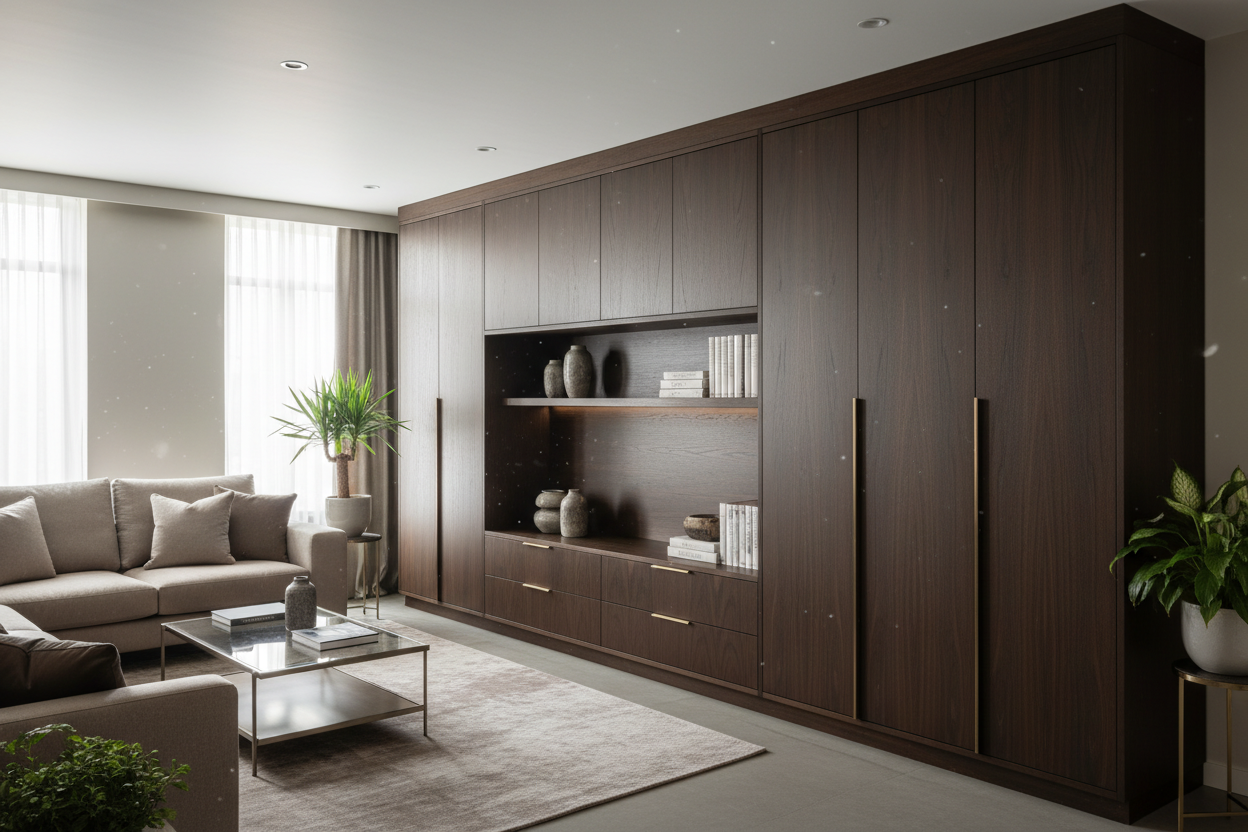
The strategic shift to a wall mounted enclosed tv cabinet changed the entire vibe of our home. By elevating the storage unit just 18 inches off the floor, I effectively moved the entire tech stack out of the 'danger zone.' It’s amazing how much less kids care about the router when they can’t actually reach the buttons.
I’m a firm believer that open shelving is a trap for parents. You want a wall TV cabinet with doors that enclose TV components because it hides the visual noise. Those flashing green and blue lights on your modem are basically a siren song for a bored three-year-old. When everything is tucked behind a solid door, the temptation vanishes. It also means I don't have to look at the tangled 'cable spaghetti' that used to haunt my baseboards.
How to Mount TV Cabinet on Wall (Without the Anxiety)
I get it—the idea of hanging fifty pounds of furniture and electronics on a vertical surface is terrifying. But learning how to mount tv cabinet on wall safely isn't rocket science; it's just about physics. The golden rule: find the studs. Use a high-quality stud finder, mark your spots, and do not compromise. If your studs aren't perfectly centered where you want the cabinet, you need to use a mounting cleat or heavy-duty 1/4-inch toggle bolts rated for at least 100 pounds each.
I spent three hours measuring and leveling because a hanging tv wall cabinet that is even a quarter-inch off will drive you crazy every time you sit on the sofa. I also highly recommend installing a recessed cable management box behind the unit. This allows you to run all your power and data lines inside the wall, so you don't have a single cord dangling down like a tail for the cat to play with.
Choosing a Wall-Hung TV Cabinet With Doors That Fits Everything
Don't make the mistake I did and buy a unit that’s too shallow. A standard AV receiver or a PS5 needs at least 14 to 16 inches of depth once you account for the cables sticking out the back. When shopping for a wall-hung tv cabinet with doors, look for something with adjustable internal shelving and built-in ventilation. If the cabinet is airtight, your electronics will cook themselves in an hour.
I eventually settled on a large TV cabinet with spacious storage that had enough room for the Nintendo Switch dock, two controllers, and my oversized collection of 4K discs. You want a tv cabinet with doors wall mount that feels substantial—avoid the cheap 1/2-inch MDF stuff that bows the second you put a soundbar on it. Look for 3/4-inch plywood or solid wood frames if you want it to last more than a season.
Reclaiming Our Adult Living Room Aesthetic
The best part of this transition happened after the kids went to bed. For the first time in years, the living room didn't look like a daycare. The floor space under the cabinet makes the room feel twice as large, and it’s a breeze to run the vacuum through. It’s a much more intentional look than a bulky modern TV cabinet table with storage that sits on the floor and acts as a graveyard for lost LEGO pieces.
My personal experience? I once tried a cheap 'floating' shelf from a big-box store that ripped right out of the drywall because I got lazy with the anchors. It was a $200 mistake that cost me a Saturday of patching plaster. Do it right the first time with a real tv hanging cabinet and proper mounting hardware. Your tech—and your sanity—will thank you.
FAQ
Is a wall-mounted cabinet safe for heavy TVs?
Usually, the TV is mounted to the wall separately on its own bracket, and the cabinet hangs below it. This is the safest setup because it distributes the weight across more studs.
How high should I hang my TV cabinet?
Aim for the bottom of the cabinet to be about 20-24 inches off the floor. This keeps it out of reach for toddlers but still looks grounded in the room's design.
Will my remote work through the cabinet doors?
If the doors are solid wood or MDF, you'll need an IR repeater (a $20 gadget) or devices that use Bluetooth/RF remotes, like the Apple TV or modern gaming consoles.


Leave a comment
This site is protected by hCaptcha and the hCaptcha Privacy Policy and Terms of Service apply.