










I remember walking into a client's dining room last year—they'd just moved into a 1920s colonial and had all their grandmother's china stacked in cardboard boxes. The room felt empty, like it was waiting for something. That's when we talked about a china cabinet for dining room. It wasn't just about storage; it was about giving their heirlooms a proper home and creating a focal point that tied the whole space together.
Quick Takeaways
- A china cabinet needs at least 36 inches of clearance from dining chairs for comfortable movement
- For standard 8-foot ceilings, look for cabinets around 84 inches tall to maximize display space
- Kiln-dried hardwood frames last decades longer than particle board construction
- Glass shelves should be at least 1/4-inch thick to safely support dinnerware
- LED lighting strips use 75% less energy than traditional cabinet bulbs
Why Your Dining Room Needs a China Cabinet
Let's be honest—most dining rooms have that awkward corner or wall that feels empty. A china cabinet solves this by creating intentional display space. I've seen clients use their cabinets for everything from wedding china to vintage glass collections. The key is that it elevates your items from 'stored' to 'curated.'
Functionally, a good cabinet protects your pieces. I recommend looking for cabinets with UV-protected glass if you have south-facing windows, as sunlight can fade delicate patterns over time. The adjustable shelves (look for at least 4 positions) let you customize for different plate sizes—standard dinner plates need about 12 inches of vertical space between shelves.
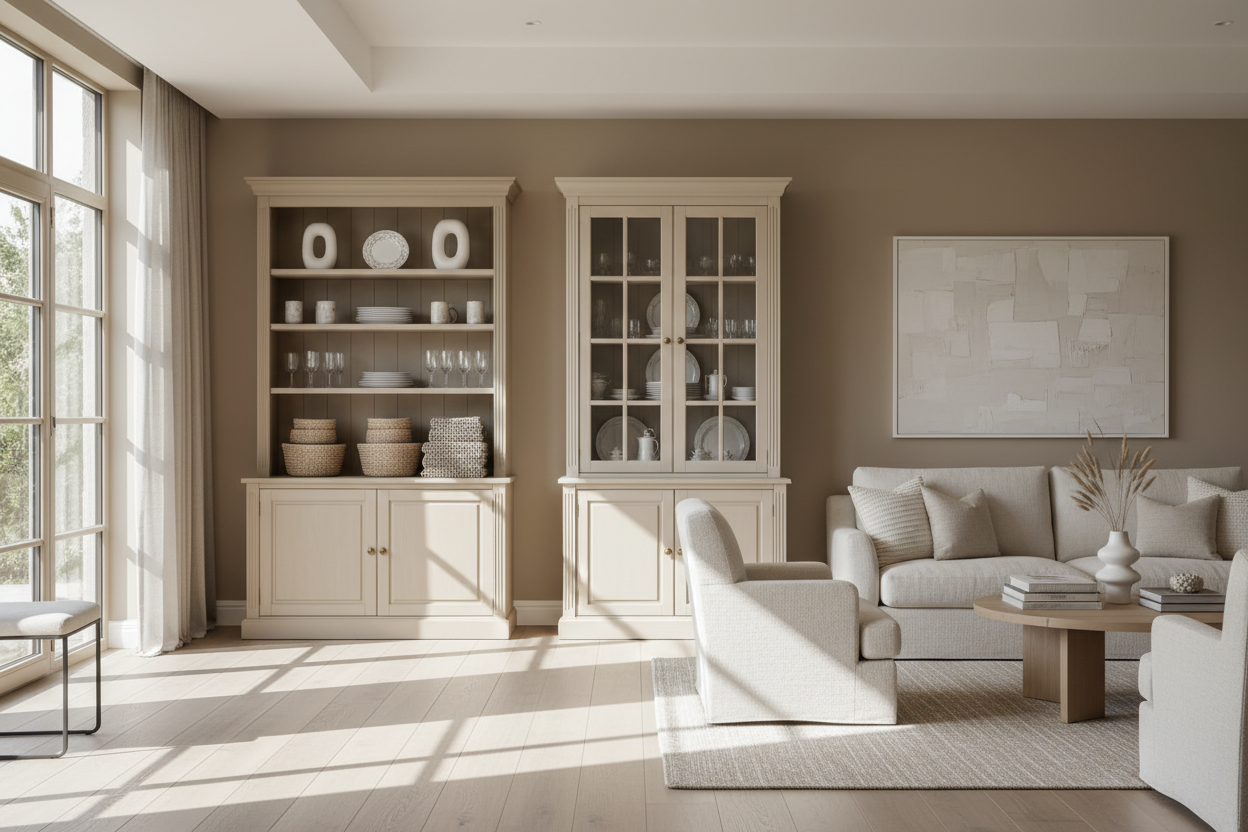
When you're considering Dining Room China Cabinet Sets, remember that matching pieces create visual harmony, but they're not mandatory. I've mixed modern cabinets with traditional dining tables that created beautiful contrast.
Choosing the Right China Cabinet for Your Space
Measure twice, buy once. Start with your room dimensions. For a standard 12x14 dining room, I'd recommend a cabinet no wider than 60 inches. Leave 42-48 inches between the cabinet and table edge for chair clearance. Corner cabinets can be space-savers—I recently installed a 36-inch corner unit that held as much as a 48-inch straight cabinet.
Materials matter. Solid wood cabinets with dovetail joints will last generations. If you're on a budget, look for plywood construction rather than particle board—it's more stable and holds screws better. Glass doors should have sturdy brass or steel hinges, not plastic.
For smaller spaces, my Small China Cabinet Tips include using mirrored backs to create depth and choosing cabinets with legs rather than solid bases. When you're ready to shop, Browse Dining Room Collections to see how different styles work in room settings.
Styling Your China Cabinet Like a Designer
Start with a clean slate. Remove everything, then add back items in layers. I use the rule of thirds: fill the bottom third with heavier items (stacked plates, bowls), the middle third with medium pieces (glasses, serving dishes), and the top third with lighter decorative items.
Group similar items together. All your white dinnerware on one shelf, colored glassware on another. Leave some negative space—about 30% of each shelf should be empty to prevent visual clutter. For height variation, use cake stands or small risers. I keep a collection of 3-inch acrylic risers in my design kit specifically for this purpose.
Lighting transforms displays. LED strip lights along the top interior edge provide even illumination without hot spots. Choose warm white (2700K-3000K) for a cozy feel. If your cabinet doesn't have built-in lighting, battery-operated puck lights are an easy retrofit.
Modern Alternatives to Traditional China Hutches
Not every home needs a traditional hutch. For contemporary spaces, I often recommend sideboards or buffets with glass upper sections. These maintain display functionality while offering cleaner lines. A Modern Wood Sideboard like this 39-inch model gives you closed storage below and open shelving above.
Open shelving units are another option. I recently used floating shelves with integrated LED lighting for a client who wanted a minimalist look. The key is keeping the display curated—too many items on open shelves looks cluttered quickly.
For tech-savvy homes, consider cabinets with smart features. I've installed several with LED Buffet Cabinet lighting that connects to home automation systems. These let you schedule lighting or control it from your phone.
Maintaining and Caring for Your China Cabinet
Weekly dusting with a microfiber cloth prevents buildup. For wood surfaces, use a cleaner specifically formulated for your finish type—oil-based finishes need different care than lacquered surfaces. I keep a small bottle of manufacturer-recommended cleaner in my clients' cleaning supplies.
Glass doors require special attention. Use a vinegar-water solution (1:4 ratio) and a lint-free cloth. Avoid ammonia-based cleaners on older cabinets, as they can damage certain types of glass. Check hinges and drawer slides every six months. A drop of machine oil on moving parts prevents squeaking and wear.
Seasonal changes affect wood furniture. In dry winter months, consider a humidifier to maintain 40-45% humidity. This prevents wood from cracking. In humid climates, silica gel packets in the cabinet can help protect delicate items from moisture damage.
Personal Experience
Early in my career, I made the mistake of recommending a beautiful antique china cabinet to clients with young children. The glass doors were single-pane, and within six months, a stray ball had cracked one. I learned that while antiques have character, families need durability. Now I always ask about household activity levels before suggesting cabinet types. The honest downside? China cabinets collect dust. Even with regular cleaning, those glass shelves show every speck. I recommend clients with allergies consider cabinets with more solid doors or invest in a good air purifier.
FAQ
How much should I budget for a quality china cabinet?
For solid wood construction with glass doors and interior lighting, expect $800-$2,500. Ready-to-assemble options start around $300 but may not last as long.
Can I use a china cabinet in rooms other than the dining room?
Absolutely. I've placed them in living rooms as bookcases, in entryways for storage, and even in bedrooms as linen cabinets. Just ensure the style complements the room.
How do I secure a tall cabinet to prevent tipping?
Use furniture straps anchored to wall studs. For cabinets over 60 inches tall, this is essential, especially in homes with children or pets.
What's the difference between a china cabinet and a hutch?
Technically, a hutch has a separate base and top unit, while a china cabinet is one piece. Functionally, they serve the same purpose, but hutches offer more configuration options.

Leave a comment
This site is protected by hCaptcha and the hCaptcha Privacy Policy and Terms of Service apply.