










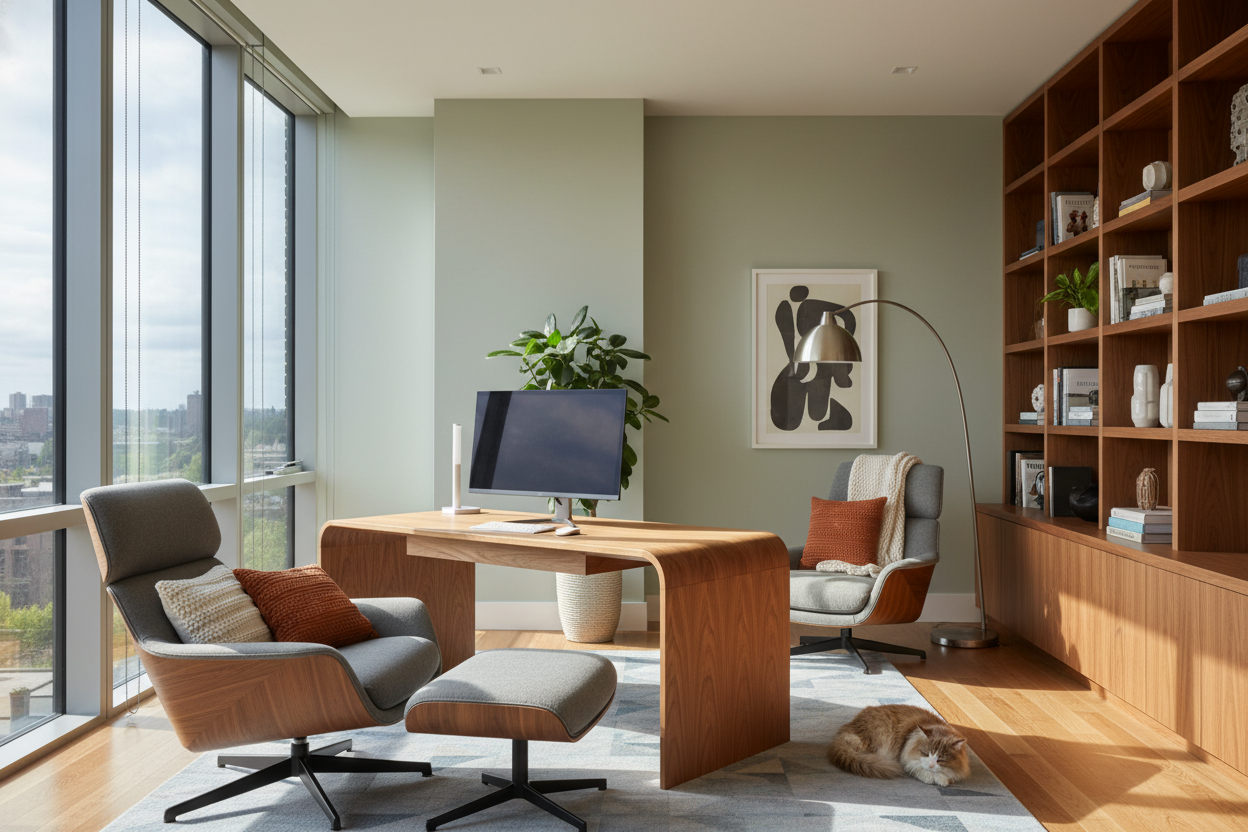
We have all been there: you set up a beautiful desk in the spare room, buy a rigid mid-century chair because it looks incredible in photos, and by Wednesday afternoon, your lower back is screaming. The reality of working from home often exposes the gap between a room that looks good and a room you can actually spend eight hours in. If you are tired of sterile corporate setups or dining chairs that double as torture devices, you need practical, comfortable home office ideas.
Creating a workspace that supports your body and your focus does not mean settling for bulky, plastic furniture. In this guide, we break down exactly how to balance proper ergonomics with warm, inviting design so you actually want to sit at your desk every morning.
Quick Decision Guide
- Prioritize the seat: Allocate the largest portion of your budget to a highly adjustable, ergonomic chair before investing in a desk.
- Soften the acoustics: Use rugs, drapery, and upholstered guest seating to absorb sound and reduce that cold, echoing corporate feel.
- Layer your lighting: Relying solely on overhead recessed lights causes eye strain; add task lighting at desk level and ambient light in the background.
- Check your clearances: Leave at least 36 to 42 inches of space behind your desk to push your chair back without hitting a wall or bookshelf.
Comfort & Ergonomics: Building the Foundation
The Desk-to-Chair Proportion
The core of any functional workspace is how your desk and chair interact. Standard desks sit at about 29 to 30 inches high, which is actually too tall for many people to type comfortably without shrugging their shoulders. When looking at comfy home office ideas, start with an adjustable-height desk or an ergonomic chair with highly adjustable armrests. Your elbows should rest at a 90-degree angle when typing. If your feet dangle, add a structured footrest to maintain circulation.
Lighting for Reduced Visual Strain
Comfort is not just about your spine; it is about your eyes. Harsh, single-source overhead lighting casts heavy shadows and causes fatigue. Instead, bounce light off the walls with a shaded floor lamp and use a dedicated task lamp with adjustable color temperature. Warm light (around 3000K) is great for reading, while cooler light (4000K) helps maintain focus during screen work.
Style & Coordination: Softening the Space
How to Make Your Home Office Cozy
Corporate offices feel cold because they rely on hard, durable surfaces like glass, metal, and commercial carpet. To counteract this at home, introduce organic textures. A chunky wool area rug under the desk anchors the room and warms up cold hardwood floors. Add woven wood shades to the windows to filter harsh afternoon sunlight. Figuring out how to make your home office cozy is often as simple as bringing in elements you would typically reserve for a living room, like a textured throw blanket over your reading chair or a potted olive tree to add life to an empty corner.
Space Planning & Layout
Positioning for Focus
Where you place your desk drastically impacts how the room feels. The classic mistake is shoving the desk flush against a blank wall. This creates a cramped, punishing visual field. If space allows, float your desk in the center of the room facing the door—a layout known in design as the 'command position.' It gives you a wider view of the room and makes the space feel instantly more intentional. If you must face a wall, mount floating shelves above the monitor to add depth and display personal art.
Designer's Honest Take
Early in my career, I designed a stunning home office for a client using a vintage, tufted leather executive chair. It had massive visual weight and anchored the dark walnut desk beautifully. Three months later, the client called to tell me they were working from the kitchen island because the chair was giving them terrible sciatica.
I learned the hard way that you simply cannot compromise on ergonomic support for the sake of aesthetics. We swapped the vintage piece for a high-end, modern ergonomic chair. Yes, the plastic frame and mesh back initially clashed with the traditional woodwork. But we softened the stark contrast by draping a high-quality sheepskin over the back and adding a rich, patterned vintage rug underneath. It taught me that the best comfortable office ideas require compromising on the 'perfect' look to ensure the space is actually livable.
Frequently Asked Questions
How can I make my home office cozy without spending a lot?
Focus on lighting and textiles. Turn off the overhead lights and bring in a warm-toned table lamp from another room. Drape a textured blanket over your chair and add a plush rug underfoot. These small changes dramatically shift the mood of the room.
What size desk do I really need?
For a standard setup with a laptop and one monitor, a desk that is 48 inches wide and 24 inches deep is the minimum comfortable size. If you use dual monitors or need space for reviewing physical documents, look for desks at least 60 inches wide and 30 inches deep.
Can I use a dining chair as an office chair?
Only for short stints. Dining chairs are pitched for eating, not typing, and lack lumbar support. If you must use one temporarily, add a dense lumbar pillow and a seat cushion, but plan to transition to a proper desk chair to avoid long-term back pain.

Leave a comment
This site is protected by hCaptcha and the hCaptcha Privacy Policy and Terms of Service apply.