










Most of us have experienced the claustrophobia of a poorly planned workspace. You sit down, bump your knees on a drawer, and feel the walls closing in. A cramped office isn't just an aesthetic issue; it actively drains your focus, creativity, and energy. But a tight square footage doesn't mean you are doomed to work in a closet-like environment forever.
Whether you are dealing with a tiny den, a converted closet, or carving out a corner in your bedroom, smart space planning changes everything. This guide will show you how to trick the eye, scale your furniture correctly, and reclaim your workflow without knocking down any walls.
Quick Decision Guide
- Ditch the executive desk: Opt for desks with a depth of 20 to 24 inches rather than the standard 30 inches to immediately open up walkways.
- Embrace negative space: Furniture with exposed legs or open frames feels lighter than solid, boxy pieces.
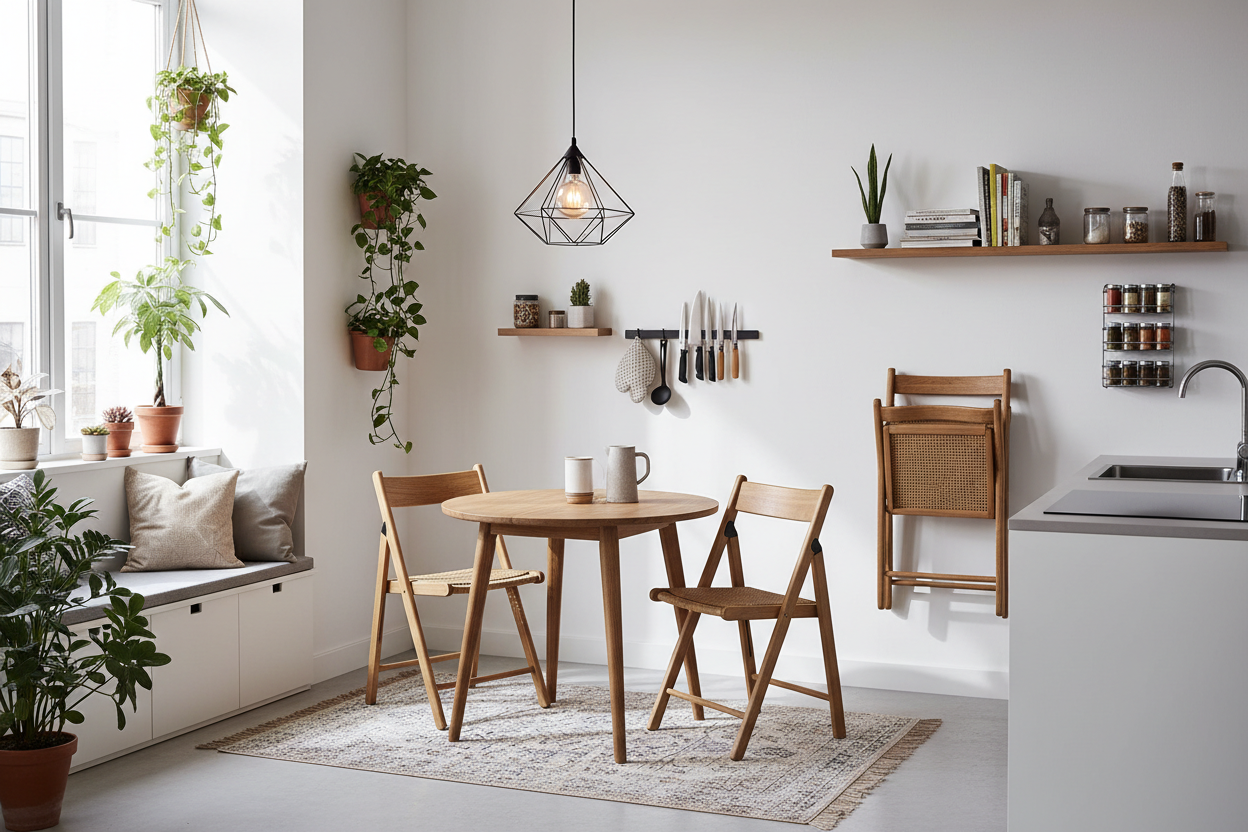
- Go vertical: Move storage off the floor and onto the walls using floating shelves to maximize your footprint.
- Control the cables: Visual clutter translates to physical claustrophobia. Invest in under-desk cable management trays.
Conquering the Floor Plan
Rethinking Desk Placement
The instinct in a cramped office space is usually to shove the desk flat against the longest wall. While this opens up the center of the room, it also forces you to stare at blank drywall all day. If your room dimensions allow, try floating the desk perpendicular to the wall or facing the door. This 'command position' provides a broader visual horizon, making the room feel significantly larger from your seated perspective.
Clearance Rules to Live By
Traffic flow is the secret to making a small room functional. You need a minimum of 36 inches of clearance behind your desk to comfortably roll your chair back and stand up. If you are adding a bookcase or filing cabinet behind you, bump that clearance up to 42 inches. If you cannot meet these minimums, it is time to downsize your furniture silhouette.
Mastering Visual Weight
Materials That Trick the Eye
In tight quarters, heavy materials are your worst enemy. A solid mahogany desk with modesty panels acts like a visual black hole, absorbing all the light and space in the room. Instead, look for materials that allow light to pass through. A glass-topped desk with a minimalist metal frame, or a warm white oak table with tapered mid-century legs, will trick the eye into perceiving more floor space.
Strategic Color Blocking
Keep your primary furniture pieces relatively close to your wall color. High-contrast furniture chops a room up visually. If your walls are a soft warm white, a light ash or white desk will blend right in, making the boundaries of the room feel less restrictive. Save your bold, contrasting colors for art and small accessories.
Designer's Honest Take: Lessons From My Own Projects
A few years ago, I was hired to fix a tiny 8x9 foot suburban study. The client had purchased a massive, L-shaped engineered wood desk because they thought they needed the surface area. It took up 70 percent of the room. You literally had to squeeze past it sideways to sit down.
I convinced them to sell it and install a custom wall-to-wall floating counter at a shallow 22-inch depth. The room instantly doubled in perceived size. However, I learned a hard lesson about floating setups: the lack of pedestals means you have nowhere to hide the ugly reality of modern work. Every single monitor cord, power brick, and router wire was on full display hanging down the wall. We had to spend an extra weekend retrofitting rigid cable channels and mounting power strips to the underside of the desk just to make it bearable. Always plan your wire routing before you commit to minimalist furniture.
Frequently Asked Questions
How do I make a small office look bigger?
Maximize natural light and use a large floor mirror to bounce that light around. Keep your floor clear by moving storage to floating wall shelves, and choose furniture with exposed legs to maintain a sense of openness.
What is the best desk size for a small room?
Look for a desk that is 40 to 48 inches wide and 20 to 24 inches deep. This provides enough room for a laptop and a secondary monitor without encroaching on your valuable walkway space.
Should I use a smaller chair to save space?
Never compromise on ergonomics to save a few inches. Keep your high-quality, supportive task chair, but choose one with a lighter frame color (like grey or white mesh) instead of a bulky, dark leather executive chair. It will provide the exact same support with half the visual bulk.


Leave a comment
This site is protected by hCaptcha and the hCaptcha Privacy Policy and Terms of Service apply.