











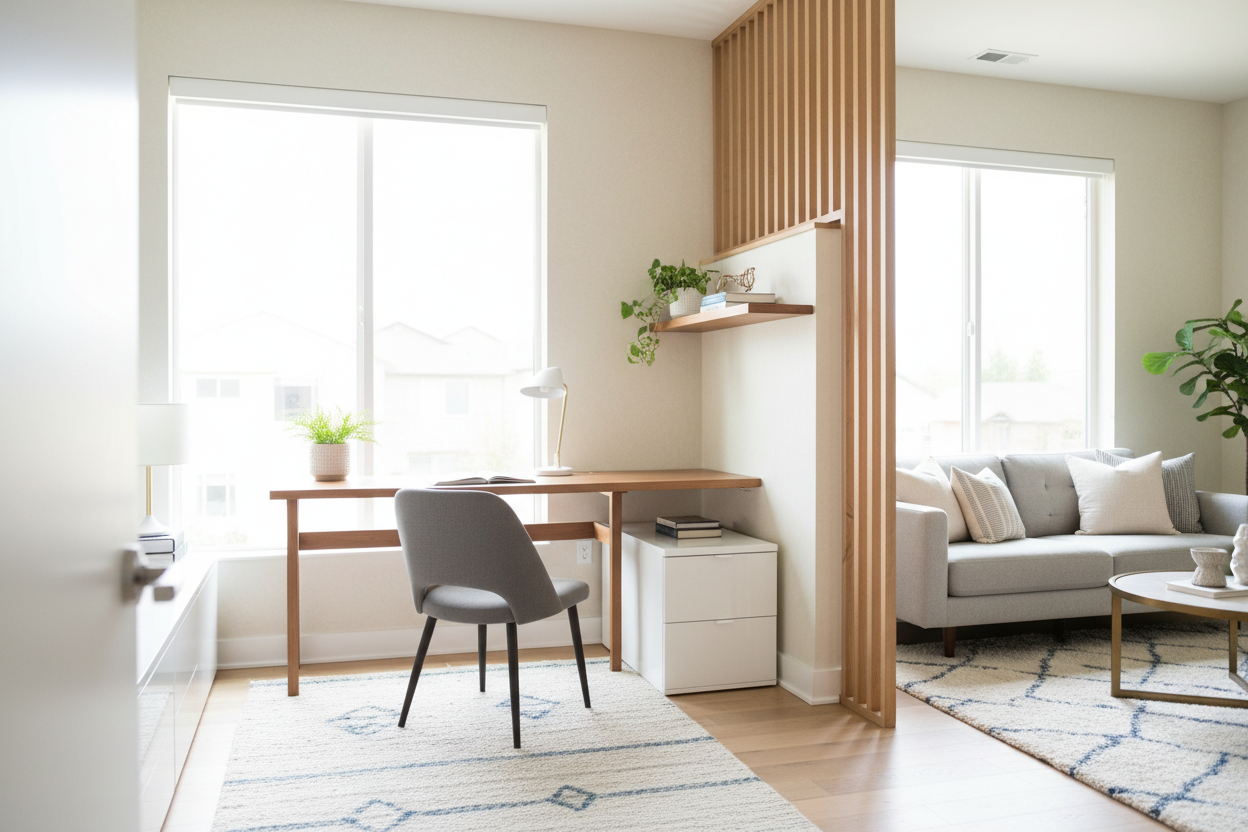
We have all been there: perching a laptop on the edge of a dining table or taking video calls from a cramped sofa corner. When the boundary between your living area and your workstation blurs, both your productivity and your home's aesthetic suffer. If you want to create a home office space that feels intentional rather than accidental, you need a solid design strategy.
Whether you are dealing with an open-concept suburban living room or navigating a small space work from home scenario, carving out a dedicated work zone is entirely possible. This guide will walk you through layout rules, visual tricks, and ergonomic realities to build a stylish, highly functional workstation that actually fits your floor plan.
Quick Decision Guide
- Measure your footprint: Always leave at least 36 inches of clearance behind your desk so you can push your chair back comfortably without hitting a wall or sofa.
- Prioritize ergonomics over aesthetics: A beautiful chair is useless if it ruins your posture during an eight-hour shift. Invest where your body touches the furniture.
- Utilize vertical real estate: Wall-mounted shelving keeps your work surface clear and draws the eye upward, making the room feel taller.
- Zone with lighting: Use a dedicated architectural task lamp to visually separate your work area from the rest of the room.
Space Planning & Layout Strategies
Finding the Right Zone
Figuring out how to create office space at home requires looking past traditional spare bedrooms. Look for underutilized square footage: an empty alcove, the dead space under a staircase, or even a wide hallway. If you are researching how to set up a small home office, consider the 'cloffice' (closet office). By removing the doors of a standard reach-in closet, you gain a perfectly proportioned nook that doesn't eat into your room's primary footprint.
Clearances and Visual Flow
When setting up a home office in a small space, you have to respect the room's natural flow. Avoid placing a desk where it blocks traffic paths or heavy sightlines. If you are floating a desk behind a living room sofa, ensure there is enough negative space around it so the room doesn't feel cluttered. The golden rule for setting up home office in small space environments is maintaining proportion—a massive executive desk will instantly overwhelm a modest apartment.
Style & Visual Coordination
Blending Work and Life
One of the biggest challenges when learning how to set up a small office space is making it look cohesive with your existing furniture. You do not want a sterile, corporate cubicle sitting in the middle of your cozy mid-century modern living room. Choose materials that speak to your home's palette. If your room features warm walnut tones and matte brass accents, carry those exact materials into your desk frame and shelving brackets.
Managing Visual Weight
To keep the room feeling airy, opt for furniture with lighter visual weight. A desk with slim metal legs or a wall-mounted floating desk creates the illusion of more floor space. This is especially crucial when navigating the realities of setting up home office small space layouts, where bulky filing cabinets and heavy wooden modesty panels can quickly make the room feel claustrophobic.
Lessons from My Own Projects
Early in my career, I designed a multi-purpose guest room for a client in a downtown condo. We focused entirely on the aesthetic, choosing a stunning, clear acrylic 'ghost chair' to pair with a minimalist white desk. It looked phenomenal in photos and kept the sightlines completely open.
However, I learned a hard lesson about practicality. After just three weeks of daily use, my client called to report severe lower back pain. The chair offered zero lumbar support, and the rigid seat edge cut off circulation to her legs. I had to swap it out for a proper, adjustable ergonomic chair. It taught me that when you figure out how to make a office functional, comfort must always dictate the seating choice. Never compromise your physical health for a magazine-worthy photo.
Frequently Asked Questions
How do I separate my workspace from my living space?
Use physical and visual cues. An area rug under your desk anchors the workstation, while an open-backed bookshelf can act as a subtle room divider. When the workday ends, turn off your task lamp to signal the transition and close your laptop.
What are the essentials for a compact desk setup?
Start with a laptop riser to bring your screen to eye level, a separate mechanical keyboard, and a wireless mouse. Add a clamp-on desk lamp to save surface area, and invest in under-desk cable management trays to hide unsightly wires.
Is putting a desk in the bedroom a bad idea?
It is not ideal for sleep hygiene, but sometimes it is the only option. If you must put your desk in the bedroom, position it so you are facing away from the bed while working. Use covered storage boxes to hide your work materials at night so you aren't staring at your to-do list while trying to fall asleep.

Leave a comment
This site is protected by hCaptcha and the hCaptcha Privacy Policy and Terms of Service apply.