










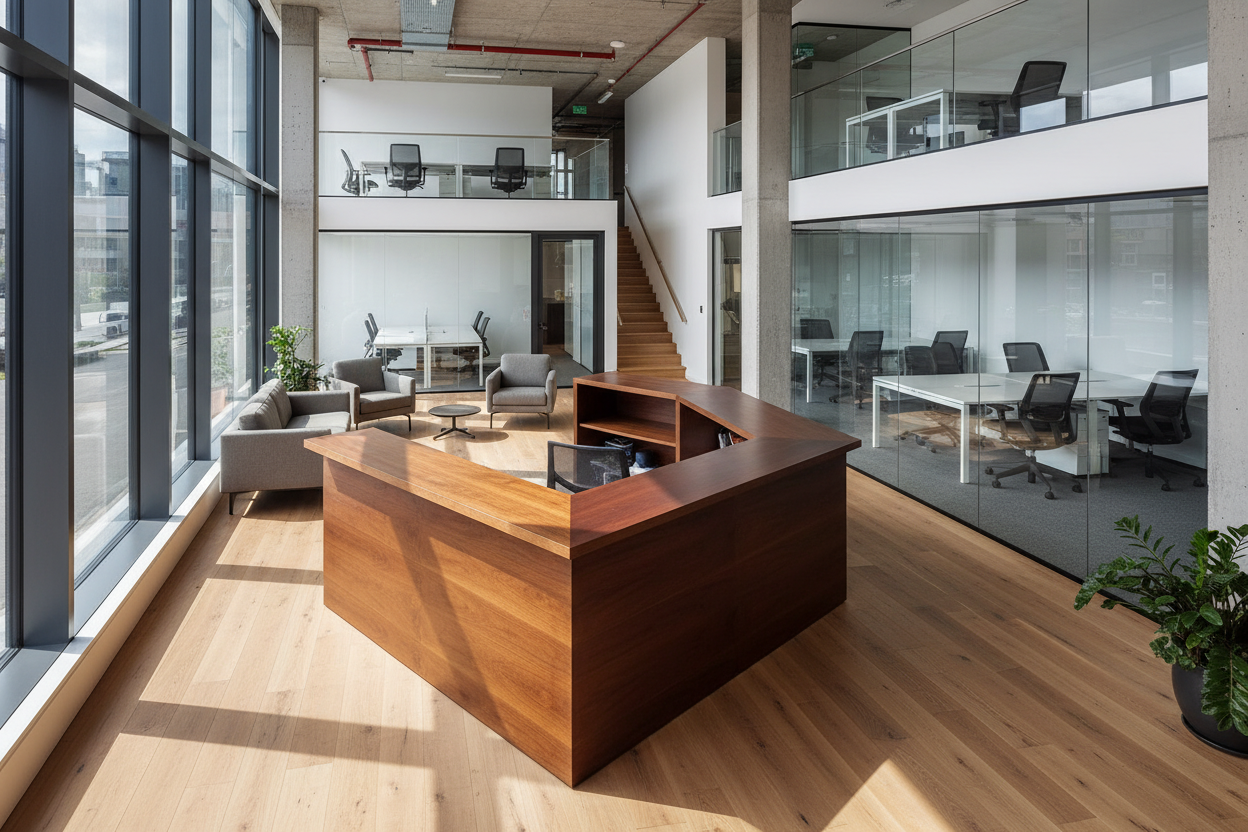
You have a tight footprint but significant ambitions for your company culture. The dilemma often lies in trying to force a corporate campus mentality into a boutique footprint. The result is often a cluttered, claustrophobic environment that stifles rather than stimulates. A successful small modern office building design relies less on square footage and more on the intelligent manipulation of volume, light, and circulation.
Key Features of High-Impact Compact Offices
- Vertical Integration: Utilizing mezzanines and double-height ceilings to create a sense of volume in limited footprints.
- Transparency & Zoning: Using glass partitions and open shelving to divide space without blocking visual sightlines.
- Multifunctional Furniture: Selecting modular pieces that serve storage, seating, and acoustic dampening purposes simultaneously.
- Biophilic Elements: Integrating vertical gardens or strategic planters to soften brutalist materials like concrete or steel.
- Strategic Fenestration: Placing windows to maximize natural light penetration deep into narrow floor plans.
Architectural Flow and Spatial Planning
When dealing with small office building architecture, the circulation path is your skeleton. A common error in narrow office building layouts is placing the circulation corridor right down the middle, creating a "bowling alley" effect that wastes valuable width. Instead, offset your main walkway. This allows for deeper distinct zones on one side—perfect for workstations—and shallower utility zones on the other for storage or private phone booths.
Open-plan concepts are popular, but in smaller buildings, they can lead to acoustic chaos. We need to create "micro-neighborhoods." Use flooring transitions—such as moving from polished concrete in high-traffic areas to carpet tiles in work zones—to psychologically delineate space without erecting physical walls that shrink the room.
Materiality: Balancing Weight and Warmth
In small business building design, material selection dictates the perceived size of the room. Heavy, dark woods can make a boutique office feel like a cave. I always advise clients to lean toward a palette that reflects light but offers texture.
The Role of Glass and Steel
Internal glass walls are non-negotiable for modern aesthetics in tight spaces. They provide necessary acoustic privacy for meeting rooms while borrowing light from the perimeter windows. However, frame selection matters. Chunky aluminum frames add visual clutter; opt for slim-profile steel or frameless glazing to maintain a seamless look.
Texture and Acoustics
Hard surfaces bounce sound. If your design leans into the industrial modern look with exposed ductwork and concrete floors, you must counterbalance with soft textures. Consider acoustic baffles suspended from the ceiling or felt-lined wall panels. These elements act as functional art, absorbing reverberation while adding a layer of sophisticated warmth.
Furniture Selection and Scale
Furniture that looks proportional in a showroom often overwhelms a small office. For small office building design concepts, we look for "leggy" furniture. Sofas and desks raised on slender legs allow you to see the floor underneath, which tricks the eye into perceiving more floor space. Avoid heavy, skirted furniture or solid block desks. Furthermore, prioritize ergonomics over bulk. A high-end mesh task chair offers the same support as a leather executive chair but with half the visual weight.
My Personal Take on Small Modern Office Building Design
I recently consulted on a project involving a converted row house—a classic narrow office building scenario. The client wanted an ultra-modern, all-glass conference room right at the entrance to impress visitors.
On paper, it looked sleek. In practice, once we installed the glazing, we realized a critical flaw: the "fishbowl effect." Employees felt exposed, and the hard glass surfaces bouncing sound off the parallel brick wall created an echo chamber that made confidential calls impossible. We had to retroactively install heavy velvet drapery and apply frosted gradients to the glass at eye level. It taught me a valuable lesson: aesthetic transparency is beautiful, but psychological privacy is essential for productivity. In small spaces, you cannot escape your colleagues, so your design must provide pockets of true seclusion, not just visual separation.
Conclusion
Designing a compact office isn't about compromising; it's about editing. By prioritizing light, fluid circulation, and appropriately scaled furnishings, you can create a workspace that feels expansive and purposeful. A well-executed small modern office building design doesn't just house your business; it elevates the daily experience of everyone who walks through the door.
Frequently Asked Questions
How do I maximize light in a narrow office building?
Use clerestory windows (windows placed high on the wall) to bring light into the center of the building without sacrificing wall space for storage. Additionally, use glass partitions for internal rooms to let that light pass through the entire depth of the building.
Is custom furniture necessary for small office building design?
While not strictly necessary, custom millwork (built-ins) is often the best investment for small spaces. Built-in desks and storage maximize every inch of alcoves and odd angles that standard modular furniture can't fit into efficiently.
What is the best flooring for small modern offices?
Large-format tiles or continuous polished concrete work best. Seamless flooring or large patterns reduce visual clutter, making the floor area appear larger than it is. Avoid small, busy patterns which can make the space feel chaotic.


Leave a comment
This site is protected by hCaptcha and the hCaptcha Privacy Policy and Terms of Service apply.