










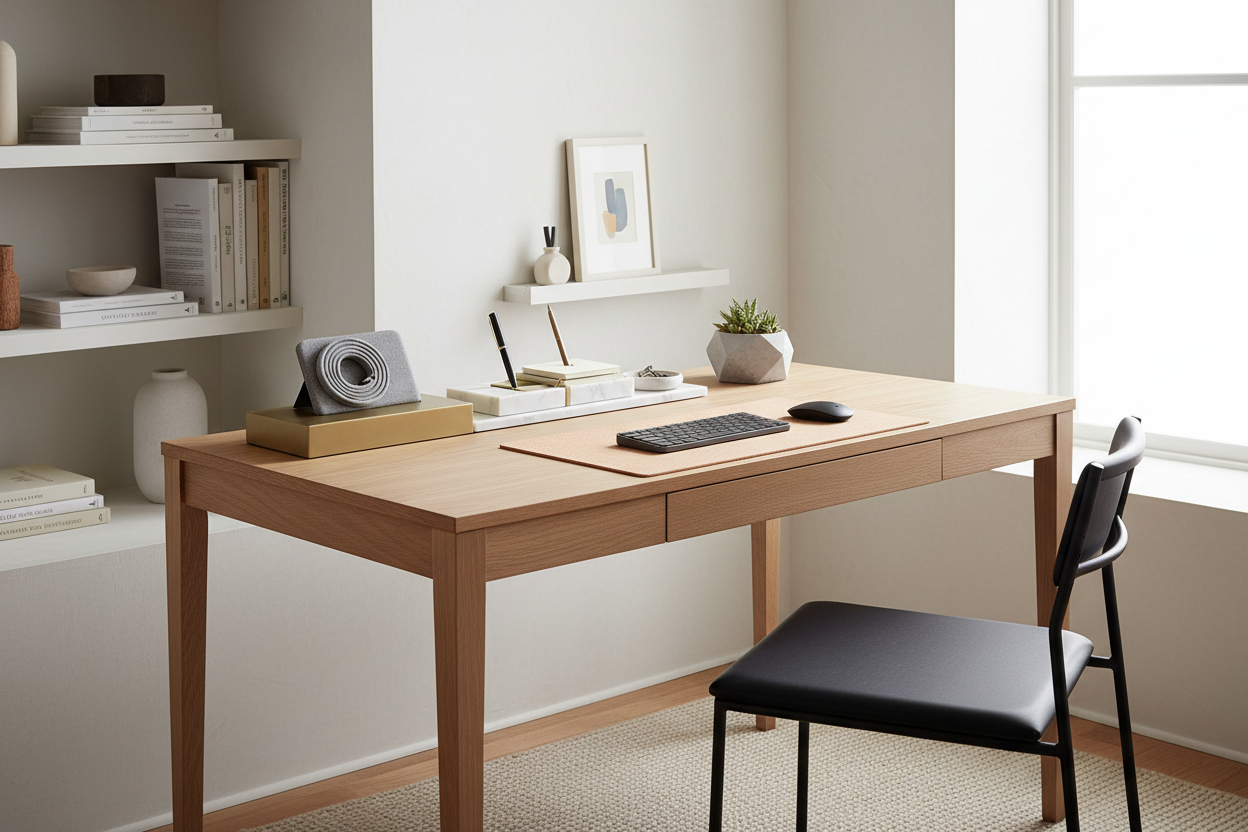
When square footage is at a premium, your workspace often suffers first. A cluttered surface creates visual noise that disrupts focus, yet the standard advice of "just buy more bins" rarely works in compact interiors. Proper small desk organization is not merely about tidiness; it is about architectural balance and curating a workflow that fits within a limited footprint. As a designer, I see the desk not just as a utility, but as a vignette that anchors the room.
Key Principles for Compact Workspaces
- Vertical Utilization: Don't just look across; look up. Wall-mounted shelving or pegboards clear the immediate work surface.
- Visual Weight: Opt for acrylic or light-colored organizers to prevent the desk from feeling heavy or imposing.
- Hidden Utility: Prioritize furniture and accessories with concealed compartments to mask necessary but unsightly tech clutter.
- The Reach Radius: Keep only daily essentials within arm's reach; archive the rest to secondary storage.
The Art of Vertical Zoning
The most common error I see when clients attempt to organize small desk layouts is treating the desktop as the only storage plane. In a small room, floor space is expensive, but wall space is usually abundant. We need to shift the focal point upward.
Consider installing a slim floating shelf roughly 18 inches above the desktop. This creates a secondary tier for items you need accessible but not immediately underhand, like reference books or ambient lighting. This approach creates a "shadow line" on the desk surface, keeping it open for your laptop and sketchbook while maintaining a sophisticated silhouette.
Selecting the Right Materials
When choosing a desk organizer for small spaces, materiality matters as much as dimension. In tight quarters, I often recommend materials with low "visual weight." Solid, opaque boxes in dark woods or black plastic can make a small desk feel claustrophobic and heavy.
Transparency and Reflection
Acrylic or glass organizers are excellent because they allow light to pass through, tricking the eye into seeing more space than actually exists. If you prefer texture, look for wire mesh or light natural linens. These materials breathe, whereas heavy leathers or chunky woods absorb light and shrink the perception of the area.
The "Tray" Theory and Visual Anchoring
To organize small desk space effectively, you must group loose items. A singular, high-quality tray acts as a boundary. Psychologically, five items scattered on a desk look like a mess; those same five items placed on a leather or marble tray look like a curated display.
This technique also aids in cleaning. When you need to wipe down the surface, you move one object (the tray) rather than shuffling a dozen pens and clips. It brings a sense of intentionality to the setup.
Ergonomics in a Micro-Layout
Small space desk organization often sacrifices ergonomics for aesthetics, which is a mistake. Your monitor needs to be at eye level, even on a petite writing desk. Instead of a bulky monitor arm which might not clamp onto a decorative console, consider a monitor riser with a drawer underneath. This gives you that necessary 3-4 inches of height for neck health while providing a hidden garage for your keyboard or mouse when the workday ends.
My Personal Take on Small Desk Organization
I learned a hard lesson about material durability during a project for a client in a 450-square-foot loft in Chelsea. We wanted a hyper-minimalist look, so I specified a beautiful, high-gloss white lacquer desk with matching acrylic organizers. It looked stunning on installation day.
However, three months later, I visited for a follow-up. The acrylic organizers, while visually light, had become a nightmare. Every fingerprint showed, and the bottom of the organizers had micro-scratches that caught the light, making the desk look perpetually dirty. Furthermore, the hard acrylic against the lacquer desk created a hollow, clattering sound every time the client dropped a pen in.
I swapped them out for felt-lined leather trays in a soft dove grey. The felt dampened the sound (crucial in a small, echo-prone apartment) and the leather developed a patina rather than scratches. The lesson? In small spaces, you interact with materials intimately. Touch and sound are just as important as the look. Always line your organizers with felt or cork if you want a luxury user experience.
Conclusion
Transforming a cramped corner into a functional workspace requires editing, not just stacking. By leveraging vertical space, choosing materials that disappear visually, and focusing on tactile quality, you can create a station that inspires creativity rather than claustrophobia. Your desk should be a reflection of your clearest thoughts.
Frequently Asked Questions
How do I manage cables on a desk with no back panel?
For open-back desks (like parsons tables), use adhesive cable clips along the back leg to run wires down to the floor. Use a cable sleeve that matches your wall paint color to camouflage the bundle as it travels to the outlet.
What is the minimum depth for a functional small desk?
I recommend a minimum depth of 20 inches. Anything shallower makes it difficult to place a laptop and a cup of coffee without risking a spill. If you use an external monitor, aim for 24 inches to maintain proper focal distance.
Can I use a console table as a desk?
Yes, but be mindful of height. Console tables are often 30-32 inches high, whereas standard desks are 28-30 inches. You may need an adjustable chair that can go higher to ensure your elbows remain at a 90-degree angle while typing.


Leave a comment
This site is protected by hCaptcha and the hCaptcha Privacy Policy and Terms of Service apply.