










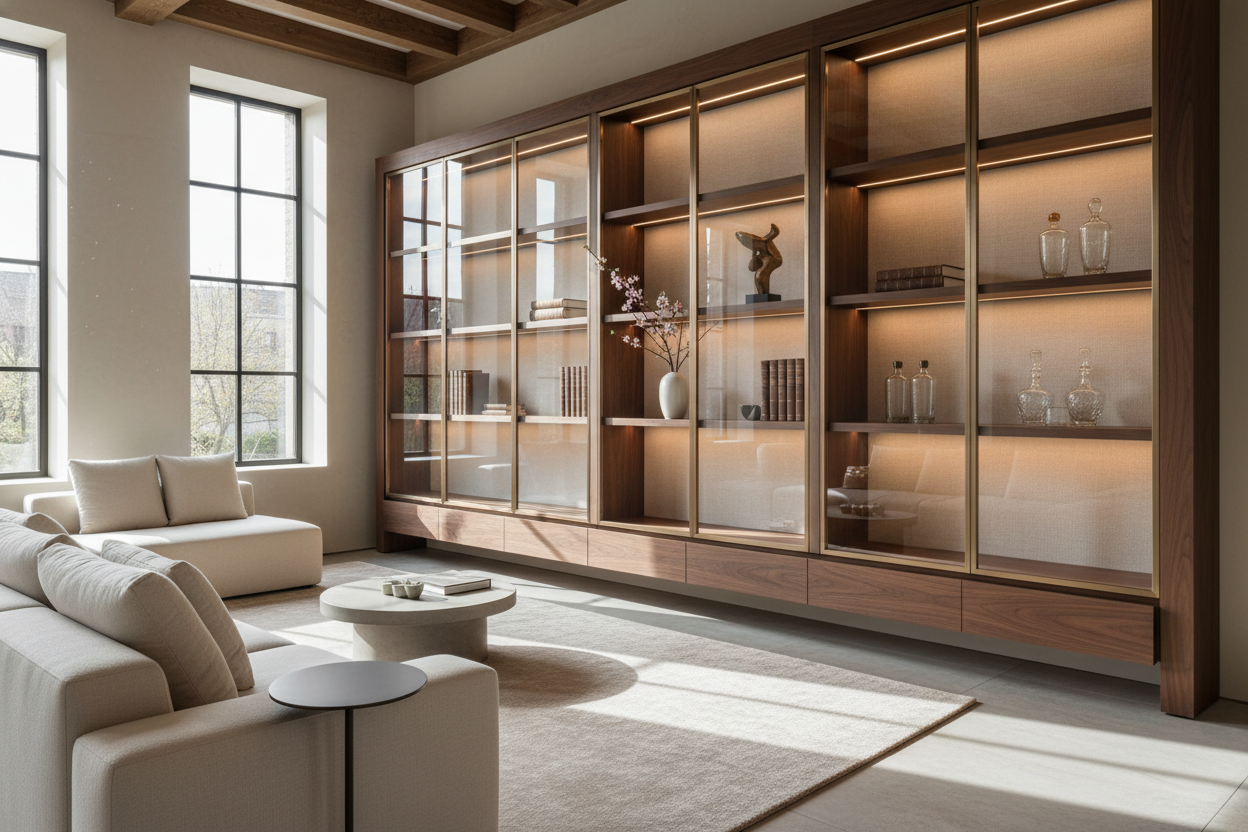
We all have things we love to collect—whether it is vintage pottery, inherited crystal, or a massive library of design books. But there is a fine line between a curated focal point and a room that feels like a crowded antique shop. When off-the-shelf shelving leaves your prized possessions gathering dust or looking visually chaotic, a well-designed custom display cabinet is often the missing puzzle piece.
Getting this piece right involves more than just picking a wood finish. It requires understanding visual weight, lighting integration, and spatial proportions. By the end of this guide, you will know exactly how to specify, scale, and style a cabinet that feels intentional and tailored to your home.
Quick Decision Guide
- Prioritize adjustable shelving: Your collection will evolve, and fixed shelves often lead to awkward negative space.
- Opt for tempered glass: It is non-negotiable for safety in busy North American households with kids or pets.
- Plan for integrated lighting early: Retrofitting puck lights looks messy; channel-routed LED strips offer a high-end, seamless glow.
- Mind the depth: A standard 15-inch depth works for most decor, but you only need 10 to 12 inches for books and glassware to prevent a cluttered look.
Material and Build Quality
The foundation of any heirloom-quality piece lies in its construction. When designing custom display cabinets, the materials you choose dictate not just the aesthetic, but how the piece holds up to daily life, humidity shifts, and sunlight.
Wood vs. Metal Silhouettes
Solid wood brings warmth and substantial visual weight, making it ideal for transitional or traditional spaces. White oak and walnut are current favorites, but they require proper sealing to prevent warping in humid climates. On the other hand, powder-coated steel or brass frames offer a slimmer silhouette. Metal frames are excellent for smaller rooms because they allow light to pass through, keeping the space feeling airy and open.
The Glass Dilemma
Standard clear glass is affordable but highly reflective. If your cabinet sits opposite a large window, the glare will completely obscure what is inside. Consider upgrading to museum-quality or anti-reflective glass. It costs significantly more, but the visual clarity makes your items look like they are floating.
Space Planning and Layout
Scaling for North American Homes
Proportion is everything. A massive, ceiling-height cabinet in a cramped apartment will swallow the room, while a petite cabinet in a vaulted suburban living room will look like dollhouse furniture. As a general rule, leave at least 18 inches of breathing room between the top of the cabinet and the ceiling unless you are going for a true floor-to-ceiling built-in look.
For walkway clearances, ensure you have a minimum of 36 inches between the cabinet face and any other furniture. If your cabinet features swinging doors rather than sliding ones, factor the door swing into that clearance so you are not trapping guests against the sofa when reaching for a wine glass.
Designer's Honest Take
Over the last 15 years, I have designed dozens of custom storage solutions, and I have definitely made my share of mistakes. Early in my career, I designed a stunning matte black oak cabinet for a client in Chicago. It looked incredible on installation day. But I failed to account for dust.
Because I used standard inset doors without a dust seal, the dark interior became a magnet for every speck of dust in the house, requiring constant cleaning. Furthermore, the integrated LED lighting I specified was a cool 4000K temperature, making their warm vintage pottery look like it was sitting in a commercial refrigerator. I learned the hard way: always specify 2700K warm LEDs for residential display, and if you are using dark interiors, insist on tightly sealed doors or dust-stripping. The aesthetic does not matter if the maintenance drives the homeowner crazy.
Frequently Asked Questions
How deep should a custom display cabinet be?
For most residential applications, 12 to 15 inches of interior depth is ideal. This accommodates books, vases, and standard dinnerware without leaving too much dead space behind the items, which can make the display look sparse.
Is built-in lighting really necessary?
Yes, if you want a high-end look. Unlit cabinets often turn into dark voids, especially if they are stained in deep tones. Hardwired, dimmable LED strip lighting routed into the front edge of the shelves illuminates the face of your objects without blinding the viewer.
How do I style the shelves without it looking messy?
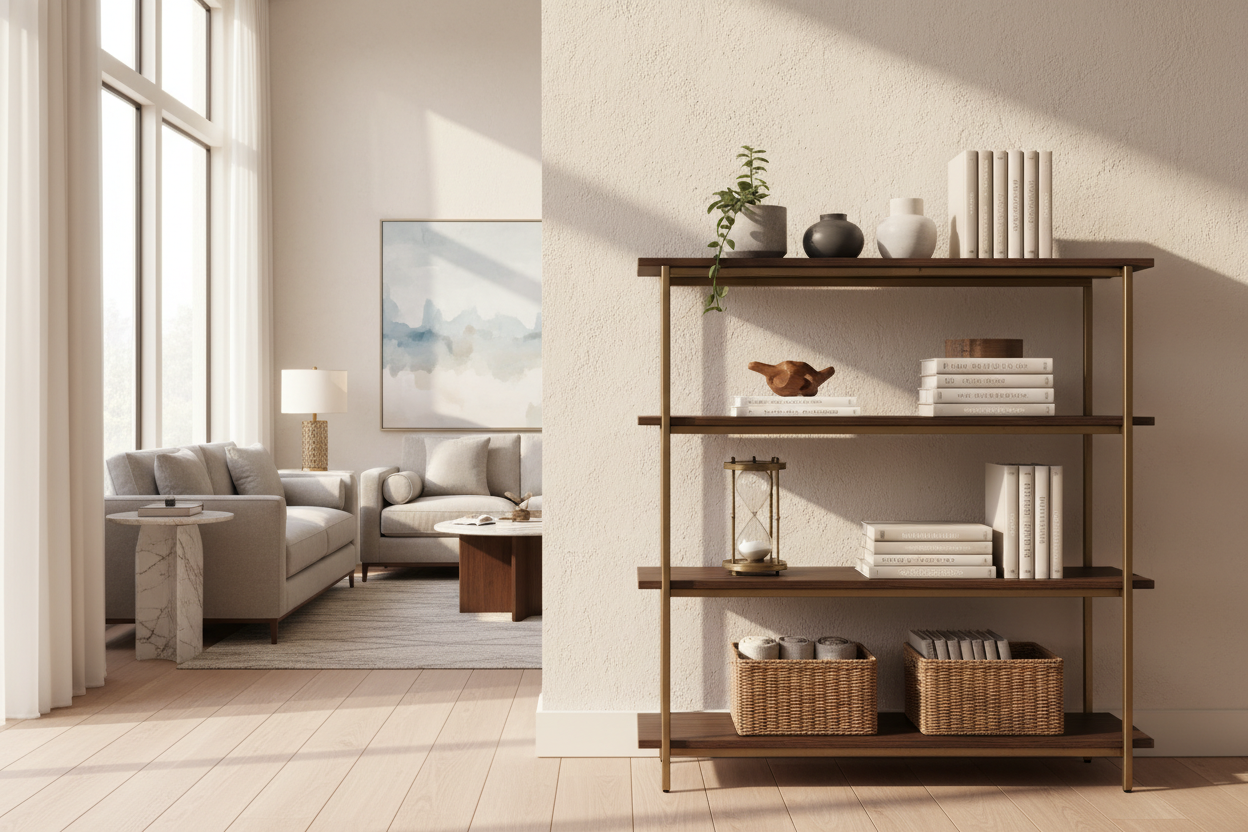
Use the zig-zag method. Place your heaviest or most visually dominant items on alternating sides as you move down the shelves. Mix materials—pair a smooth ceramic vase with a textured woven box—and remember that negative space is just as important as the objects themselves.

Leave a comment
This site is protected by hCaptcha and the hCaptcha Privacy Policy and Terms of Service apply.