










If you are reading this, you probably know the frustration of a workspace that just does not flow. Maybe your desk is shoved against a blank wall, or your video call background is a chaotic bookshelf that makes the space feel cluttered. Nailing the design of office room environments is about more than just buying a trendy desk; it is about creating a physical boundary between your personal life and your work life inside the same house. By the end of this guide, you will know exactly how to arrange your layout, choose pieces that actually support your posture, and build a cohesive aesthetic that encourages focus.
Quick Decision Guide
- Position your desk in the 'command position' facing the door, rather than staring at a blank wall, to create a sense of control and openness.
- Layer your lighting: combine ambient overhead fixtures with a dedicated task lamp to reduce eye strain during long hours.
- Invest heavily in your chair. A beautiful sculptural chair is useless if it causes lower back pain after two hours.
- Leave at least 36 to 42 inches of clearance behind your desk so you can roll your chair out comfortably.
Space Planning & Layout
The Command Position
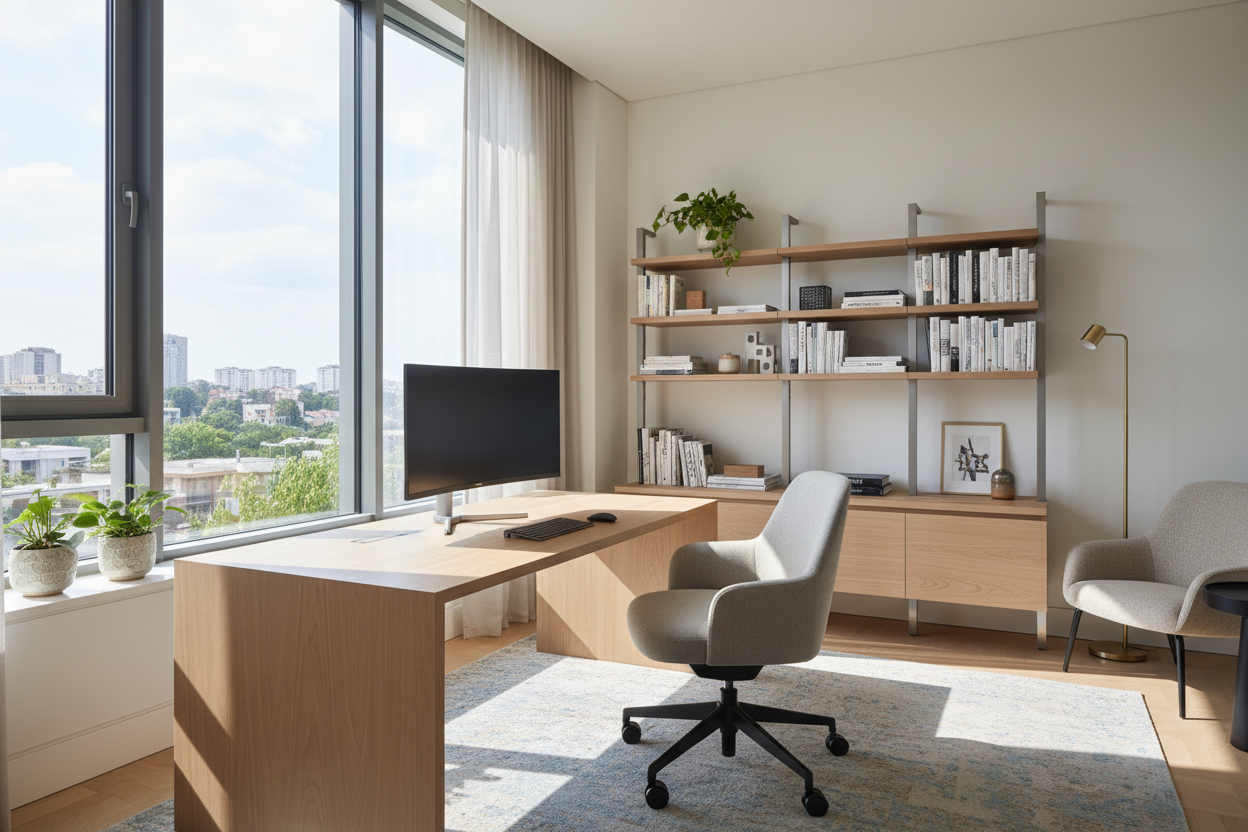
When tackling a new office room design, the biggest mistake I see in North American floor plans is pushing the desk flush against the deepest wall. This usually happens in standard 10x10 spare bedrooms to maximize floor space. However, sitting with your back to the door creates subconscious tension. Instead, float the desk in the middle of the room facing the entrance. If space is too tight for a center float, position the desk perpendicular to a window so you get natural light without the harsh glare on your monitor.
Navigating Small Footprints
In apartments or smaller suburban homes, visual weight matters. A massive, solid-oak executive desk will swallow a small room whole. Opt for a writing desk with slim metal or tapered wood legs. This allows light to pass under and around the furniture, making the room feel larger. Pair this with vertical storage—tall, narrow bookcases draw the eye upward and utilize dead wall space without eating into your valuable square footage.
Comfort & Ergonomics
Beyond the Aesthetic Chair
We all want an office room interior that looks ready for a magazine spread, but ergonomics must dictate your furniture choices. Standard desks sit at 29 to 30 inches high. For many people, this is actually too tall for comfortable typing, leading to hunched shoulders. You need an adjustable chair to compensate, ideally one with adjustable armrests and lumbar support. If your feet dangle when the chair is raised to the proper desk height, add a dedicated footrest.
Style & Coordination
Warming Up the Workspace
Home offices easily drift into sterile, corporate territory if you rely solely on metal filing cabinets and black mesh chairs. To fix this, introduce residential textures. Layer a vintage-inspired or heavily textured wool rug under the desk. Swap harsh, cool-toned LED bulbs for warm white (around 3000K) to make the room feel inviting. Bring in organic elements like a large potted olive tree or snake plant to soften the hard angles of monitors and tech gear.
Designer's Honest Take
Early in my career, I designed a stunning home office for a client using a custom floating glass desk. Visually, it was a minimalist masterpiece. Practically, it was a nightmare. Within a week, the client called to say the glass showed every single fingerprint, coffee ring, and speck of dust. Worse, there was nowhere to hide the monitor cables, so thick black cords dangled awkwardly in plain sight. I had to retrofit the desk with a custom frosted modesty panel and a bulky cable management tray. I learned the hard way that in a working space, function absolutely must lead the aesthetic. Never buy a desk without a solid plan for your cables.
Frequently Asked Questions
How do I balance storage without making the room feel cramped?
Use closed storage for clutter and open shelving for decor. A low credenza behind your desk hides printers, ugly binders, and messy paperwork behind solid doors, while floating shelves above it can display art and books to keep the room feeling airy.
What size rug do I need for my office?
Your rug needs to be large enough that all four casters of your office chair remain on the rug even when you pull the chair all the way out. Typically, an 8x10 rug works best for standard rooms, anchoring the desk and the chair together.
Is a standing desk worth the investment?
Yes, but only if you actually use the standing feature. If you buy a standing desk, make sure it has dual motors for smooth lifting, and pair it with a high-quality anti-fatigue mat to protect your joints while standing on hard floors.


Leave a comment
This site is protected by hCaptcha and the hCaptcha Privacy Policy and Terms of Service apply.