










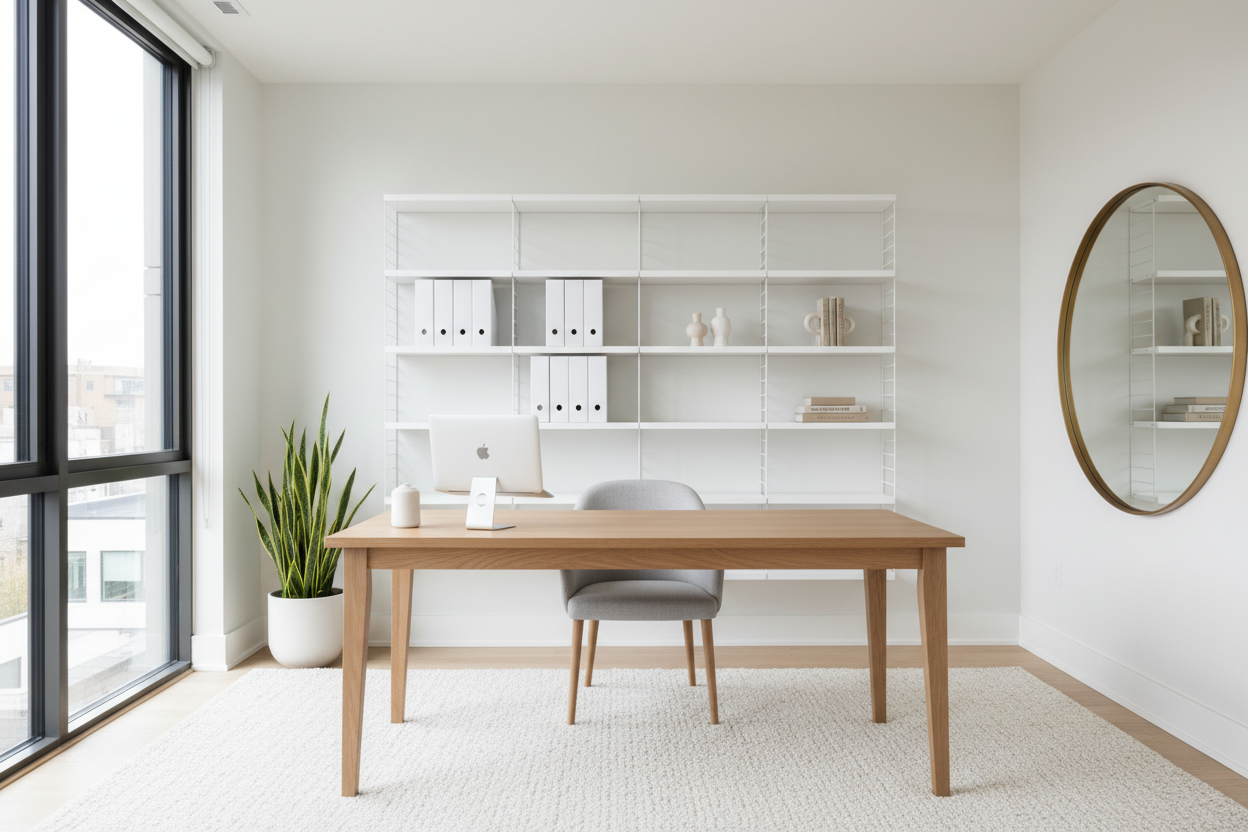
Visual noise is the silent killer of productivity. When I walk into a workspace, the first thing I notice isn't the chair brand or the desk finish—it's the flow of energy impeded by accumulation. To declutter the office is not merely an act of tidying up; it is a strategic design decision that reclaims your mental bandwidth. A curated environment allows the architecture of the room and the quality of your furnishings to breathe, creating a workspace that serves your workflow rather than hindering it.
Quick Decision Guide: The Pillars of Organization
- Zoning: Define 'active' work zones versus 'archive' storage to prevent daily accumulation.
- Visual Weight: Opt for closed cabinetry for heavy files and open shelving for curated decor to balance the room.
- Cable Management: Integrated raceways are essential; visible wires create subconscious visual stress.
- Materiality: Choose durable materials like solid wood or high-pressure laminate for surfaces that handle high friction.
- Verticality: In small footprints, utilize wall-mounted hutches to free up valuable floor space.
Analyzing Workflow and Spatial Planning
Before buying storage bins, we must address the root cause of a cluttered office space: poor spatial planning. In high-end design, we look at the 'triangle of reach.' Items you use daily—your laptop, notebook, luxury pen—should be within an arm's reach. Everything else belongs in secondary or tertiary zones.
If you are struggling with how to declutter your office effectively, start by auditing your furniture layout. A desk positioned against a wall often encourages piling paper in corners. Floating the desk in the center of the room, if space permits, forces a more disciplined approach to surface management because the clutter has nowhere to hide.
Storage Solutions: Material Quality and Aesthetics
The difference between a frantic office and a serene study often lies in the quality of the storage furniture. When advising clients on how to declutter your home office, I steer them away from clear plastic bins which, while functional, add to visual chaos. Instead, we look for substantial pieces that anchor the room.
Closed vs. Open Storage
To truly declutter office space, you need to master the ratio of concealed to displayed items. Ideally, 80% of your storage should be closed (credenzas, filing cabinets) and 20% open (bookshelves). Look for sideboards with acoustically dampened doors and heavy-duty drawer slides. The tactile experience of closing a solid oak drawer signals 'work is done' far better than tossing a file onto a stack.
Ergonomics and The Digital Purge
Clutter isn't just physical; it's digital hardware too. A major aspect of modern decluttering is cable management. High-end office furniture now comes with integrated power spines and grommets. If your current desk lacks these, investing in a leather cable management sleeve or a under-desk spine is non-negotiable. This eliminates the 'spaghetti' of wires that makes a room feel messy regardless of how clean the surfaces are.
Lessons from My Own Projects
I recall a specific project for a client in a historic brownstone who was drowning in paperwork. She was convinced she needed wall-to-wall open shelving to 'see' her files. I refused. The issue wasn't visibility; it was visual overstimulation.
We compromised on a custom low-profile credenza with a walnut veneer and matte black pulls. The specific detail that changed everything for her was the internal drawer dividers. I remember her calling me a month later, surprised by a specific nuance: she realized that because the drawers were soft-close and lined with felt, she actually enjoyed the act of putting things away. It wasn't a chore; it was a ritual. That tactile feedback—the silence of the drawer closing—was the psychological cue she needed to keep the surface clear. Cheap metal filing cabinets rattle; quality joinery whispers. That difference dictates whether you maintain the habit or slide back into chaos.
Conclusion
Ultimately, the goal is to create a space that invites focus. By selecting furniture that offers smart concealment and prioritizing a layout that supports your natural movement, you do more than just clean up. You curate an environment where your best work can happen.
Frequently Asked Questions
How do I start decluttering if I am overwhelmed?
Start with the 'surface sweep.' Clear your primary desk surface completely. Only put back the items you use daily. Everything else must go into a drawer or be archived. This gives you an immediate visual win.
What is the best furniture for a small home office?
For tight spaces, prioritize verticality. Use a tall, narrow bookcase or wall-mounted floating shelves. Avoid deep, heavy desks; a writing desk with a shallow depth keeps the footprint light while discouraging piling.
How often should I organize my office?
Adopt the 'Friday Reset' method. Spend the last 15 minutes of your work week clearing your desk and filing papers. This ensures you walk into a fresh, inviting space on Monday morning.


Leave a comment
This site is protected by hCaptcha and the hCaptcha Privacy Policy and Terms of Service apply.