










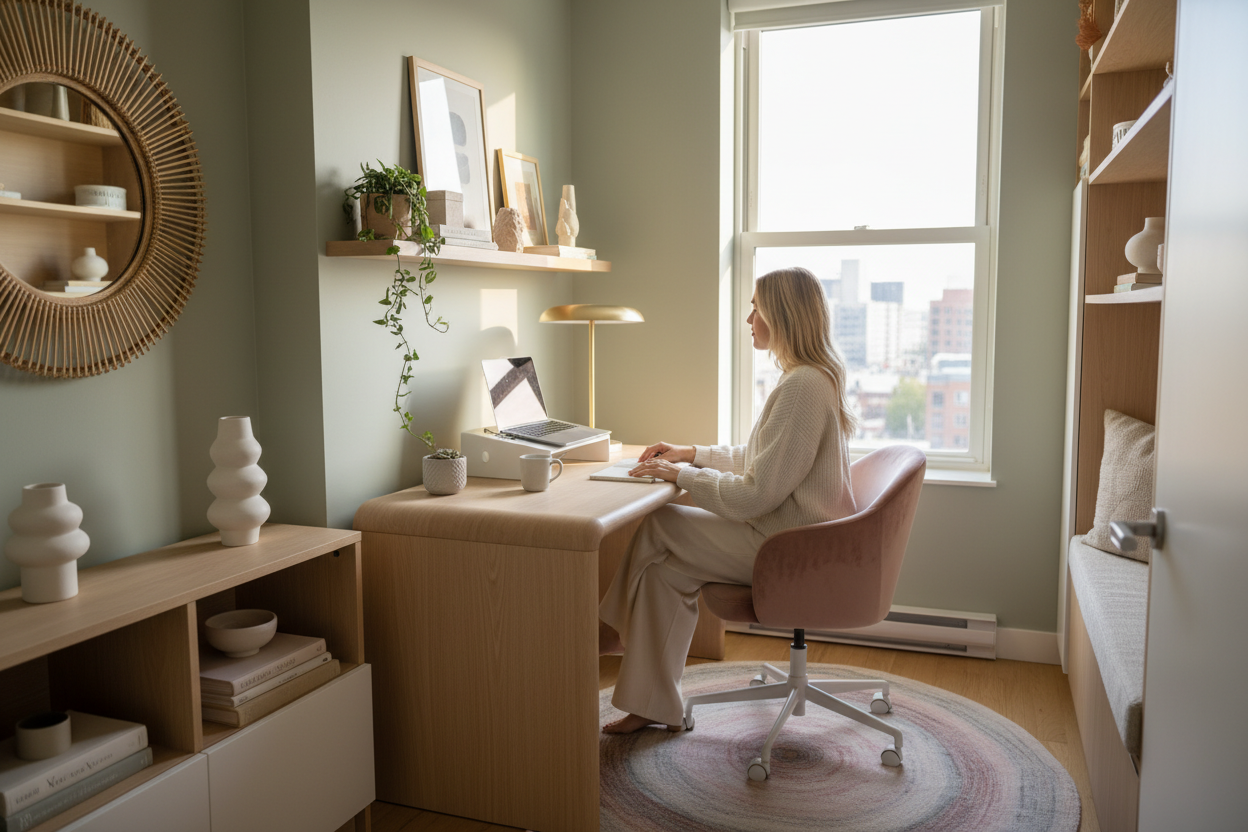
For many professionals, the transition to a remote environment highlighted a glaring disconnect: standard office furniture is rarely designed with residential aesthetics—or the female form—in mind. A dedicated ladies work from home setup requires more than just a laptop stand and a ring light; it demands a fusion of ergonomic precision and curated interior design. The goal is to create a space that supports your workflow without disrupting the visual harmony of your home.
Key Features to Look For
- Anthropometric Scale: Ensure chair seat depth and height align with your stature; standard corporate furniture is often sized for the 95th percentile male.
- Performance Textiles: Opt for Crypton or high-performance velvets that offer durability against spills while softening the room's acoustics.
- Task Lighting Temperature: Select adjustable LED lamps (2700K–3000K) to reduce eye strain and flatter skin tones during video calls.
- Hidden Cable Management: Look for desks with integrated modesty panels or grommets to maintain a clutter-free visual flow.
Ergonomics Meets Aesthetics: The Chair
The centerpiece of any work from home for ladies setup is the seating. As a designer, I constantly see clients compromising their spinal health for a stylish dining chair. This is a mistake. However, you do not need to settle for a bulky, black mesh monstrosity.
Scale and Silhouette
Look for office chairs with a smaller footprint and shorter seat pans. If the seat is too deep, you will instinctively scoot forward, losing lumbar contact. Brands are finally responding to the work at home woman by offering mid-century modern silhouettes with hidden ergonomic mechanisms. Look for synchro-tilt functions wrapped in bouclé or linen-blend fabrics that complement your living room drapery.
Materiality: Softening the Corporate Edge
When curating a work from home lady office, the choice of materials dictates the mood. Hard laminates and cold steel feel sterile. Instead, introduce organic warmth.
Desk Surfaces
Solid wood—walnut or white oak—ages beautifully and gains character over time. If you are tight on space, a glass top can reduce visual weight, making a small room feel larger. However, keep in mind that glass is cold to the touch; I often recommend a high-quality leather desk blotter to ground the space and provide a tactile surface for typing.
Layout Strategy: The "Cloffice" and Nooks
Not every lady work at home scenario involves a dedicated room. We often have to carve out zones. The "Cloffice" (closet-office) is a brilliant solution for maintaining work-life separation. By installing floating shelves and a shallow console within a closet, you can literally close the door on your workday. The key here is verticality: use the full height of the wall for storage to keep the limited desk surface clear.
My Personal Take on Ladies Work From Home Setups
I want to share a specific lesson from a project I worked on last year. I designed a stunning office for a client using a trendy, unpolished travertine stone desk. It looked sculptural and incredible in photos. However, within two weeks, she called me complaining about the "cold factor."
The stone sucked the heat right out of her wrists while she was typing, making it uncomfortable to work for more than an hour. We had to retrofit a custom leather inlay to fix it. Furthermore, I've noticed that for many female clients, standard desk heights (29-30 inches) are simply too high, causing shoulders to hike up toward the ears. I now almost exclusively specify adjustable standing desks or cut down fixed legs to 27 inches for clients under 5'6". It’s a subtle change, but it eliminates neck tension entirely.
Conclusion
Designing a workspace is an investment in your productivity and peace of mind. By prioritizing scale, tactile materials, and proper lighting, you can build a ladies work at home environment that feels less like a cubicle and more like a sanctuary. Trust your taste, but verify the ergonomics.
Frequently Asked Questions
What is the ideal desk depth for a home office?
For a laptop setup, 24 inches is sufficient. However, if you use multiple monitors, aim for 30 inches deep to ensure the screens are at a comfortable focal distance.
How do I hide office clutter in a shared living space?
Invest in "closed storage" furniture. A credenza or a decorative chest can house printers and files, keeping the messy aspects of business out of sight when guests arrive.
Is a standing desk worth the investment?
Absolutely. It is not just about standing; it is about micro-adjustments. Being able to lower your desk by just one inch to accommodate different heel heights or posture shifts is a game-changer for comfort.


Leave a comment
This site is protected by hCaptcha and the hCaptcha Privacy Policy and Terms of Service apply.