










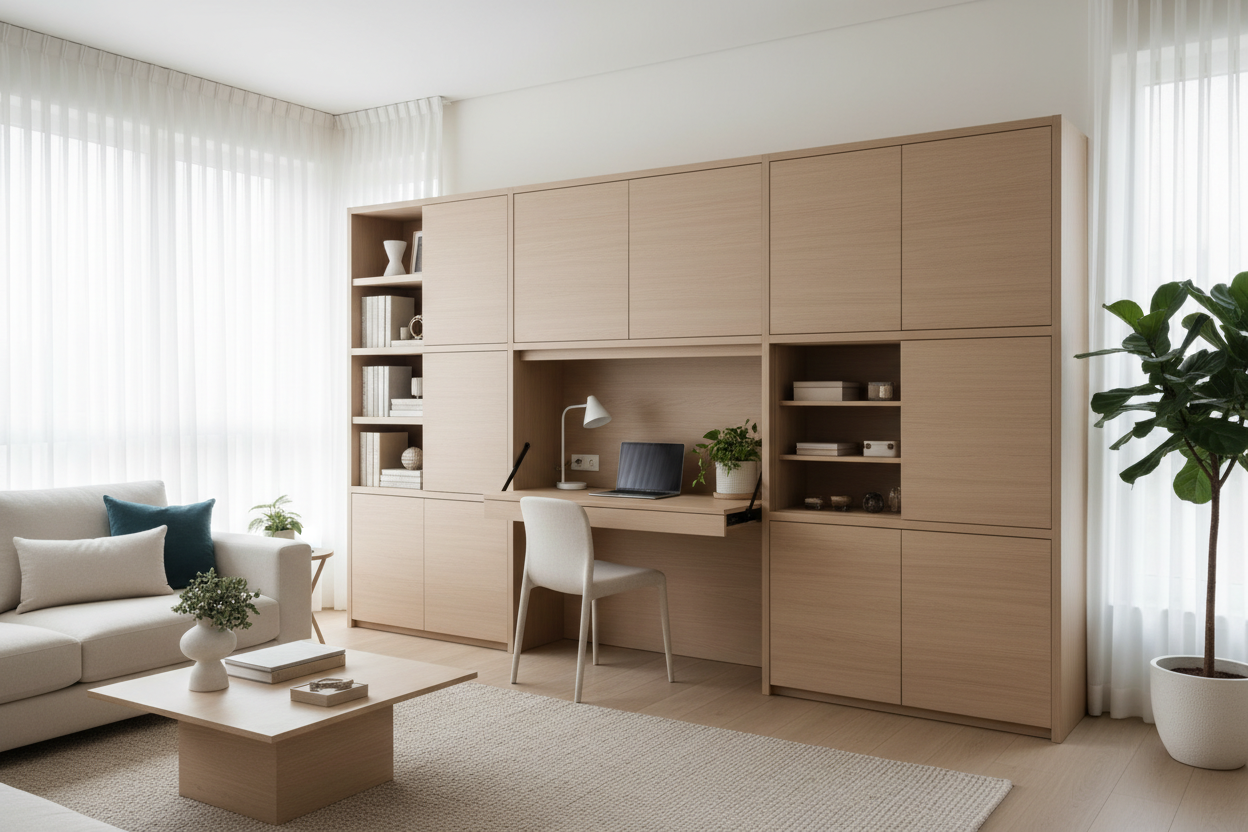
The greatest challenge in modern interior design isn't finding beautiful furniture; it is mastering the art of the double-duty space. For many of my clients, the idea of a living room office induces a specific anxiety: the fear that their sanctuary of relaxation will be overtaken by the visual noise of cords, monitors, and corporate stress. It doesn't have to be that way. With intentional space planning and a curatorial eye, we can carve out a workspace that serves your career during the day and respects your downtime at night.
Key Design Elements for Integration
- Scale & Proportion: The desk must not dominate the seating area; look for writing desk silhouettes rather than executive bulks.
- Material Continuity: Choose wood finishes and metals that match your existing coffee or side tables to create visual harmony.
- Concealed Storage: Prioritize pieces with drawers to hide laptops and papers, ensuring the "office" mode can be turned off.
- Lighting Layers: Utilize decorative table lamps with warm bulbs (2700K-3000K) rather than harsh, cold task lighting.
- Ergonomics vs. Aesthetics: Select a chair that offers lumbar support but is upholstered in residential fabrics like boucle, leather, or velvet.
Zoning Your Home Office in Living Room Layouts
The success of this layout relies entirely on zoning. We want to create a psychological boundary without erecting a physical wall. If you have a rectangular room, consider floating the sofa in the center and placing a console-style desk against the back of it. This allows you to watch television or converse with family while working, but more importantly, when you are sitting on the sofa, the work surface is physically behind you—out of sight, out of mind.
For those dealing with a smaller footprint, the alcove strategy is paramount. Utilizing built-in shelving or a deep recess to house the desk creates a natural "nook." By painting this alcove a moody, contrasting color—perhaps a deep charcoal or forest green—you visually separate the function of the space from the rest of the airy living area.
Selecting Furniture: The "Front Room Office" Aesthetic
If your workspace is located in a formal front room office setting, the furniture must act as sculpture first and workstation second. Avoid melamine and plastic laminates; they reflect light artificially and cheapen the room's ambiance.
The Desk
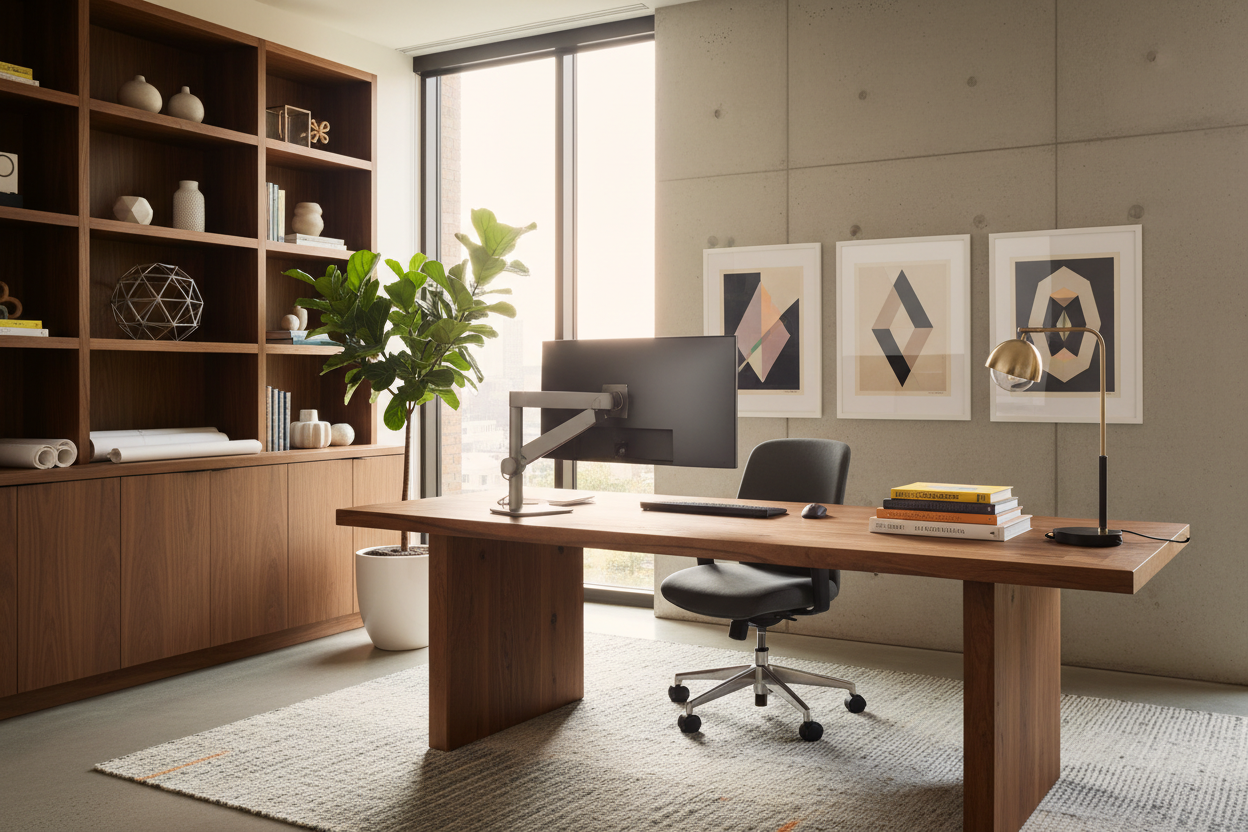
Opt for solid wood or high-quality veneers like walnut or white oak. A "bureau" or secretary desk is often the unsung hero here. Being able to physically close the lid on your work is a powerful psychological trigger that the workday is done. If you prefer a standard table, look for slender legs and open bottoms to keep the sightlines open, maintaining the room's perceived volume.
The Chair
The standard mesh office chair is the enemy of a cohesive living room. Instead, look for a mid-century modern bucket seat or a structured dining chair with a swivel base. High-performance velvets are excellent here—they offer the durability needed for 8 hours of friction but soften the hard edges of the technology on the desk.
Lighting and Ambiance
Lighting dictates the mood. A common error is relying solely on overhead recessed lighting, which casts shadows on your workspace. Layer your lighting by adding a directional floor lamp or a heavy-base architectural table lamp. The goal is to have a pool of light on your documents, not a spotlight on the entire corner of the room.
Lessons from My Own Projects
I want to share a specific hurdle I encountered while designing a workspace for a client in a historic brownstone. We selected a stunning, vintage Danish teak floating desk. It looked incredible in the photos. However, once we installed the computer, we realized a fatal flaw: cable management.
Because the desk had open legs and was positioned perpendicular to the wall (to face the window), every single black power cord dangled visibly, ruining the clean lines we fought so hard for. I learned the hard way that if you float a desk, you must have floor outlets or run cords down a singular leg wrapped in a cable sleeve that matches the wood tone. We ended up having to custom-wrap the cords in a leather sheath to make them look like a deliberate design detail rather than an eyesore. It’s these unpolished, gritty details—like where the ugly power strip sits—that determine if a living room office actually feels luxurious to live in.
Conclusion
Integrating a workspace into your main living area is about balance. It requires suppressing the "office" aesthetic in favor of residential warmth. By choosing materials that age gracefully and prioritizing layouts that hide the clutter, you protect the sanctity of your living room while maintaining professional efficiency.
Frequently Asked Questions
How do I fit a desk in a small living room without crowding it?
Look for "ladder desks" or wall-mounted floating shelves. These utilize vertical space and have no footprint on the floor, keeping the room feeling open. A glass or acrylic desk can also reduce visual weight.
What is the best way to hide a monitor in a living room?
If you cannot use a laptop, consider a monitor with a white chassis rather than black, as it blends better with neutral walls. Alternatively, place the desk inside an armoire where the doors can be closed when guests arrive.
Can I use a dining chair as a desk chair?
Yes, but be cautious. Dining chairs lack the tilt and lumbar adjustment of task chairs. If you work full-time, use a lumbar pillow and ensure the seat height allows your elbows to rest at a 90-degree angle to the desk surface.

Leave a comment
This site is protected by hCaptcha and the hCaptcha Privacy Policy and Terms of Service apply.