










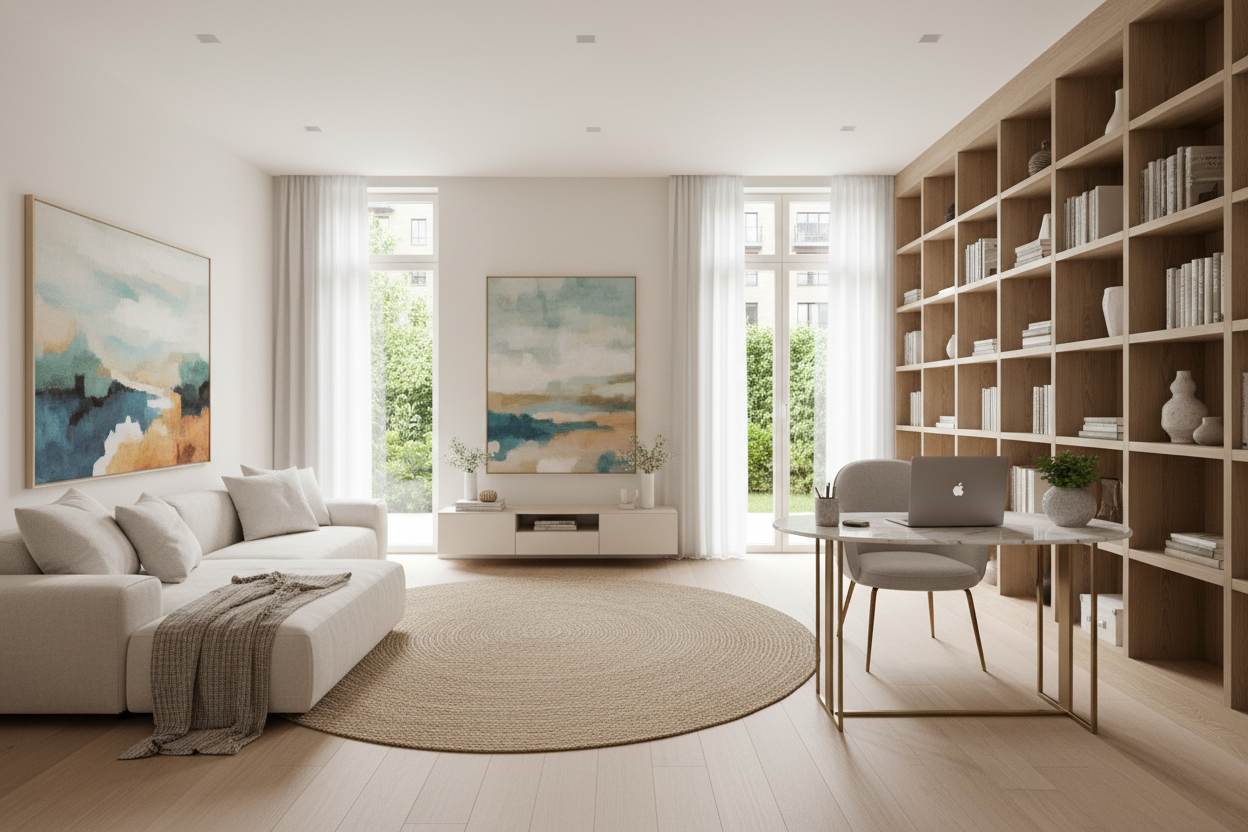
One of the most frequent dilemmas I encounter in client consultations is the battle between productivity and relaxation. When square footage is at a premium, the communal area often becomes the default workspace, but nobody wants their sanctuary dominated by monitors and tangled cords. The goal isn't just to squeeze a desk in; it is to curate living room office ideas that feel intentional, architectural, and harmonious with your existing decor.
Quick Decision Guide: Integrating a Workspace
Before moving furniture, consider these critical elements to ensure your workspace enhances rather than detracts from your living area:
- Visual Weight: Opt for desks with slender legs or glass tops to keep the room feeling open, rather than heavy executive pedestals.
- Material Continuity: Match the wood stain or metal finish of the desk to your coffee table or media console for a cohesive look.
- Dual-Purpose Design: Select a console table or a secretary desk that can be closed up or styled as a display surface when off the clock.
- Acoustics: In shared spaces, position the desk away from high-traffic zones (like the entryway) to minimize distraction.
Mastering the Layout and Flow
The placement of your workstation dictates the energy of the room. A common mistake is instinctively pushing a desk against a blank wall, which often leaves the worker with their back to the room and creates a "cubicle" effect. Instead, consider floating the desk behind your sofa. This utilizes the "dead space" behind seating and allows you to face the television or window, integrating you into the room's social fabric.
For more compact footprints, look into office in living room ideas that utilize vertical space. Built-in millwork or shelving units with a drop-down desk leaf offer excellent functionality without encroaching on the floor plan. This approach treats the office as a feature wall rather than an intrusion.
Materiality and Furniture Selection
Solid Wood vs. Veneer
In a high-traffic zone like a family room, durability is paramount. While veneers offer a sleek aesthetic at a lower price point, they are susceptible to chipping—damage that is difficult to repair. For a piece that will see daily wear, I always recommend solid wood (walnut or white oak are timeless choices). It develops a patina over time and can be refinished. If you must go with veneer, ensure it has a thick wear layer and solid wood edging.
The Seating Dilemma
Nothing ruins a sophisticated living room aesthetic faster than a bulky, plastic ergonomic chair. When exploring family room office ideas, prioritize chairs that bridge the gap between dining and office styles. Look for a mid-century modern swivel chair upholstered in performance velvet or leather. It provides the necessary lumbar support and rotation but looks like a lounge piece when tucked under the desk.
Lighting: Task vs. Ambient
Office lighting tends to be cool and harsh, while living room lighting is warm and ambient. To blend the two, avoid industrial fluorescent task lamps. Instead, choose a table lamp with a dimmer switch and a linen shade. This provides adequate downward light for reading documents while diffusing a soft glow that contributes to the room's overall mood in the evening.
Lessons from My Own Projects: The "Console" Trap
I want to share a specific lesson I learned the hard way during a renovation for a client in a historic brownstone. We fell in love with a stunning, vintage console table to serve as the desk. Visually, it was perfect—slender, elegant, and unobtrusive.
However, after two weeks, the client called me with back pain. The issue wasn't the chair; it was the "apron" (the decorative wood strip beneath the tabletop). It was too deep, meaning she couldn't cross her legs or scoot her chair in close enough to type comfortably without banging her knees. We also realized that the lacquer finish, while beautiful, showed every single fingerprint and smudge from her coffee mug.
Since then, I strictly measure the clearance from the floor to the bottom of the apron (aim for at least 24-25 inches) and always insist on a leather desk blotter. It defines the work zone, protects the wood, and improves mouse tracking—a small detail that saves the furniture and the user's sanity.
Conclusion
Integrating a workspace into your main living area doesn't require a renovation; it requires a shift in perspective. By treating office furniture as part of the home's design narrative—focusing on materials, silhouette, and lighting—you can create a space that works as hard as you do without sacrificing style.
Frequently Asked Questions
How do I hide computer cords in the middle of the room?
If your desk is floating (not against a wall), cable management is vital. Use a desk with built-in wire channels or attach a cable spine to the desk leg. Run a floor cord cover in a color that matches your rug or flooring to safely route power to the nearest outlet.
Can a living room office work in a small apartment?
Absolutely. In small spaces, "ghost" furniture (acrylic or glass) is excellent as it takes up zero visual weight. Alternatively, a wall-mounted ladder desk draws the eye upward and keeps the floor area clear, making the room feel larger.
What is the best desk depth for a laptop setup?
For a laptop-only setup, a depth of 18 to 20 inches is sufficient (typical of console tables). However, if you use an external monitor, aim for a minimum depth of 24 inches to maintain proper focal distance and prevent eye strain.

Leave a comment
This site is protected by hCaptcha and the hCaptcha Privacy Policy and Terms of Service apply.