










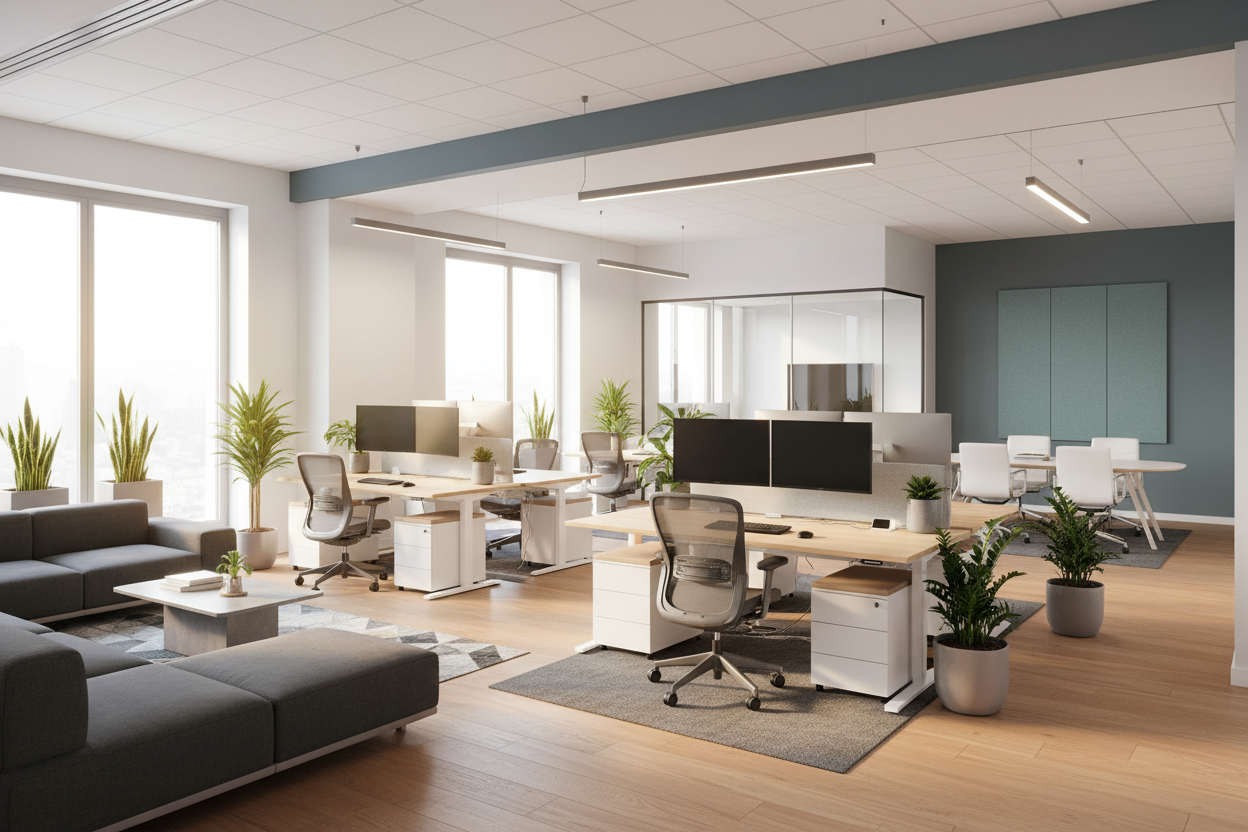
We have all walked into a workspace that feels sterile, uninspiring, or chaotically cluttered. It immediately impacts your mood and, subsequently, your output. The challenge isn't just buying desks; it is curating an environment that balances corporate identity with human comfort. True office interiors design is not merely about aesthetics; it is a strategic tool that dictates how teams interact, focus, and collaborate.
Key Pillars of Workspace Efficiency
Before selecting finishes or furniture, consider these fundamental elements. Prioritizing these factors ensures your investment yields long-term productivity gains rather than just a visual update.
- Acoustics: Essential for focus; look for baffles, rugs, or soft furnishings to dampen sound.
- Lighting Layers: Combine ambient overhead lighting with task lighting to reduce eye strain.
- Ergonomics: Invest in chairs with lumbar support and adjustable height desks.
- Traffic Flow: Ensure clear pathways between zones to prevent congestion and distractions.
- Biophilia: Integrating plants improves air quality and reduces stress levels.
Zoning and Spatial Planning
The open-plan era has taught us a hard lesson: privacy matters. Successful workspace interior design relies on distinct zoning. You need 'collision points' for collaboration—think soft seating areas or coffee bars—and 'focus zones' shielded from the hustle.
Balancing Openness with Privacy
If you are managing an interior office renovation, avoid the fishbowl effect. While glass walls offer transparency, they often kill productivity due to visual distractions. Consider using acoustic pods or high-backed booth seating to create semi-private enclaves within a larger room. This allows for the energy of an open floor plan without the constant interruption.
Selecting the Right Materials
When curating interiors for office spaces, durability is just as vital as style. Commercial-grade fabrics are non-negotiable.
Surface Durability
For desks and conference tables, high-pressure laminate (HPL) often outperforms solid wood in high-traffic areas as it resists ring marks and scratches. However, for executive suites, a solid walnut or oak veneer adds a necessary gravity and warmth. When consulting with an office interior company, always ask for the 'Rub Test' (Martindale cycle) results on upholstery; anything under 50,000 rubs will look tired within a year.
Office Furniture Interior Design: The Ergonomic Equation
Office furniture interior design must prioritize the human form. A beautiful chair that causes back pain is a liability. Look for 'synchro-tilt' mechanisms in task chairs, which allow the seat and back to move together, supporting dynamic posture. Visually, keep the silhouettes clean. Bulky furniture in a small footprint makes the room feel claustrophobic, whereas furniture with raised legs exposes more floor space, creating an illusion of volume.
My Personal Take on Office Interiors Design
I once worked on a project for a boutique marketing firm that was adamant about having matte black surfaces everywhere—desks, cabinetry, even the kitchenette. It looked stunning in the 3D renders. However, three weeks after installation, I visited the site and saw the reality: finger oils. Every time someone touched a surface, it left a greasy smudge that was nearly impossible to wipe off without specialized cleaners.
That experience taught me a valuable lesson I now pass to every client: Texture hides sins. Now, when specifying dark joinery, I always insist on a woodgrain texture or a nano-coated anti-fingerprint finish. It’s these unpolished, practical realities—like how a chair fabric pills after six months of denim friction—that determine whether a design is actually successful, not just how it looks on installation day.
Conclusion
Refining your workspace is about respecting the people who inhabit it. By merging robust materials with thoughtful spatial planning, you create an environment that supports the workflow rather than hindering it. Whether you are a startup or an established firm, thoughtful design is the silent engine of productivity.
Frequently Asked Questions
How do I budget for a professional office redesign?
Budgeting varies by square footage and finish quality. Generally, allocate 40% to furniture, 30% to architectural changes (lighting, partitions), and the remainder to labor and design fees. Always keep a 10% contingency fund for unforeseen structural issues.
What is the best color scheme for productivity?
While brand colors are important, avoid oversaturating the space. Blues and greens are proven to improve focus and calmness. Use high-energy colors like yellow or red sparingly as accents in break areas, as they can induce anxiety in high-focus zones.
How much space should be allocated per employee?
In modern office interiors design, the standard has shifted. For a comfortable open plan, aim for 100-150 square feet per person (including shared circulation space). Cramming desks closer together often results in higher noise levels and lower employee satisfaction.

Leave a comment
This site is protected by hCaptcha and the hCaptcha Privacy Policy and Terms of Service apply.