










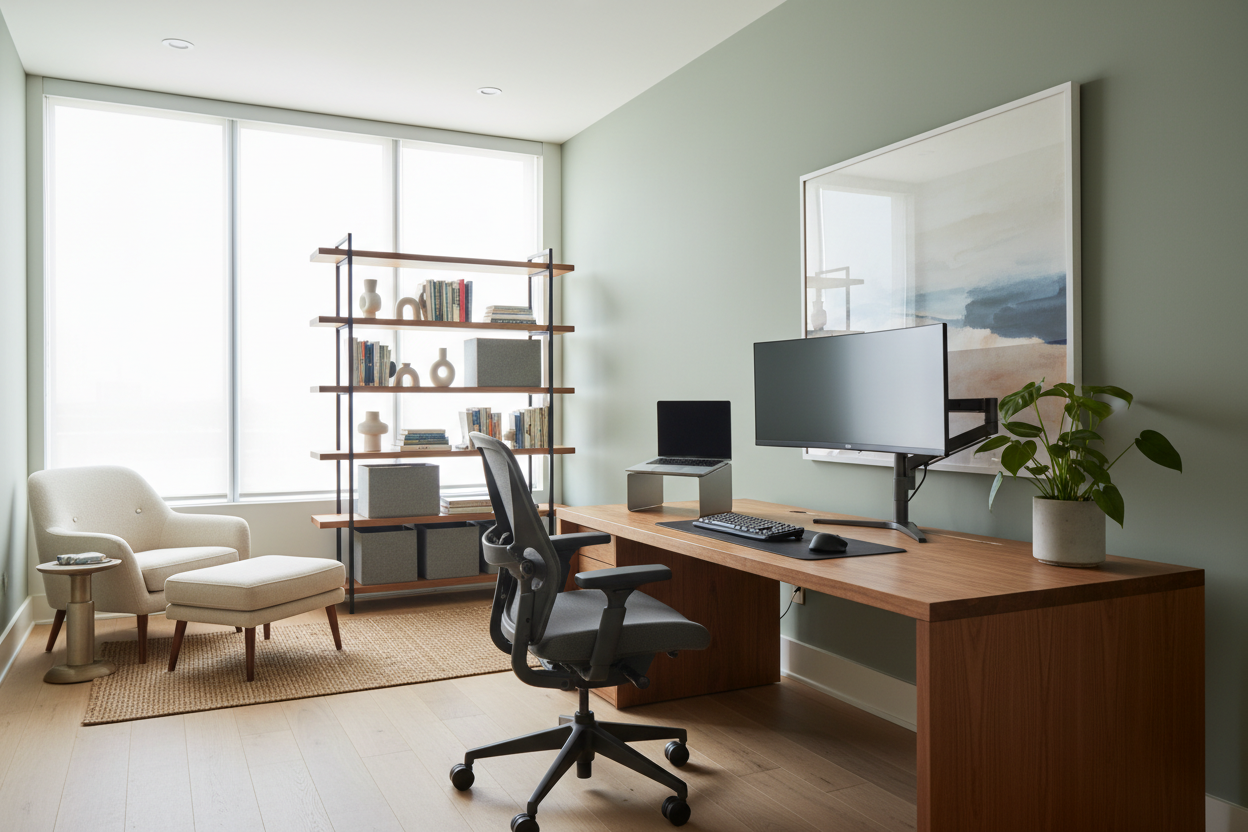
The transition from a corporate office to a personal workspace is rarely as seamless as placing a laptop on a dining table. As an interior designer, I have seen countless professionals struggle to find focus because their environment lacks structural intention. Whether you are crafting a DIY career or settling into a remote corporate role, the success of your home made job relies heavily on the physical space you inhabit. It is not merely about aesthetics; it is about creating a psychological boundary between rest and productivity through thoughtful furniture selection and spatial planning.
Quick Decision Guide: Workspace Essentials
If you are rushing to set up your office, prioritize these design elements to ensure immediate functionality and comfort:
- Ergonomics First: Prioritize a chair with adjustable lumbar support and seat depth over aesthetic trends.
- Surface Area: Ensure your desk is at least 24 inches deep to maintain proper monitor viewing distance.
- Lighting Layers: Combine ambient overhead lighting with a dedicated, adjustable task lamp to reduce eye strain.
- Material Warmth: Opt for natural wood or matte finishes to reduce glare and add tactile comfort.
- Acoustic Control: Use rugs, curtains, or upholstered furniture to dampen echo and background noise.
Understanding the Function of Your Space
Before selecting a mahogany desk or a mid-century modern credenza, we must define the utility of the room. When clients ask what is home based job design, I explain that it is the architectural response to your specific workflow. The requirements for a freelance graphic designer differ vastly from those of a virtual assistant.
Understanding what are home based jobs in the context of your daily routine dictates your layout. If your work involves handling physical samples or paperwork, you need expansive surface area and vertical storage. If your role is strictly digital, a compact, floating console might suffice to keep the room feeling airy. The goal is to maximize flow—ensuring you can move freely without bumping into corners, which disrupts cognitive focus.
The Anchor Piece: Selecting the Right Desk
The desk is the focal point of the room. In high-end design, we look for construction quality that withstands daily wear. Avoid hollow-core particle board; it tends to bow under the weight of dual monitors and lacks the longevity of solid wood or high-grade plywood with a hardwood veneer.
Material and Texture
Consider the tactile experience. A glass desk looks sleek and modern, but it is cold to the touch and attracts fingerprints instantly. A solid walnut or oak desk offers warmth and develops a patina over time, grounding the room with a sense of permanence. For a home made job setup where you spend eight hours a day, the sensory feedback of the furniture is paramount.
The Throne: Seating and Ergonomics
Never compromise on your chair. While a velvet tub chair may look stunning in a portfolio photo, it is often a disaster for spinal alignment. Look for a chair with a 5-star base for stability and high-quality mesh or breathable fabric. Leather is luxurious but can retain heat during long sessions. The silhouette of the chair should complement the desk—ensure the armrest height allows you to tuck the chair in fully when not in use to preserve floor space.
Lighting and Ambiance
Lighting defines the mood. Relying solely on a ceiling fixture creates harsh shadows that fatigue the eyes. Layer your lighting. Start with soft ambient light, perhaps a floor lamp with a linen shade to diffuse the glow. Then, add precision task lighting. A high-quality architectural boom arm lamp allows you to direct light exactly where needed without creating glare on your screen.
Lessons from My Own Projects: The "Velvet Trap"
I feel compelled to share a specific mistake I made early in my career when designing my own home studio. I was obsessed with the visual of a vintage, tufted velvet armchair. It looked incredible against the navy blue walls of my office. However, regarding my home made job efficiency, it was a failure.
Within two weeks, I noticed the lack of lumbar support was causing me to slouch, and the velvet nap was impossible to keep clean of dust and crumbs. I learned the hard way that in a workspace, function must precede form. I eventually swapped it for a high-end ergonomic chair with a matte black frame. It wasn't as "Pinterest-perfect," but my productivity doubled because I wasn't constantly shifting to get comfortable. The lesson? Invest in your spine first, and style second.
Conclusion
Curating the environment for your home made job is an investment in your career longevity. By choosing durable materials, prioritizing ergonomic support, and layering your lighting, you create a space that invites you to work rather than one you avoid. Treat your home office with the same design integrity as a corporate headquarters, and your output will reflect that professionalism.
Frequently Asked Questions
How do I fit a workspace into a small apartment?
Focus on verticality. Use wall-mounted shelving and a drop-front desk (secretaire) that can be closed to hide work clutter when you are "off the clock." This helps separate work life from home life visually.
Is a standing desk worth the investment?
From a health perspective, absolutely. However, aesthetically, they can be industrial. Look for standing desks with wood-grain tops and hidden motors to maintain a residential, rather than clinical, aesthetic.
What is the best color for a home office?
Greens and blues are generally considered the best for focus and calmness. Avoid overly bright reds or yellows, which can induce anxiety over long periods. A sage green or deep navy creates a sophisticated, library-like atmosphere.


Leave a comment
This site is protected by hCaptcha and the hCaptcha Privacy Policy and Terms of Service apply.