










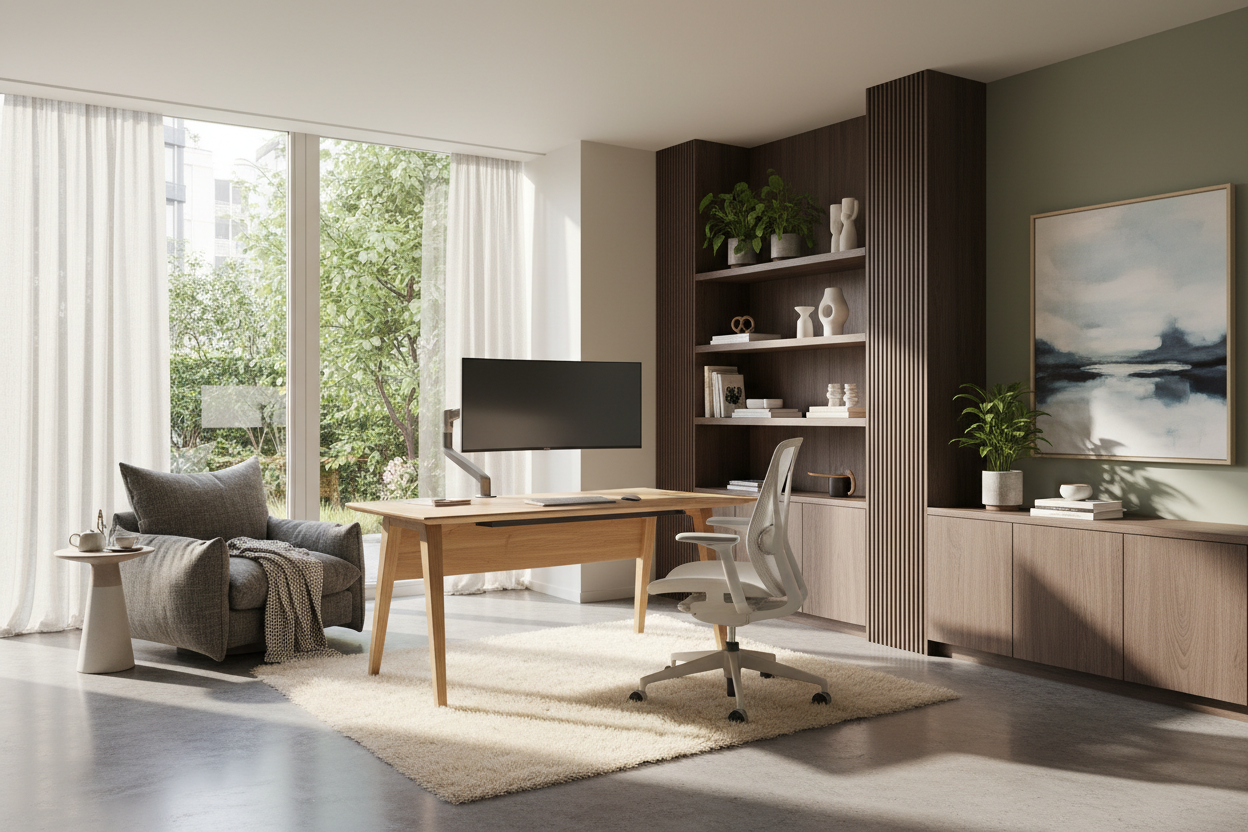
We often treat the home office as an afterthought—a spare corner with a leftover table and a dining chair. However, as your schedule shifts and the duration of your seating time increases, the physical environment begins to dictate your productivity. The design dilemma isn't just about finding a desk that fits; it is about curating a space that supports your body and mind through long work from home hours without compromising the visual integrity of your home.
Quick Decision Guide: Optimizing for Duration
- Ergonomics over Aesthetics: For 4+ hours of daily use, prioritize chairs with synchro-tilt mechanisms over static accent chairs.
- Material Breathability: Choose mesh or top-grain leather over synthetic velvet to regulate temperature during long sessions.
- Lighting Layers: Combine ambient overhead lighting with articulated task lighting to reduce eye strain as natural light fades.
- Spatial Flow: Position your desk to command the room (the "power position") rather than facing a blank wall to reduce psychological fatigue.
The Chair: The Anchor of Your Workday
When clients ask me where to allocate their budget, I always point to the chair. If your work from home hours exceed four hours a day, a standard tub chair or mid-century modern replica will not suffice. You need to look for "performance seating."
Understanding Martindale Cycles and Fabric
Durability is key. In the industry, we measure fabric durability in Martindale cycles. For a task chair used daily, look for a rating above 30,000 cycles. While a bouclé fabric might look stunning on Instagram, it often pills under the friction of daily shifting. I recommend high-quality wool blends or performance linens that offer tactile comfort without showing wear patterns within six months.
The Silhouette and Visual Weight
Ergonomic chairs are often bulky and disrupt the design language of a curated home. To mitigate this, look for frames with a slim silhouette or finishes that match your existing millwork. A chair with a polished aluminum base often reflects the floor, reducing its visual weight in smaller rooms compared to heavy black plastic bases.
Lighting: Managing the Circadian Rhythm
Your lighting scheme must adapt as your work from home hours progress from morning to late afternoon. Static lighting causes eye fatigue. The goal is to layer your lighting to mimic the natural progression of the day.
Start with ambient lighting (ceiling fixtures) for general illumination, but the critical investment is task lighting. An articulated desk lamp with a high CRI (Color Rendering Index) of 90+ ensures that colors look true and text remains sharp. This reduces the micro-adjustments your eyes make, preserving your energy for the work itself.
Surface Area and Materiality
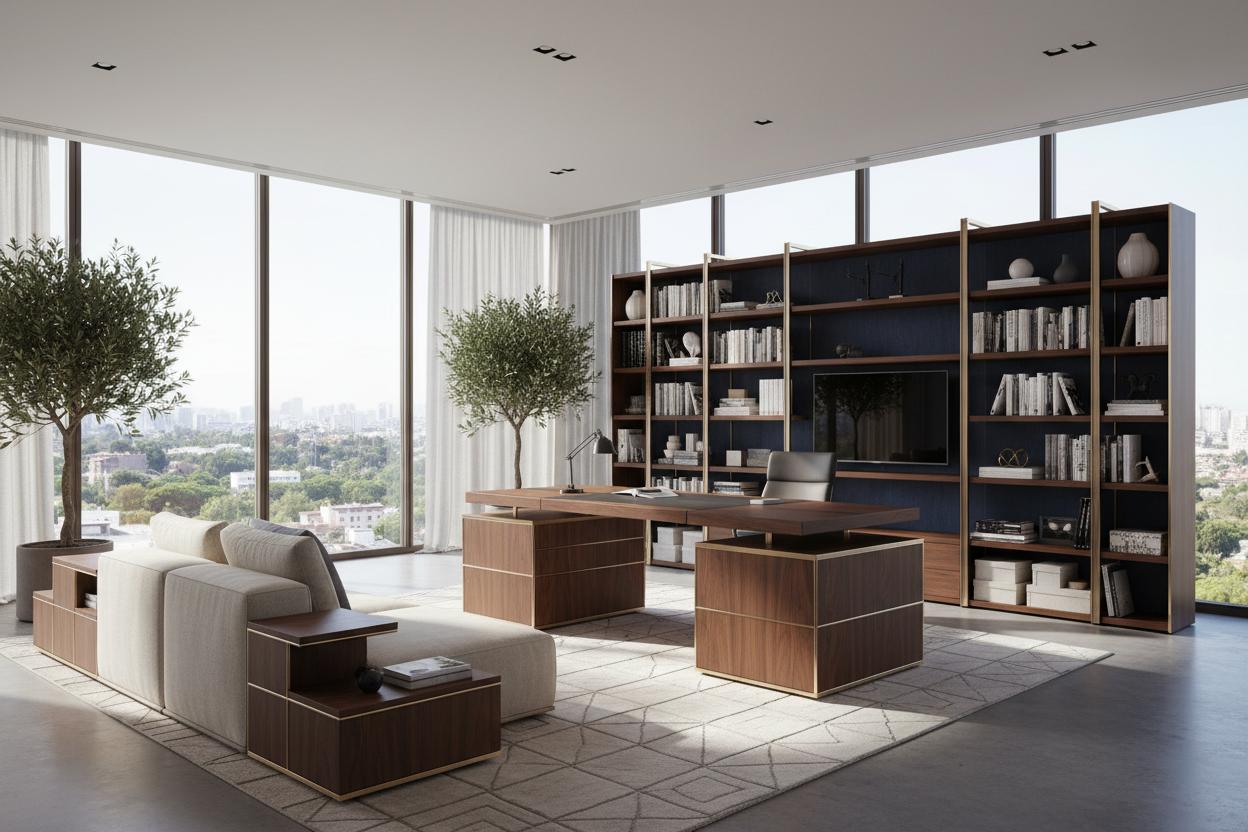
The desk surface is your primary touchpoint. While glass tops feel modern, they are cold to the touch and prone to fingerprints. Solid wood—walnut or white oak—offers warmth and improves acoustics by absorbing sound rather than reflecting it. If you are working with a tighter footprint, consider a floating desk anchored to the wall; it keeps the floor visible, making the room feel expansive regardless of the furniture size.
My Personal Take on work from home hours
I learned the hard way that "commercial grade" doesn't always mean "home appropriate." Early in my career, I designed my own home office using a stunning, vintage-inspired leather chair. It had zero lumbar adjustment and a fixed height. It looked incredible in photos.
However, three months into heavy project loads, I noticed a specific wear pattern on the leather where my lower back hit, caused by my constant shifting to get comfortable. More importantly, the lack of breathability made it unbearable by 2:00 PM in the summer. I swapped it for a high-end mesh hybrid that, while less "sculptural," allowed me to actually focus. The lesson? If a piece of furniture distracts you physically, it has failed its design purpose, no matter how beautiful the patina is.
Conclusion
Designing for your work from home hours is an exercise in balancing performance with personality. By investing in tactile materials, proper support, and adaptive lighting, you transform a workspace from a place of obligation into a space of inspiration. Your environment should work just as hard as you do.
Frequently Asked Questions
How much space do I actually need behind my desk chair?
For a functional layout, allow at least 36 to 42 inches of clearance behind your desk. This allows you to slide back comfortably and recline without hitting a wall or bookshelf, maintaining good flow within the room.
Is a standing desk necessary for an 8-hour workday?
It is not strictly necessary, but highly recommended for varying your posture. If a mechanical standing desk ruins your aesthetic, look for desktop risers that can be stowed away, or consider a "drafting height" table with a stool to alternate between sitting and perching.
How do I make an ergonomic office chair look less corporate?
Focus on customization. Many high-end manufacturers now offer ergonomic frames with residential-grade upholstery options. distinct frame colors (like sage, navy, or cream) instead of standard black can also soften the industrial look.

Leave a comment
This site is protected by hCaptcha and the hCaptcha Privacy Policy and Terms of Service apply.