










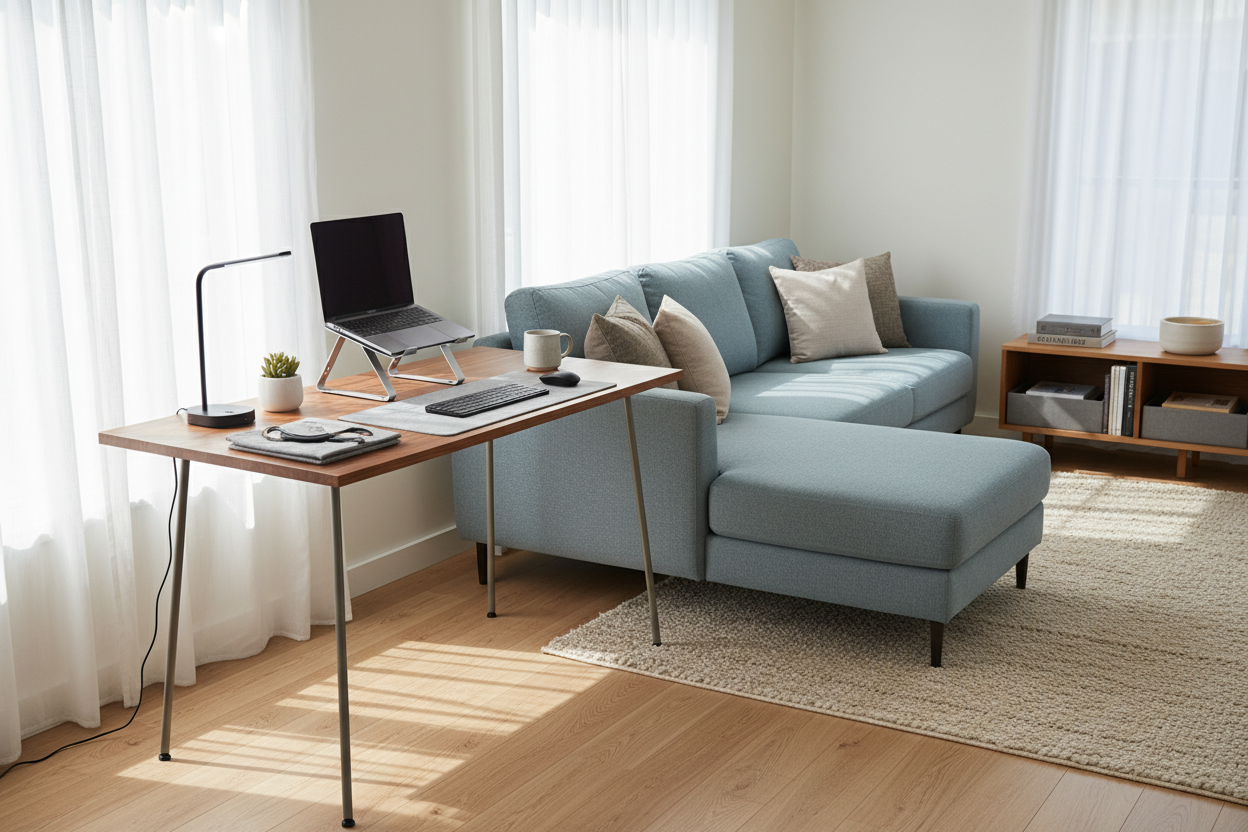
The era of the static, heavy mahogany desk is slowly fading for many modern homeowners. We often face a common design dilemma: the need for a dedicated workspace conflicts with the desire to keep our living areas open, airy, and free of clutter. You might find yourself migrating from the dining table to the sofa, sacrificing posture for a change of scenery. The solution lies in a curated portable desk setup that respects both your spinal health and your interior aesthetic.
Key Features to Look For
- Material Weight & Durability: Opt for high-grade aluminum or engineered wood that offers stability without excessive heaviness.
- Mechanism Quality: Ensure folding hinges or height-adjustment levers operate smoothly without grinding.
- Footprint Efficiency: The base should slide easily under sofas or tuck into corners (C-tables are excellent for this).
- Surface Finish: Look for scratch-resistant laminates or sealed veneers that can withstand frequent movement.
- Caster Type: If wheeled, ensure the casters are soft rubber (to protect hardwood) rather than hard plastic.
Selecting Materials for a Portable Office Setup
When selecting furniture for a portable office setup, the interaction between tactile quality and weight is paramount. In my design practice, I often steer clients toward mixed-material pieces. A solid oak top adds warmth and visual weight, but if the frame is heavy steel, the desk becomes a burden to move. Instead, look for powder-coated tubular steel frames paired with walnut or oak veneers. This combination offers the sophisticated grain of real wood while keeping the total weight manageable.
Avoid cheap particle board with paper-thin laminates. These tend to chip at the edges when moved frequently through doorways or against other furniture. A high-pressure laminate (HPL) or a marine-grade plywood edge offers far superior longevity for a mobile piece.
Ergonomics in a Mobile Context
A common misconception is that a portable work from home setup requires sacrificing ergonomics for size. This is a mistake. If your portable desk is too low, you will hunch; too high, and your shoulders will tense. Since many portable desks lack height adjustability to save weight, the chair pairing becomes critical.
I recommend pairing a static height portable desk with a compact, height-adjustable task chair. If you prefer a standing configuration, look for pneumatic rising desks that utilize a gas spring. These allow you to transition from sitting to standing instantly, maintaining blood flow without the bulk of an electric motor.
Space Planning and Visual Balance
Integrating a portable office set up into a living room or bedroom requires a keen eye for visual balance. The desk should not look like temporary camping gear. When not in use, the desk should arguably function as a console or side table.
Consider the silhouette. A desk with slender, tapered legs feels less intrusive than one with thick, blocky supports. If the desk is on wheels, ensure the design incorporates a modesty panel or a clean underside, as messy cables are more visible on a floating piece of furniture. Use wireless peripherals or a singular cable sleeve to maintain that minimal, 'showroom' appearance.
My Personal Take on Portable Desk Setup
I learned the hard way that "portable" does not always mean "functional." A few years ago, I invested in a beautiful, high-end acrylic mobile desk setup for my own apartment. Visually, it was stunning—it disappeared into the room perfectly. However, I overlooked one specific detail: friction.
Because the desk was so lightweight and the wheels didn't have high-quality locking mechanisms, the desk would micro-shift every time I typed vigorously. It was maddening. Furthermore, the acrylic surface, while chic, showed every single palm print and dust mote within minutes of cleaning. Now, when I specify these for clients, I physically test the wheel locks to ensure they "bite" into the floor, and I always check the surface texture against fingerprints. It’s these unpolished, practical realities that determine whether a piece remains in your home or ends up in a garage sale.
Conclusion
Creating a functional workspace doesn't require a dedicated room; it requires dedicated design thinking. By selecting the right materials and prioritizing stability, you can build a workspace that moves with you, adapting to the rhythm of your day while maintaining the elegance of your home.
Frequently Asked Questions
How do I stop my portable desk from wobbling?
Wobbling usually stems from uneven flooring or poor joinery. Look for desks with adjustable leveling feet (glides) if the desk is stationary, or high-quality locking casters if it is wheeled. Tightening the assembly bolts periodically is also essential for mobile furniture.
What is the ideal depth for a portable laptop desk?
For a laptop-only setup, a depth of 18 to 20 inches is sufficient. However, if you use an external mouse and a notebook, aim for at least 24 inches deep to ensure your wrists have adequate support without feeling cramped.
Can I use a dual monitor mount on a portable desk?
Proceed with caution. Most portable desks are lightweight and may tip over due to the top-heavy weight distribution of dual monitors. If you must use dual screens, ensure the desk frame is steel-reinforced and the base is wide enough to prevent tipping.

Leave a comment
This site is protected by hCaptcha and the hCaptcha Privacy Policy and Terms of Service apply.