










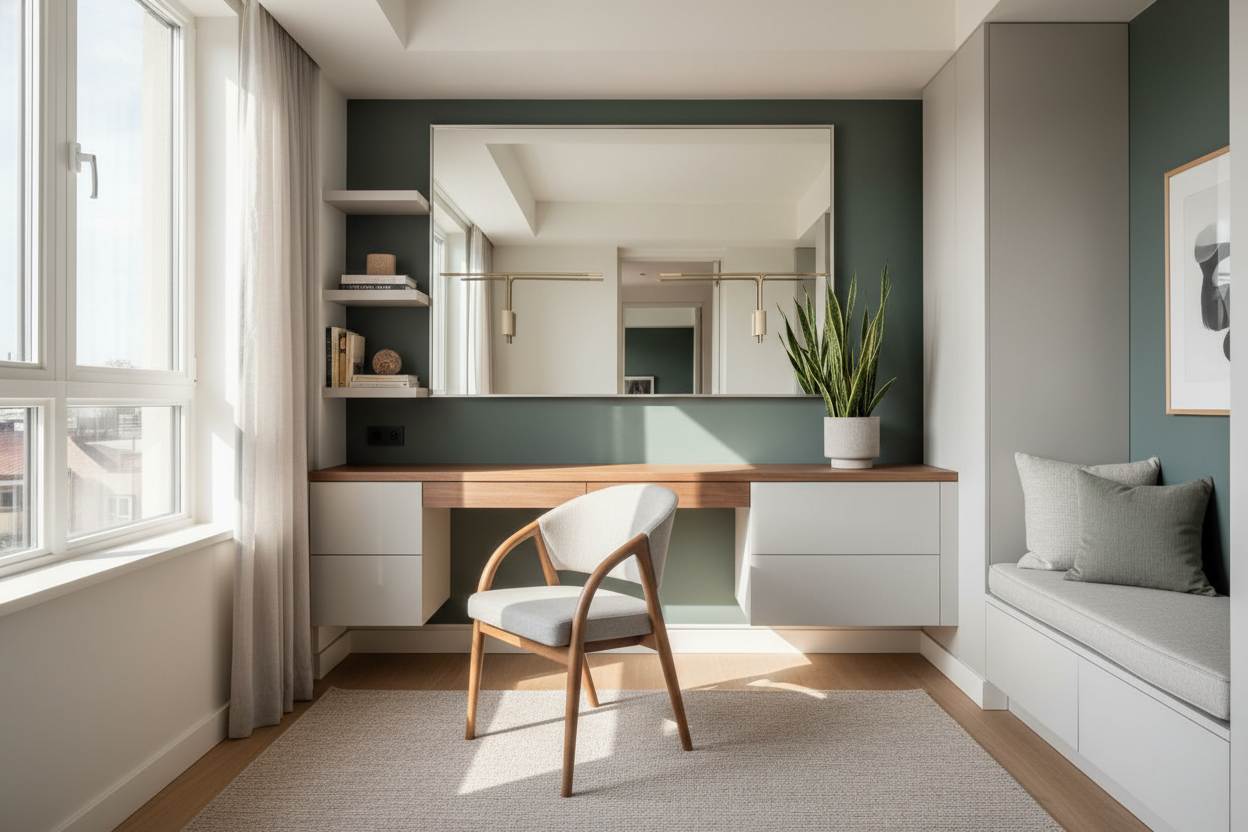
Staring at a cramped corner or a converted closet can feel uninspiring, yet this is the reality for many modern professionals working from home. The challenge isn't merely fitting furniture into a room; it is about cultivating an environment that fosters deep focus without feeling claustrophobic. As a designer, I often see homeowners prioritize the wrong elements, sacrificing flow for bulky storage. In this guide, I will walk you through how to design a small office that balances high-end aesthetics with rigorous functionality, ensuring every square inch serves a purpose.
Quick Decision Guide: Key Elements for Small Spaces
- Visual Weight: Opt for materials like glass, acrylic, or slender metal frames to keep the room feeling open.
- Vertical Utilization: Prioritize floor-to-ceiling shelving over wide, lateral filing cabinets to maximize footprint.
- Ergonomics: Ensure a minimum of 36 inches of clearance behind your chair for movement.
- Lighting Layers: Combine ambient overhead lighting with focused task lighting to reduce eye strain and expand the perception of space.
- Multi-Functionality: Select furniture that offers hidden storage or nesting capabilities.
Mastering Scale and Visual Weight
When you learn how to design small office space effectively, the first lesson is understanding "visual weight." A solid mahogany executive desk might physically fit in the room, but it will visually dominate the space, making it feel smaller. Instead, look for silhouettes that allow light to pass through.
Material Selection: Solid Wood vs. Veneer vs. Glass
For tight quarters, material choice dictates the atmosphere. A glass or acrylic desk is the ultimate "ghost" furniture—it functions perfectly while virtually disappearing. However, if you require the warmth of wood, opt for high-quality veneers on engineered wood rather than chunky live-edge slabs. Veneers allow for slimmer profiles and sharper lines that solid wood construction sometimes cannot support without bulk.
The Layout Strategy: Flow and Function
Placement is everything. The most common error is floating a desk in the center of a small room. While this looks commanding in a large corporate suite, it creates "dead zones" in a small home office.
The Command Position
Ideally, position your desk so you face the door (the command position) but anchor it against a wall or perpendicular to a window. This maximizes floor space for a walkway. If you must face a wall, install a mirror or artwork above the desk to prevent the psychological fatigue of staring at a blank surface.
Ergonomics in Limited Square Footage
Comfort should never be sacrificed for size. A common misconception is that a small office needs a small chair. This is false. You need a visually light chair that still offers full lumbar support.
Look for task chairs with mesh backs. The mesh provides breathability and transparency, reducing the visual mass of the chair. Ensure the base diameter fits within your desk opening; nothing ruins a design faster than a chair armrest that bangs against the drawer unit every time you push it in.
Lighting: The Invisible Expander
Lighting is a structural element in interior design. Relying solely on a single overhead pot light casts shadows in corners, shrinking the room. Layer your lighting by adding a slender floor lamp in a corner to wash the wall with light (uplighting). This trick pushes the walls out visually. For the desk, choose an articulated sconce mounted to the wall rather than a table lamp to save precious surface area.
My Personal Take on how to design a small office
I want to share a specific lesson from a project I worked on in a tight Brooklyn brownstone. We were obsessed with the idea of a wall-mounted floating desk to save legroom. It looked sleek and architectural in the renderings.
However, once installed, we realized a critical flaw that rarely gets mentioned: cable management and vibration. Without legs to run wires down, the power cords dangled messily against the wall, ruining the clean aesthetic. Furthermore, because the client was a heavy typist, the slight vibration of the cantilevered desk transferred directly into the wall, creating a low-frequency hum in the adjacent bedroom.
We ended up swapping it for a "writing desk" with very slender metal legs. It provided the stability we needed and allowed us to magnetic-clip the cables down the back leg. The takeaway? sometimes the most "space-saving" solution on paper isn't the most livable one in reality. Always test the sturdiness of a desk before buying; if it wiggles in the showroom, it will drive you crazy at home.
Conclusion
Designing a compact workspace is an exercise in editing. It requires you to be ruthless with clutter and intentional with every texture and silhouette. By prioritizing vertical storage, selecting visually light materials, and respecting ergonomic principles, you can create a workspace that feels like a sanctuary rather than a cage. Trust the process, measure twice, and invest in pieces that offer both form and function.
Frequently Asked Questions
What is the minimum depth for a small office desk?
For a functional laptop or monitor setup, aim for a minimum depth of 24 inches. Anything shallower (18-20 inches) is often sold as a "console table" and will leave you too close to the screen, causing eye strain and leaving no room for a keyboard.
Should I paint a small office light or dark?
While white creates an airy feel, don't be afraid of dark, moody colors like charcoal or navy. Dark colors can actually blur the corners of a room, making the boundaries of the space recede visually. It creates a cozy, "jewel box" effect that is excellent for focus.
How do I hide a printer in a small office?
Printers are visually heavy and rarely attractive. In a small layout, place the printer on a rolling cart tucked into a closet, or dedicate the bottom shelf of a bookcase to it, concealing it behind a decorative basket or cabinet door. Do not waste prime desktop real estate on a printer.


Leave a comment
This site is protected by hCaptcha and the hCaptcha Privacy Policy and Terms of Service apply.